Bishop does something inexplicable – in other news, yellow circle of light appears in the sky

Somewhere on a small island a long way away from here, an Archbishop will do something which seems to many, if not most, to make no sense

At this point, this blog could turn into an extended reflection on the absence of Church History from what is left of ‘theological training’ in some parts of the world. Suffice to say, ‘So?’ Anyone with the slightest grasp of the history of the last two thousand years will find little of interest in this ‘event’, an observation which only goes to reinforce my urge to write on our lack of ecclesio-historical awareness, as ‘the media’ has been full of ‘it’.

But it is the lack of another, deeper and more significant awareness, which I find  inexplicable – far more so than the actions of a Bishop, Arch or otherwise. And that is the awareness of fact that the Church is a collection of sinners, and sinners do things which make no sense – Continually.

Unfortunately it appears that we are largely ignorant of this. It seems we nowadays believe that the Church is full of machines – whom like all the machines with which we are surrounded, never go wrong . . . or if they do we only need to replace them with a better one . . . We are under the demonic [sic] conceit that ‘there is no reason why everyone shouldn’t be good’ – ‘why everything shouldn’t ‘work” – ‘why bishops shouldn’t be able to fix everything’. Why else the outpouring of moral indignation etc.??

More evidence for this is seen in our (changing) approach to clergy and episcopal training. A Church on a small island a long way away from here, has decided to cherry pick promising candidates for the episcopate and put them through an ecclesiastical version of an MBA – ‘because clearly what we need are better management skills’ (the human mirroring of those ‘Oh so dependable’ machines – as we increasingly become like that which we worship . . .). No doubt to turn out bishops who look like this.

People who wear suits – whom our upbringing has taught us to trust because ‘they are obviously very clever, and of course that is what we need in the church’. If we make clever people bishops, all will be well, they will be able to fix things . . . (Of course those who hope that the decision of the Church of the small island far away to consecrate women as bishops will ‘fix’ this – probably has failed to note how, as was pointed out to me by one of the first women to be ordained in that church, ‘they all end up looking like the men’, and b) they’re sinners also.)

Yet more evidence of our ludicrous hope that somehow we can ‘fix’ the church is the inexplicable habit in some quarters of asking people to put their names forward to be bishop. Each then explains why under their ‘just and gentle rule’ the world will be a better place . . . and, ignoring the fact that they’re all sinners we tend to believe at least one of them (because we are also sinners). We pray about it, because we ought to, all the while ignoring the fact that we are sinners, and then we elect one of their number. A majority of folk say ‘Now everything will be better! Bishop John ‘is a wonderful person’ or Bishop Susan ‘has a Great plan!’ (All the while quietly complimenting ourselves on our ‘discernment’) A minority are disappointed. Some of those passed over leave in high dudgeon, because the Diocese has made ‘such an ‘inexplicable’ choice, ‘my plan for fixing everything was far better’. There is a big service at the Cathedral where words like ‘hope’, ‘future’ and ‘confidence’ are bandied around, and sooner or later the new Bishop does something ‘inexplicable’ . . .

Of course if we knew our church history we’d not be surprised, but like sheep who are disturbed every morning by that yellow ball in the sky . . .


Some years ago one of my former tutors at college gave a wonderful talk on false understandings of our Life in Christ. In it he compared Thomas the Tank Engine – a tale of a railway on a small fictional island, off the coast of a small island a long way away from here – to that rather wonderful and scary book ‘Where the Wild things are’. At the time I heard it as a gentle ribbing of those who understood the bible in that good old Deuteronomistic way – “Be Good! everything will be well”. A world where ‘everything works’, and when it doesn’t we say we’re sorry and everything is working properly again. (Thomas the Tank Engine was after all written by a nice middle class English Vicar in the 1950s) His point was that ‘faith in its glory’ wasn’t really like that, it was much more like the exuberant, unpredictable world conjoured up by Maurice Sendak.

Yet I cannot fail to surmise that at root so many in the Church think along Thomas the Tank Engine lines, not in terms of ‘Being Good and it will all work out’  – but because they have forgotten that we are sinners, (except in a rather nice 1950s middle class sort of way – ‘we occasionally do something naughty, or indeed ‘inexplicable”) We think that we know how it should be fixed, we think we know the faults of others, we can see how it would be better if only they listened to us, read our blogs . . . We are all busy playing The Fat Controller . . .

The Church is messy, very very messy, of course, because it is full of sinners, and no piece of legislation (think Microsoft patch), no ‘new bishop’, nothing is going to change that, except people who wake up to the reality deep in their hearts that we are all ‘under the same condemnation’, and put down their stones, and their spanners . . . that is how the true healing of the Church, and thus the World comes about


This run of blogs etc. on the actions of an Archbishop on a small island a long way away from here, puts me in mind of a series of articles run by ‘The Times of London’, in the days when it went under that moniker. It was entitled ‘What’s wrong with the World?’ Perhaps unsurprisingly the editor was not scratching around to find someone to opine, and numerous luminaries, men in suits, perhaps even bankers . . . wrote lengthy articles explaining EXACTLY what was wrong with the world.

Eventually it all became too much for one reader, who responded with ‘a letter to the editor’, thus


Sir,

‘What is wrong with the world?’

I am

Sincerely yours

GK Chesterton


It also put me in mind of a recent saying of Pope Francis, pointed out to me by a friend

‘We should all become islands of mercy’


As Someone once said

“How can you say to your brother, ‘Brother, let me take the speck out of your eye,’ when you yourself fail to see the plank in your own eye? You hypocrite, first take the plank out of your eye, and then you will see clearly to remove the speck from your brother’s eye.”


It is rumoured that he was Not a sinner, yet we crucified him

And there are even wilder stories going about that he was raised from the dead


Now THAT is inexplicable . . .


Sermon for Epiphany 3 – Year B – 2014 ‘Securing our own existence?’

Sermon for 3rd Sunday after Epiphany

Sunday 25th January, 2014

Jonah 3:1-5,10

1 Corinthians 6:1-11 (alteration to Lectionary reading)

Mark 1:14-20

‘Securing our own existence? Why not be wronged? Why not be defrauded?’

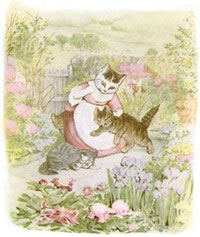
Amongst all the giants of those who correctly diagnose the human condition, I believe it fair to say that not enough attention has been paid to one of my fellow country women. For her perception of the condition of the human soul, there are few who would dare compare themselves to . . . Beatrix Potter . . .

Farmer, award winning breeder of the best Herdwick Sheep, natives of my home Lake District – and one who has seen deep into the dark heart of the human condition. And as evidence for this perhaps preposterous claim, I offer you ‘The tale of Tom Kitten’

Now there is not time to tell all of this intricately woven fable of human existence, told in the form of a parable involving animals – so to fill in a few details – There were once three kittens, Mittens, Moppet and Tom Kitten – who loved to play in the dust, but one day, their mother, Mrs Tabitha Twitchit, was expecting friends to tea – So Moppet, Mittens and Tom Kitten had to be wash and suitably dressed, before the arrival of ‘fine company’.  Faces scrubbed – and squeezed into ‘all sorts of elegant and uncomfortable clothes’, ‘Mrs Tabitha Twitchit unwisely turned them out into the garden, to be out of the way while she made hot buttered toast . . .’ Well of course like any children sent out to play in the garden in their best clothes . . . it was not too long before all the clothes were in disarray, indeed, dirty, torn and eventually discarded, where they were espied by the puddle ducks . . . where we pick up the tale ‘Mr Drake Puddle-Duck advanced in a slow sideways manner, and picked up the various articles. But he put them on himself! They fitted him even worse than Tom kitten “It’s a very fine morning!” said Mr Drake Puddle-Duck. And he and Jemima and Rebeccah Puddle-Duck set off up the road, keeping step -pit pat, paddle pat! Pit, pat waddle pat! THEN Tabitha Twitchit came down the garden and found the kittens with no clothes on. She pulled them off the wall, smacked them, and took them back to the house.Tom-Kitten-22“My friends will arrive in a minute and you are not fit to be seen; I am affronted!” said Mrs Tabitha Twitchit. She sent them upstairs: and I am sorry to say she told her friends they were in bed with the measles; which was not true. Quite the contrary; they were no in bed; not in the least. [SLIDE] Somehow there were extraordinary noises over-head, which disturbed the dignity and the repose of the tea party . . .

How like Life 🙂 We’ve made all our plans – we decide what a perfect life would look like and we set about securing it for ourself – this is the way we want life to be – we’ve made a huge effort to get everything right . . . and then others mess it all up! And the dignity and the repose, the elegance and the refinement, or the quiet perfection of life as we’d like it comes crashing to the ground . . . and the question is – what do we do next?? For like Mrs Tabitha Twitchit, it is others who refuse to co-operate – it is as if we surrounded like willful children . . . how often do we hear the complaint, oh they really need to ‘Grow up!!’ for like Mrs Tabitha Twitchit, we are affronted!!! We exclude more and more others from our life, we try to secure our existence, and if that means I go nowhere near so and so, all well the good . . . and our lives shrivel as we surround ourselves with those who reflect the person we’d like to be back to us – in other words, we are lost in our selves, like Narcissus who can only bear to see himself in the world around him, who cannot bear to be wrong, who cannot bear being wronged . . .

Which is all well and good until we come to the Church, for in Christ, we are all one body, called to Life Together with no get outs. We cannot at once be close to God in Jesus Christ, and distant from those who refuse to co-operate with our attempts to secure life on our own terms, to give us what we want . . . as if that was their role, as if they existed for us . . . for we cannot bear to be wronged . . .

St Paul was not blind to this in the life of the church in Corinth and his words to us may well unmask our own attempts to secure a life for ourselves. For he finds that the Corinthians are not sorting out their disputes amongst themselves, rather they are taking their fellow Christians to court (which sounds terrible until of course we remember that in the C20 Christians went to war with each other over ‘higher ideals’ . . .) One of the glories of the Scriptures is that there is no papering over the cracks, the naughty kittens aren’t sent upstairs as if they didn’t exist – here in the Bible we read of how God’s people still forgotten who they really are – that their lives are no longer their own. So Paul asks a shocking question, I wonder if we heard it?? Rather than try and assert your ‘rights’ he asks, ‘Why not rather be wronged? Why not rather be defrauded?’ Why are you so insistent on trying to secure this Life you have built for yourself?? You see you cannot build a life for yourself and follow Jesus, because Jesus invitation to follow him is to leave the life we build for ourselves behind, and accept the true life he offers us . . . there is no carefully refined respectability in the Kingdom of God, there is just the life of Jesus, who sleeps in the dust, who is wronged, who gives up all rights . . . and yet whom God raises even from death.

Elsewhere Paul says to the Corinthians, ‘But with me it is a very small thing that I should be judged by you or by any human court. I do not even judge myself. I am not aware of anything against myself, but I am not thereby acquitted. It is the Lord who judges me.’ In this he is entirely like Christ who

Listen to what St Peter says about Jesus . . . to this you have been called, because Christ also suffered for you, leaving you an example, so that you should follow in his steps.

‘He committed no sin, and no deceit was found in his mouth.’

When he was abused, he did not return abuse; when he suffered, he did not threaten; but he entrusted himself to the one who judges justly. Jesus is utterly wronged, but his security is not in his own sense of self  worth, which can all too easily be torn to shreds like Mrs Tabitha Twitchit’s plans for a dignity and repose. His security is in the very life of His Father, God. That is what fills his consciousness

When we like Mrs Tabitha Twitchit are ‘affronted’ – when we shudder for the repose and dignity of the life we have tried to make for ourselves is assailed – it is a sign that we haven’t begun to follow Jesus. We are still trying to secure our own life – and we are rejecting the life he calls us to. The disciples are called from the life they have made for themselves to a life with Jesus. A life in which we are healed from our deepest sin, our desire to have life on our own terms.  He himself bore our sins in his body on the cross, so that, free from sins, we might live for righteousness; by his wounds you have been healed. For you were going astray like sheep, but now you have returned to the shepherd and guardian of your souls.

And that is the heart of Baptism – the abandonment of our attempts to build a life on our terms – to follow Jesus, the one who entrusts himself entirely to ‘the one who judges justly’

Salvation – Sharing in Life, in Time and Space and Relationships. Sermon for Second Sunday after Epiphany – Year B 2015

Sermon for Second Sunday after Epiphany – Year B (2015)
1 Sam 3:1-10
1 Cor 6:11-20
John 1:43-51

Participation

‘Then Jacob woke from his sleep and said
“Surely the LORD is in this place and I did not know it!”
And he was afraid, and said, “How awesome is this place!
This is none other than the house of God, and this is the gate of heaven.”
So Jacob rose early in the morning, and he took the stone that he had put under his head and set it up for a pillar and poured oil on the top of it. He called that place Bethel’
[which means ‘House of God’]
Full Participation

The TIME of heaven and earth woven together
Well, we’re just back from our family holidays – and I’m glad to say, well rested and refreshed. Which is a good thing, for our culture has a prohibition against too many holidays 🙂 Partly of course because, as a secular culture it does not know what to do with the Holy, and thus has little time for Holy Days, which is of course where the word comes from, but we have forgotten.
In the middle ages, those times which so fuelled the imagination of our great literary heroes, CS Lewis and JRR Tolkein, it is estimated that the hardest working person worked for no more than half the year, for the calendar was interspersed with many many Holy Days – days for rejoicing and feasting – and whilst in the more Catholic inclined cultures, there are still relics of this – I vividly remember a family holiday when Paris ground to a halt on August 15th, the feast of the Assumption of Mary – by and large the grim culture of Protestantism has won out and our Salvation is no longer Gift but something to be worked for, despite the fact that it is the Protestants who ‘told us’ that Salvation was by faith alone – and so work displaces holidays, for Protestants of course have little time for the Holy, it being useless . . . Catholics may have been criticised for living as if one was saved by works, but their lives betrayed the sense that they knew they were saved by Grace and our culture which is profoundly shaped by the Protestantism of Northern Europe and now of course the United States is profoundly one of what Josef Pieper calls ‘total work’ – we rest in order to work, we go to school to learn how to work. Our culture is historically the most work obsessed of all in human history, and of course the most secular, apart from the Chinese, and they are similarly obsessed with work. Different ideologies but the same secularity. Work makes you Free is the motto of our age
So holidays are no longer holy days, and they must be limited or of course the world which we tell ourselves is sustained through Grace by the Word of Christ, will obviously stop. There is some talk of Life as Gift and Grace, but our lives reveal what we really believe. And not only are they not holy, there are few of them. The great genius of the Medieval synthesis, the product of 1000 years of Christian Imagination was this weaving together of the Sacramental tapestry.  The weaving together of Heaven and Earth – So time was woven through with Holydays – and also Space was understood to be woven together
The SPACE of heaven and earth woven together
As we look around us at all the manufactured articles which fill our houses to overflowing, and will one day fill a hole in the ground, our medieval forebears would look on with horror. ‘Where did all this metal come from? And all this plastic? What have you done to the Good Earth in order to take these things for yourselves?’ In early to mid medieval Europe at least, the earth was not to be tilled with iron, for it was to do Violence to the Creation. The idea that the mining of ‘resources’ which is central to our lives in this age, is a violent abuse of the Created order never passes our minds – yet one need only to take a moment to look at the poisoned lakes of China, the leveled mountains of The United States, the tar fields of Alberta, the hollowing of Western Australia and, yes the state of our own rivers – to know that this is profoundly true, perhaps these poor benighted medieval folk saw more clearly than we do.
The earth was sacred, in the sense that all of Creation was participating through Grace in the Life of its Creator – Christ, the one in whom all things hold together, all things. All of Creation was Created to rejoice in the Life of its Creator. For when Jesus takes on our flesh – it is not merely about God rescuing human beings from their plight – it is about the Whole Created order. The Holy Spirit inhabits the material to Save it – all of it!
And the loss of this is seen even more clearly in the huge change in our attitudes to one another.  One of the strange things about that medieval culture, which was so shot through with A Christian Imagination of existence  – was how it shaped human relating so profoundly. As someone I was reading this week suggested, the loss of that view, and particularly the shift from Catholic to Protestant understanding of faith was that we completely changed our attitudes to the poor.
LIVES woven together
One of the effects of the Reformation was to disenchant the world, to not acknowledge our everyday lives as the place of Salvation. If as the reformers taught, salvation was ‘by faith alone’, then of course the Catholic churches tiresome emphasis on Corporal acts of mercy, Caring for the sick, sharing your bread with the hungry and the like were no longer necessary. A misunderstanding of Salvation Life opened the door to secularism, with private piety – or the world which we know. Faith as a private matter – you and your soul before God – it had no dimension of works. ‘Everyday life’ was set free from ‘burdensome obligations to the neighbour, and thus also to God. One only had to think right – and then go to work and make your profits.
But this Salvation is a Life, not an idea, not a worldview, not even a theology. Salvation is a Life . When John the Baptist asks of Jesus – ‘Are you the One, or should we look for another? – Jesus Response is ‘tell him what you see – The blind receive sight, the lame walk, those who have leprosy are cleansed, the deaf hear, the dead are raised, and the good news is proclaimed to the poor.’ Jesus didn’t preach a message to John, he opinted to Life breaking out around Him. Where Christ is Present these things are happening and the world is Changed. Where Salvation Life is – these things are evident. By their fruit shall you know them . . . And medieval Catholic Europe, for all its failings knew this. The poor were not looked down on as objects of pity or disdain, rather they were in some regards looked up to, for did not Jesus say ‘Blessed are you poor!’. Some, indeed many embraced voluntary poverty – living by Grace through faith in the most concrete way, and the Rich – well the rich fed them. ‘I am my brothers keeper’ was a motto writ large on the medieval consciousness, for indeed most knew that if the let the poor go hungry, they would suffer the consequences of Hell, for to turn your back on your brother was to turn your back on the Life that flowed through all of Creation in   -and as we all know, Medieval Hell was a far more graphic reality then than now. As was Heaven . . . now largely they have faded from our imagination. The Word of the Lord is Rare in these days.
Salvation far from being something in which we all participated – in which we all shared – became a thing of piety – with the emphasis on the internal. Our lives fundamentally no different from those around us. Just as busy, just as rushing around, just as convinced that everything depends on us. We no longer understand our lives as participating in Creation, in the lives of one another – and fundamentally we have lost sight of the greatest Truth of all – that in Christ we are invited to become participants in the very life of God.
As everyone is aware, I’ve been going barefoot around the church these past weeks. As with many practices, it teaches you things 🙂 It started because I was woken up to something I had lost sight of – like the old priest Eli who was continually woken by Samuel, I’d forgotten that God speaks, sometimes in words that we can hear.  Like Samuel, who was woken from sleep, Like Jacob who also had been dreaming, God brought me to my senses. I had lost sight of the holiness of this place. So I guess it is in part an act of repentance on my place for that loss of sense of the holiness of the place, must extend to my loss of sense of the holiness of those whom I serve, and do not shake your heads in disagreement, ‘Do you not know, your body is a temple of the Holy Spirit of the Living God??’ But more than that – waking up to the Holy in this place also alerted me to how out of touch with God’s good creation I’d become. Rushing from place to place – not seeing – tied up with the importance of my life. Do you know that there is the most spectacularly beautiful clover leaf outside in the grass??
Creation is so dense with beauty that it really slows you down if we but attend. You cannot live a frenetic life in the world if you attend to it as it is – we cannot be The Church and continue to live such lives – for so many Church has become little more than a pause in a busy week – we are called to the most extraordinary participation – We are Called to know our place in Holy Time, to know our place in Sacred Space, to know what it is so to participate in Life that we know amongst ourselves the truth of loving one another ‘as we love ourselves’,  . . . And why??
In Christ Everything is Woven together
Eli had forgotten that God Speaks, as the church seems to have done – Nazareth had so forgotten her vocation that the idea that Goodness might come from her that Nathaniel scoffed at the one of whom the prophets had spoken of might come from there. The idea that the Life of Christ might flow from the Church is laughable in our culture – but it is the Truth. Because in Jesus Christ, God has joined heaven and earth. Jesus said to Nathaniel “Do you believe because I told you that I saw you under the fig tree? You will see greater things than these.” 51And he said to him, “Very truly, I tell you, you will see heaven opened and the angels of God ascending and descending upon the Son of Man.” Our Vocation is the deepest participation in Time and Space, in the lives of one another, and above all and in all and through all in the very life of God in Jesus Christ. In Jesus Christ Heaven and Earth are woven together. In Him is the fullness of Life. In Christ, the vision of Jacob comes true – Surely God is in this place. May it be said once more amongst us.

Sermon for Advent 2, Year B, 2014. ‘Waiting . . . for the Redemption of our bodies’

Advent 2 2014
Samuel Marsden
Isaiah 40
2 Peter 3
Mark 1

Waiting for the redemption of our bodies

As you can’t fail to have noticed this morning, we are celebrating ‘the best Good News since 1814’ – which raises to questions, one general one – what IS the Good News?? If a friend asked you, What is that sign on the Church drive all about? What would you say?? And secondly – waht is Anything does the Good News have to do with our bodies???

I was recently reading an article by a man who had lived through the 1930s in England. His family had been coal miners and to say his existence was harsh would be putting it fairly but perhaps also mildly. Children all sharing the same bed – a lavatory outside the house shared with several other families – poor and sometimes non-existent food – and of course disease, taking children in infancy and leading to life expentancies much much shorter than those we have come to take for granted.

When we consider the collapse of participation in the life of the church, particularly since the 1960s, one factor that I rarely hear mention of is how comfortable our lives are nowadays. After all, IF the big theological problem is ‘Why does an all loving God permit suffering?’ surely when we suffer far far far less than even our parents generations – and we do – then church should be packed with folk giving thanks to God? Surely??

And of course church has itself become  less demanding and more comfortable, as well . . .  and herein might be part of the issue. Back in England many many churches went through the business of ‘re-ordering the church’, at least when financial circumstances were better. By and large that meant making the building more ‘comfortable’. The installation of better heating and of course that perennial bane of a Vicar’s life – the removal of pews to be replaced with ‘comfortable’ chairs . . . but of course does not Isaiah 40 verse 1 say ‘Comfort ye, O Comfort ye my people . . .’ 🙂

Not long before coming here I chaired a Diocesan committee which had both the Archdeacons on it. One evening we met at one of their houses, and as the second Archdeacon came into the room he said to his colleague ‘Ah! that must be your prayer chair!!’ He was pointing at one of these.

poang-armchair__0117277_PE272441_S4

And he was right! How did he know?? Except for the assumption that one must be comfortable to pray . . . Imagine being sat on that  or indeed your own favourite comfortable chair – losing all sense of your body, its aches and pains – almost for a moment leaving the material realm and entering into the pure realm of the Spirit . . .

This turn is one of the most ancient heresies of the Church that of Gnosticism, a retreat into the realm of pure Spirit – the denial of our bodies. Which is fundamentally a denial of the heart of our faith. Our bodies are the very realm of our Life as Christians. And as we shall see the Heart of the Good News.

This Gnostic turn is seen in what happens when we pray – together as a body. When I was young it was unthinkable that one might not kneel to pray. In other words without naming it – we were bringing all of who we were before God, and in material terms almost all of who we are is our bodies. Kneeling is of course very Anglican – Other traditions stand to pray. Again very physical and perhaps more demanding. Until very very recently, not to adopt some bodily posture in prayer would be thought most odd. Why leave so much of yourself behind when you pray?

Our Faith is at its heart Embodied. Physical and Spiritual irrevocably woven together – put another way, it is Sacramental.  And thus it cannot be disembodied. Only those who think that there are two realms, one of the Spirit an one of the body could imagine otherwise. Our bodies matter – they are the Realm of the working out of our salvation – as St Paul reminds us ‘‘do you not know that your body is a temple of the Holy Spirit within you, which you have from God, and that you are not your own? For you were bought with a price; therefore glorify God in your body.’ What we do with our bodies is of ultimate significance. they are no mere shells for our ‘selves’ We are our bodies, perhaps more than we are minds in that we might lose our minds yet still live, yet we have no life apart from our bodies

Thus the central outworking of our faith – Worship and Prayer must fully involve the body for us to be present – we eat bread – we drink wine – we are baptised by our bodies being immersed in water – we annoint the body with oil after baptism, for healing and in preparation for death. We stand we kneel, we turn to face the Gospel – for in this Jesus is speaking –  As we enter the Holy of Holies at the Eucharist we change our dress. We HEAR the word with our ears, we respond in speech with our mouths – we SING and action which brings so much more of us bodily into the picture – the body resonates literally with the praise of God. We confess our sins OUT LOUD. This too is why marriage is a Sacrement, because it is Known in the BOdy, the two become one flesh

One of the disciplines of faith I have been teaching our Baptism class has been to read the Bible out Loud even when you are alone. One of the marks of our disembodied existance has been ‘reading in your head’ . St Augistine once found  the Saintly Bishop Ambrose ‘reading without moving his lips’ and thought it so odd that he mentioned it in his writings and tried to explain this Strange behaviour. But as anyone who has ever read out loud and paid attention will note – it is a very different practise. the words are embodied they resnote – all of who we are in involved rather than the very very limited part of our neural pathways involved in reading in our head – ie to read in your head is barely to read at all – indeed such practices as research shows largely shut us down. In this increasingly virtual, unreal world there is a very real sense in which we need to get out of our heads in worship. Not in the Gnostic sense of contemporary charismatic worship wherein people are enjoined to lose sense of their bodies – this is no different to praying in the comfy chair. no we get out of our heads to get our faith into our bodies.

Today as we move through Advent in this the bicentennial year of the announcement of the Good News in these lands we remember Samuel Marsden. Here on Friday, the children from Kaikorai School re-enacted that story as a means of telling the story of Christ’s birth amongst us. Earlier this year with the other members of General Synod I was privileged to visit Oihi Bay. What struck me forcibly was the sense of exposure – of the harshness of what life must have been like for Marsden and his family. Few if any of us know what it is to live in dependence of the hospitality of others. Imagine literally coming ashore in acute dependence for your physical needs, your bodily need for safety, your bodily need for shelter, your bodily need for food and water. As we have lost sense of these needs, so our apprehension of who we are has shrivelled to a point where for all we say the Self is writ large in contemporary society, we have in effect made ourselves disappear, and where is The Good News in that?  Perhaps in no small part we have lost any sense of our faith, of what the Good News is, precisely because of this bodily denial?

So John the baptizer appeared in the wilderness, proclaiming a baptism of repentance for the forgiveness of sins. And people from the whole Judean countryside and all the people of Jerusalem were going out to him, and were baptized by him in the river Jordan, confessing their sins. Now John was clothed with camel’s hair, with a leather belt around his waist, and he ate locusts and wild honey.

The people left the comfort of home to meet this strange figure in the wilderness and to be immersed in the water of the baptism of repentance

one cannot help but be struck by the sheer physicality of john the Baptist. There he is in the wilderness, the place always of God’s salvation, the place of physical dependence upon God, the place where the LORD provdes the manna, the daily bread. And dressed in what he could find – camels hair – perhaps an echoe of those skins that the LORD provided for our first parents, Adam and Eve. Living on a diet of what he could forage . . .

Announcing what?

Mark wastes no time in announcing the content of the Good News. Mark Chpater 1 and verse 1 – The beginning of the good news of Jesus Christ, the Son of God. The Good News comes to us in a body, that of Jesus. The eternal word of God of which Isaiah spoke becomes FLESH. Born in humility, having family, having nowhere to lay his head, being hungry and thirsty, whipped and scourged, brutally nailed through sinew and bone to a rough wooden cross – the Sphere of our Salvation hope is indisputably the body of Jesus. As St Paul puts it when he is asked what is the message he preaches, ‘it is Jesus Christ and him crucified . . .’ The Good News is known in a body, and in that body God in Christ reconciles the world to himself. And through faith, God raises Jesus from the dead, not as a ‘spirit’ but as a living breathing, fish eating, walking talking living breathing human.

Both Isaiah and Peter speak of the transitory nature of our lives – But the day of the Lord will come like a thief, and then the heavens will pass away with a loud noise, and the elements will be dissolved with fire, and the earth and everything that is done on it will be disclosed. The physicality of our lives laid bare

All people are grass, their constancy is like the flower of the field. The grass withers, the flower fades, when the breath of the Lord blows upon it; surely the people are grass. The grass withers, the flower fades;    but the word of our God will stand for ever. And therein lies our Great Hope – for all the frailty of our bodies, our great hope is that in the eternal Word bodily raised from the dead, we too are raised. That Christ’s triumph over death was no mere ‘vague ongoing existence’ as so many of the comfortable ‘modern’ Christians would like to think. That beyond the vagaries of mere beliefs, even our bodies are caught up in the Salvation purposes of God. So we prepare by Worshipping in our bodies, by Praying in our bodies, by fasting in our bodies, by baptising bodily,

Comfort ye, comfort ye my people, saith your God . . . the word rendered comfort means better Strengthen!! Get ready – prepare yourself, body and soul for the coming of the one who Saves us, Soul and Body

Sermon for Christ the King Sunday, 2014. Year A. ‘Breathing’

Sermon For Christ the King, 2014. Year A

Matthew 25:31-46

Breathing

It is undoubtedly a good thing that the most fundamental acts of our humanness are almost always entirely unconscious. Since we woke this morning. Each one of us will have breathed somewhere in the region of 3,500/7,000 times, and until I mentioned it, hardly any of us will have given our breathing a moments thought. That and our heart beat, another fact of our embodiedness which pretty much we rarely experience or give thought to, are those things which are at root ‘how we live’. The stopping of the heart often signifies the end of our lives, our last breath is just that. The unconscious actually delineates our lives.

As natural as breathing. Natural. Unconscious. Indeed the neuro scientists tell us this. There is perhaps no such thing as a conscious act, only a consciousness of acting. We become conscious in the act after it has begun.

And we know this in our everyday existence. We are hungry, we go make ourselves something to eat. We are cold, we throw another log on the fire; we are thirsty, we put on the kettle; we feel as if the walls are closing in, we get out for a walk. Without thinking.

Just the other day I was taking time out to try and write up a paper for a conference – when some of that became less than straightforward. Firstly, I noted that I hadn’t taken as much food as usual on my break – I was hungry. I was having to eke the food out. Eating and Food became suddenly a more conscious part of my existence, these things mattered ore than usual, indeed they mattered. Then, thinking to take a shower, I fell foul of a shower that hadn’t been used for a long time and had limed up. As a result, having switched it on, I couldn’t switch it off and it was draining a neighbour’s water supply. So I resorted to switching it on briefly at the outdoor main, filling a bucket. And using that for all necessities – including drink. Again, I was more conscious of that part of my existence – these things began to matter – for me. I woke up to the reality of my existence. It is sobering to note how ‘life’ slips us by

I haven’t any scientifically verifiable evidence to prove this, but I suspect that it is the truth, that we say Grace over fewer meals  I sense that this is the case, I may be gloriously wrong, but I don’t think so.
One of the oddities of abundance is that Gratitude disappears. We live unconsciously. When food on the table becomes something utterly unremarkable. How often do we give thanks for our breath or the beating of our hearts? How often for food, drink, warmth, freedom . . . except of course when we are made aware of our lack of them.

There is a rather strange phrase which, on those occasions we give thanks, is often used to modify the prayer – one which I am not sure I am comfortable with. ‘and make us mindful of the needs of others’. Well I suppose that it is a start, but using the discomfort of the other as the occasion of our own gratitude, at the very least is perhaps a signifier of how isolated and separate our existences have become. We are awoken to those who do not have food, or drink or are cold, or those who are imprisoned by their lives . . . and we give thanks that we are not . . . we don’t go out into the highways and byways and bring them in . . .

And I think that perhaps we say The Lord’s Prayer less than we once did. Spending time preparing candidates for Baptism and Confirmation, I am always reminded of the centrality of Prayer. When Jesus’ disciples ask him ‘Lord, teach us how to pray’ his answer wouldn’t exactly fill my one hour session on ‘The Life of Prayer’; ‘when you pray say ‘Father, hallowed be your name. ‘Your kingdom come. Give us each day our daily bread. And forgive us our sins, for we ourselves forgive everyone indebted to us. And do not bring us to the time of trial.’’ What?? Perhaps some in depth teaching on meditation? Or Intercession? What about praying for others?? Is that it?? There is nothing grandiose or large about our asking. It is just for that which we need – bread and foregiveness, the stuff of Life. It is little, and it is everything. We miss the little, we miss everything

It says much we don’t say Grace every time we eat. It says perhaps more that we perhaps only infrequently use The Lord’s Prayer when we pray alone. Again as I think about preparing people for Baptism, I think of this prayer. In the early days of the church, preparation for Baptism took up to three years. And the Lord’s prayer was one of the last things taught . . . strange that. Why leave it to last? Well I guess because it was such a staggering prayer. How staggering to pray ‘Our Father’ One becomes a child of God through Baptism. it was as if just before the baptism, you were let in on the biggest hidden thing, that through Baptism you became a child of God, one of His.
Or perhaps it was because of the politically dangerous nature of the prayer. Hallowed be Your name – no other kings. Or perhaps, that it was so demanding . . . forgive us as we forgive. Give us your breath as the breath of life flows from us – Give us this day our daily bread.
Often super spiritual types ciriticise prayers that we say without noticing, but I wonder? Perhaps they have a point. Do we linger as we pray, ‘Give us this day our daily bread’ – or do we just let the words roll through us.

Of course we must note that in a sense this is a prayer we cannot pray apart from others. We do not pray,‘give me mine’, rather ‘give us our’ In that petition we recognise that this is all about US, not about Me. That we are praying for bread for all God’s people . . . whether we recognise it or not. Do we hear what we pray?

This parable of the End has an element of uncosciousness writ large about it. Neither the sheep nor the goats recognise Christ in the hungry, the thirsty, the naked and the prisoner. It would be a poor hearing of the text which suggested to us that we might ‘see Christ in one another’, indeed I am not at all sure that that is what in the background. Rather there is an unconsciousness to all of it. If the point were to see Christ in the neighbour and thus act – the point of the teaching would be missed.

Those who feed the hungry, give drink to the thirsty, clothe the naked, and visit the prisoner have no awareness, they are not living out some moral code. They’re NOT walking round thinking ‘I see Christ in everyone I meet’. Just as those who do not do these things are not consciously ignoring Him.

One of the metaphors Jesus often uses of those who are his is Child. As I have said several times of late, it is a powerful and significant metaphor. There is something of the entirely natural about a child. A young child does not respond in life as a set of moral codes – rather to use the words of GM Hopkins, ‘What I do is me!’ Their lives are as natural as breathing.

Early memories are funny things and of course notoriously unreliable, but one very early memory I have is of being at ‘kindy’. It was perhaps my first day. I seem to remember it was run by nuns, but those who might enlighten me in that regard are now long gone. I seem to remember being upset – and I remember another child giving me a piece of his chocolate . . . I also remember that peculiar combination of apple and chocolate – but I remember him sharing. It was Grace. Pure gift. Nothing I suggest self conscious – I don’t remember the shadow of a nun telling him to share. I just remember the Gift. i look forward to meeting that boy again one day.

I don’t know how many times we’ve been told to see Christ in the hungry etc. and no doubt many will hear that today, and to any avail?? Others will be called to ‘challenge the unjust structures of society’ that there may be no hungry. The words of Jesus come back to me, unless you become like a little child, you will by no means inherit the Kingdom of God. Are children going to ‘challenge the unjust structures of society’? I wonder why we did not have the boldness to make that mark of mission the words of the prophet Isaiah – ‘to share bread with the hungry, and bring the homeless poor into your house; when you see the naked, to cover them, and not to hide yourself from your own kin’?

Nothing less than the radical transformation of our hearts will effect this unconscious response to the need of others. For it is out of the overflow of our hearts, for good or ill come, and no moral exhortation to ‘see the face of Christ the King’ in all will change that.

Of course within the covenant community of God’s people, it was unthinkable – Had not God said, ‘there shall be no poor amongst you’? Surely it is unthinkable that in the midst of so much excess, there should be scarcity?

If they do not hear the word to ‘love your neighbour as yourself’???  Our self love, our self care is unconscious. Transforming society happens not primarily at the structural level, but deep down within our hearts – transformed that we see our kin, whom we feed and clothe and share with them the little we have.

How easy it is to wish the hungry well, to pray to remember them as we eat and to ‘seek to transform the unjust structures of society’, but the eye of kinship, the simple eye of the child, sees only their kin and acts simply. I’m not sure that if we saw the hungry as our kin we would be able to pray ‘keep us mindful of the needs of others’, or having prayed that to eat.

By all means let us seek justice, but let us not tell the hungry and the naked to just wait for the day when it is all sorted out. The church has been playing this game since the dawn of Christendom and indeed often before. Paul berates the church in Corinth for the rich feed well and ignore the needs of the hungry. Then down through the ages,the game of telling the poor and the hungry to wait for heaven – if the hunger of my kin took precedence then perhaps the wider society would take notice. If God’s people identified with one another.

At the heart of this tale of the end of the ages is a radical Identification. The child of God sees their kin. The Son of Man, Christ the King, radically identifies himself with his people that that which is done to them, he  takes as done to him. This is the model of Kingship whi He alone embodies, He spends himself for his people, pouring out his life for them. Identifying with them in their plight as those who are lost ‘insofar as you did it to one of the least of these, you did it to me’ God in covenant Love takes hold of a people and identifies himself with them, and takes their fate upon himself. This perhaps is the greatest wonder of all. He sees himself in his people. It is a staggering thought. They are his Life. We participate in this Life when we similarly identify ourselves with our kin. And this is the childlike faith, the basics of our life together, like breathing

For thus says the Lord God: I myself will search for my sheep, and will seek them out. 12As shepherds seek out their flocks when they are among their scattered sheep, so I will seek out my sheep. I will rescue them from all the places to which they have been scattered on a day of clouds and thick darkness. 13I will bring them out from the peoples and gather them from the countries, and will bring them into their own land; and I will feed them on the mountains of Israel, by the watercourses, and in all the inhabited parts of the land. 14I will feed them with good pasture, and the mountain heights of Israel shall be their pasture; there they shall lie down in good grazing land, and they shall feed on rich pasture on the mountains of Israel. 15I myself will be the shepherd of my sheep, and I will make them lie down, says the Lord God. 16I will seek the lost, and I will bring back the strayed, and I will bind up the injured, and I will strengthen the weak, but the fat and the strong I will destroy. I will feed them with justice.

All Christ’s sheep will be fed. It is as natural as breathing. It will be so

The terrifying abundance of God – (Parable of the talents). Sermon for Sunday 16th November 2014

Sermon for Sunday 16th November, 2014
23rd Sunday in Ordinary Time, Year A

Ephesians 4:25- 5:2 (This reading is used as we are having a special service later in the morning)
Matthew 25:14-30

Recording includes illustrative comments from CS Lewis “the Great Divorce” not included in the text below

The terrifying abundance of God

When we hear these last words of the gospel For to all those who have, more will be given, and they will have an abundance; but from those who have nothing, even what they have will be taken away. As for this worthless slave, throw him into the outer darkness, where there will be weeping and gnashing of teeth. It would not be unreasonable to hear an alarming degree of dissonance with regard to the closing words of our epistle Therefore be imitators of God, as dearly loved children . . .

To be a dearly loved child is as we have explored these past weeks to be absorbed in the life of the parent, and learning to live through imitation. Those who have children will know how much play takes the form of copying parents, whether it be pretend driving a car, or playing at cooking in the kitchen. Who cannot have known the delight of being given a lovingly made mud pie with a side order of grass 🙂

Yet hearing the words of the master to the third servant ‘You wicked and lazy slave!’ we may be brought up short. Certainly this text has caused a flurry of correspondence amongst clergy this week. ‘What do we make of this text?’, ‘can it really be Jesus?’ One alternative reading which has become almost commonplace is that this is Jesus decrying the world as it is – where ‘Bosses’ hold all the strings of power, and those who blow the whistle on the operation are condemned. And of course that is an alluring suggestion, for we see this so clearly, Jesus is only condemning what we see in front of us and which we agree is evil. Jesus agreeing with us and condemning the World . . . yet ‘God did not send his Son into the world to condemn the world . . .’

Such a reading leaves us as petty moralists – and more importantly it leaves our eyes fixed on the condemnation of the world, which is not life giving. It leaves us as moral agents, charged with bringing in the Kingdom of God, rather than upon what God in Christ has done and continues to offer to us, as dearly loved children.

The relationship of master to slave in the time of Jesus is not as clear to us as we might like to think. ‘Slave’ is a very loaded word in our culture and understandably so. We cannot claim that ‘slavery is a good thing’ (yet we continue to allow it in many and diverse forms required to keep us in the manner to which we have become accustomed. Slavery in all its forms is as rampant as ever. Every person who works for less than a living wage is in a form of slavery. It is the only work they can get, and it doesn’t pay enough but it keeps Our world ticking over.) Actually for many of the slaves of the time of Jesus, many – perhaps not most – we do not know – for them their service was a form of social security. In a world where it was and is ‘devil take the hindmost’ – to have the security of work and usually food and shelter, was a better deal than for many. Jesus parable of the workers in the vineyard showed how it was for those who were not in a form of regular service, waiting in line on the hope that they might get a day’s work, and often not for a day’s pay.

So here is a master with three slaves and ‘he entrusted his property to them’ as he goes away on a journey. He puts it into their hands. Immediately we are told, their is an expected relationship of trust. ‘He entrusted his property to them’

But then WHAT PROPERTY!!! Five talents – probably as much as 100 years of wages at usual rates!! What trust the master has in his slaves. Immediately we see that there is a different relationship here than we might think of ‘master-slave’. Even the slave who was given one talent – 20 years worth of wages – still a huge trust.

So let us think for a moment of the first two. In clear sight in this parable is Jesus going away, and entrusting his life to his servants, the disciples. Huge treasure.

Part of our problem as we read this story is that we do not recognise what God in Christ has done for us – we fail to see in these huge amounts of money a clear Revelation of the Glory of God in Christ Jesus and the truly amazing nature of His Life. We have developed amongst ourselves over many many years in the church, ‘the myth of scarcity’, as if we have to be careful for everything, as if God is not Yahweh Jireh, The God who provides imaginably more than all we can ask or conceive.

God’s Love and mercy and forgiveness and sustenance is Superabundant. It overflows to all those in need. His Life is like a HUGE wellspring bursting up – irrepressible. He is the God who gives and gives and gives.

The first two slaves Know their master – and they get in on this almost terrifying superabundance. They live out of the masters abundance and produce more life. As Jesus says ‘Let anyone who is thirsty come to me, and let the one who believes in me drink. As the scripture has said, “Out of the believer’s heart shall flow rivers of living water.” They like dearly loved children are rejoicing in the abundance of the life of their master – and so upon his return they gladly return their version of mud pies and grass to him. They already know their Lord, they know his Joy and he just amplifies it Well done, good and trustworthy slave; you have been trustworthy in a few things, I will put you in charge of many things; enter into the joy of your master. The slave has proved worthy of his masters trust. He Knows his master . . . he knows Him.

Jesus, twice in Matthews gospel uses the chilling words ‘I never knew you’. Once, last week about those who were not paying attention waiting for him, Once in the Sermon on the Mount where he says “I never knew you; go away from me, you evildoers.”

And so it is with the third slave, except here we see, he is the one who does not know his master – it is the same difference.

“Master, I knew that you were a harsh man, reaping where you did not sow, and gathering where you did not scatter seed; so I was afraid, and I went and hid your talent in the ground. Here you have what is yours.” He calls his master a harsh man – yet his master has entrusted vast wealth to his care – we have already seen that he does not even reappropriate to himself the gains the first two slaves have made. The fact is he does not know his master at all. He believes him to be a Master of Scarcity, not a master of abundance. His master replies “You wicked and lazy slave! You knew, did you, that I reap where I did not sow, and gather where I did not scatter? Then you ought to have invested my money with the bankers, and on my return I would have received what was my own with interest.  ‘You knew me?’ Well if you believe me to be the man you say I am, the thing you should have done was to put the money to work at the bank. The master is not agreeing with the slave, the statement is a rhetorical question? If you knew me to be like this you would have behaved thus . . . The fact is you are hiding behind your own deceit – your actions betray you. You are a liar and untrustworthy.

How often in the presence of the Overwhelming abundance of God people hide – Adam and Eve hide, people ask for the mountains to fall on them. At Sinai the people, tell Moses to deal with God, He is too much for them. God’s mercy Love forgiveness and provision are too much for those who live in fear and assume scarcity, who do not rejoice in God’s provision of Daily bread, but seek to hoard and to hide.

When we refuse to believe in the Abundant Goodness of God, we show we do not know who he is. It is perhaps salutary to note that interpretations which avoid the call to the abundant life made known in Jesus have risen and risen as the church has shrunk – perhaps shrunk back in fear? As we think about the Church in this place and time, do we see a church which rejoices in the Abundance of all that God provides, or one whose story is of Scarcity – which is a lie about God, and a Lie about His Life made known to us in the Creation and fully in Christ, Risen and glorified.

The parable is about the end, but also about the ongoing judgement of God’s people when they prefer to hunker down with a small view of the Goodness of God and do not step out as dearly loved children, Imitating the glorious abundance of the Life of the God and Father of our Lord Jesus Christ.

Sam Wells in his staggeringly beautiful book ‘God’s Companions’, says that our situation has at its heart four disorders: sin, evil, collusion, and poverty of imagination. This last speaks I think most clearly into the current state of the church, which in its life is far closer to the third and last slave, than the first two.
Does our Imagination stretch far enough to See the abundance of the Father’s love for us? As always, if not there is a simple remedy, turn to face Him. Allow his Presence to fill our imagination and absorb us wholly – and then as dearly loved children live in imitation of that which we See and Know.

Amen

Sermon for ALL SAINTS – 2014 Year A

Sermon for ALL SAINTS 2014 – Year A
Revelation 7:9-17
Psalm 34
1 John 3:1-3
Matthew 5:1-12

Uncomfortable clothes . . .

See what love the Father has given us, that we should be called children of God;
and that is what we are. The reason the world does not know us is that it did not know him.
1 John 3:1

For those of you who are following its progress, the beard has got to the itchy stage. 🙂

I’m informed that this is the stage at which a lot of men give up – we don’t like discomfort!! But discomfort is at once a non-negotiable aspect of the Christian life, and one which is intensified in this present age.

We will all have seen comedy films where a boat is sat by a deck and someone tries to get into the boat, but as they do, they have a foot on the deck and a foot in the boat – I will allow your imagination to fill in the details 🙂

But in this age, that is also a profound illustration of how we experience our lives a Christians. For large parts of the lives of most of us, we have lived in the long shadow of Christendom. There was a sense that most people amongst whom we lived had some inkling of the Christian story, and after all didn’t we share the same set of moral values?? And after all, wasn’t that what it was all about???

Wasn’t it? Yet there is a sense of drifting apart – The church often tries to fix this – to ‘try to be relevant’ as if the answer was to be found in chasing after the world – we don’t like the discomfort.

I wonder how many of us have known a profound discomfort upon plucking up the courage to try and give witness to our faith. Our children I suspect know this far better than most of us as adults. We tell someone ‘I am a Christian’ – ad quick as a flash the rejoinder comes back ‘I live a good life’, or ‘I don’t need such things, my life is very fulfilling’ And we are uncomfortable . . . where do we go from here? Is that all there is? A vacuous sameness? A comfortable nothingness?

Come back to that boat – let’s call it our Waka. For many years, to our eyes it has sat by the dock, but now it seems to be drifting off, or is it? Is it not that the dock is drifting away? We thought our ‘values’ were somehow universal. If we could at least live in a world where we shared values, then we could be comfortable. But who said that the Christian Life was about values??

This is not what Jesus tells us ‘you must be born again – unless you are born again you cannot see the Kingdom of God’. St Paul when berating the Galatians tells them with regard to their conflicts on circumcision –  ‘What counts, is a new Creation!’ We might say ‘Values?? What counts is a New Creation!’ And our own St John speaks these words to us – to all who received him, who believed in his name, he gave power to become children of God, 13who were born, not of blood or of the will of the flesh or of the will of man, but of God. – And again in the epistle this morning ‘See what love the Father has given us, that we should be called children of God; and that is what we are. The reason the world does not know us is that it did not know him.’ These words are to say the least ‘uncomfortable’ especially when we have grown up in a culture where we have been told over and over : ‘we are all God’s children! That is why we have these universal shared values, that is why it isn’t essential to be Christian, that is why we shouldn’t try and share our faith – because let’s face it we have nothing particularly distinct to share, and after all, trying to share our faith does makes us very uncomfortable’ We find great comfort in the crowd, however illusory it is . . .  yet, as the world abandons its pretense of Christian faith, One calls us to be with Him . . .

When Jesus saw the crowds, he went up the mountain; (Jesus walks away from the crowds – indeed he is often doing this) and after he sat down, his disciples came to him . . . Jesus is in the Waka – the disciples step off the dock. They are called apart . . . and that ‘called apartness’ is Essential to what it means to be Christian – those who are called Apart – this is the root of the word Saint!!

Next time you pluck up the courage to have that conversation about our faith, try and use a better word than Christian – a more helpful word – a word that won’t have folks telling you what good people they are – a word that has less unhelpful cultural baggage – a word that won’t have people thinking ‘well so am I’  – a word which might find you mocked and ridiculed . . . try telling them the Truth – ‘I am a Saint’

Of course, immediately we are confronted with seems to be a similar problem . . . but perhaps a more truthful one . . . that while we are comfortable calling ourselves Christian, after all for much of our lives that was not a contentious thing to do, referring to ourselves as Saints feels very uncomfortable to us . . .

It is not only our illusions about the world which are called into question – our Christian imagination is also in need of serious remedial attention. Following the death and resurrection of Jesus, nowhere are his brothers and sisters called sinners . . . something we would be comfortable with, indeed we are. If I were to say ‘you are a Saint!’ you might blush and demur – or you might say, no I’m just a common or garden sinner . . . but to be called apart – called to be with Jesus is to find ourselves in the company of those who are either called Saints, or ‘those called to be Saints’ . . . But how might we understand this? So infected is our imagination by images of ‘Christian heroes’ whose lives seem to glow with the Life of Jesus in a way we cannot see in ourselves. Well firstly of course we have to say that our vision is defective, in that we are Always looking at ourselves!

During the early part of the middle ages there was the great controversy over Ikons – they were being smashed left right and centre – Iconoclasm . . . and we have replaced them with mirrors . . . but a child, that constant ideal Jesus holds up to us his disciples, a child is absorbed in this powerfully sensate world . . . like a Saint – paying attention to what is Real

To understand what a Saint is, come back with me to last week and this photo I shared with you. I invited you to put yourself in the place of the child – whose whole imagination is taken up with God. Our Psalm today expressed it thus The angel of the Lord encamps around those who fear him, and delivers them. O taste and see that the Lord is good; happy are those who take refuge in him. O fear the Lord, you his holy ones, for those who fear him have no want.

those who fear him have no want – to fear the Lord is to have ones life set on a completely different course – as Moses is described in the letter to the Hebrews who ‘persevered as if he saw him who is invisible’. Jesus calls us to himself, like Martha’s sister Mary to be utterly attentive to him – and this means we are called out and this feels uncomfortable.

One of the reasons my school days weren’t the happiest of my life was because my parents elected to send me not to the local Grammar school, but to one ten miles away. Everyone in my village went to either the local Grammar, or the local Secondary Modern as it was called, based on the results of the 11+ exam. So I was the only child in my village to wear the Blue blazer of Heversham Grammar, rather than the Green of Queen Elizabeth’s or the Black of Milnthorpe. Many was the time I could have happily disappeared, but my blazer marked me out as different. And of course dressing differently continues to this day 🙂 But as we have been at pains to remind ourselves these past weeks, my priesthood is merely a visual reminder of the priesthood of us all – those called out – to be bearers of the Glory of God in the World which God loves. Called to be Saints

That as Jesus tells his disciples is a blessing – in these words addressed to those who have stepped out from the crowd – who have stepped off the dock and into the Waka. Blessed are the poor in Spirit, those who mourn, the meek, those who hunger and thirst for righteousness, the merciful, the peacemakers, those persecuted for the sake of Righteousness . . . A strange blessing – a powerful symbol of being set apart – not a blessing which finds much resonance in the world . . . surely these blessings of Jesus explode any illusion we might have about ‘a shared set of values’. Who is blessed in the world? Who is blessed in the Waka of the Kingdom of God?

And if this feels uncomfortable? Well I ask you to cast your mind back to The First Story – The Creation – How does God bring Life into the world? By setting apart. Day from night, Water above the earth from water upon the Earth, . . . Darkness from Light – First there is the formless and void primeval chaos, so like the modern world in which we live – incoherent, directionless, shapeless – but then God says ‘let there be light’ – and there was light.

St Paul – ‘What counts is a New Creation’

Jesus calls his disciples out from the crowd, to know their life in him. Now they see the crowd, the crowd see them – they are set apart – and, thus set apart Jesus says the most extraordinary thing to them: he blesses them with these strange blessings, so unlike the deceitful blessings of the world – the Poor, Mourning, Meek, Hungry and Thirsty, The Merciful, Peacemaking, Persecuted and Crucified One breathes his Creative Word, his very being upon this group of his disciples – making them his sisters and brothers – making them children of God and announcing this new creation of those called to be with Him in these words “You are the light of the world.”  “You are the light of the world.” Saints.
To the Glory of God the Father

Let us pray
We bow our knees before the Father, from whom every family in heaven and on earth takes its name. We pray that, according to the riches of his glory, he may grant that we may be strengthened in our inner being with power through his Spirit, and that Christ may dwell in our hearts through faith, as we are being rooted and grounded in love. We pray that we may have the power to comprehend, together with all the saints, what is the breadth and length and height and depth, and to know the love of Christ that surpasses knowledge, so that we may be filled with all the fullness of God.

Now to him who by the power at work within us is able to accomplish abundantly far more than all we can ask or imagine, to him be glory in the church and in Christ Jesus to all generations, forever and ever. Amen.

Ephesians 3:14-end