Through the Bible in a Year – March 20

The Scheme for March – April can be found here

Num 8-9; 2 Cor 3-4; Psalm 102

Paul gives us a beautiful picture of the Christian Life here

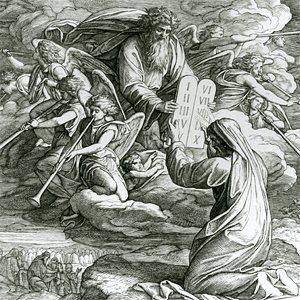
You yourselves are our letter, written on our hearts, to be known and read by all; and you show that you are a letter of Christ, prepared by us, written not with ink but with the Spirit of the living God, not on tablets of stone but on tablets of human hearts.

There are two brief things we might consider here

Firstly, once again, Paul has hard things to say to the Corinthians in the letter, yet at the same time he sees quite clearly the Life of Christ amongst them. The Life that he has proclaimed amongst them is now inscribed on their hearts.

Paul looks on the heart – he does not judge with the eye, he has learned to see as Christ sees.

What is more he sees the Christian Faith not in static terms but in terms of growth – extraordinarily ‘into the glory of the Lord’, or put another way, into the likeness of Christ. So much of Western Protestant Christianity in particular denies our ‘telos’, our end, an thus is directionless. It sets no path before us by which we may so e transformed, indeed it isn’t even expected. We rather ‘hope for heaven’ beyond this life, rather than look in Hope for its gradual emergence amongst us.

Secondly we may well ask of ourselves, in what sense are we ‘a letter of Christ’? How is this ‘shown’? How are we being transformed in and through our common life that as a people we are changed from one degree of glory to another?

Through the Bible in a Year – March 19

The Scheme for March – April can be found here

Num 7; 2 Cor 1-2; Psalm 99-101

Paul opens his ‘second’ letter to the Corinthians, following the opening address, with these words

 Blessed be the God and Father of our Lord Jesus Christ, the Father of mercies and the God of all consolation, who consoles us in all our affliction, so that we may be able to console those who are in any affliction with the consolation with which we ourselves are consoled by God.

These are words of great comfort and consolation  – and immensely rich and powerful – but I think a word needs to be said about the ‘affliction’ of which Paul speaks, for as becomes apparent he understands it in terms of affliction encountered in the basic Christian condition, discipleship.

There is much affliction that is common to the human condition, but Paul’s words are not addressed to these circumstances, rather he speaks of ‘the sufferings of Christ [being] abundant for us‘. In other words that in the life of faithful discipleship, the community of faith can expect no better than their Lord and Master. The scorn of the world.

Over the years however, as faith has become radically individualised and cerebral – such an emphasis is lost. After all, in a pluralist society who suffers for holding a different set of opinions? When we make friends with the world, rather than with the one who has reconciled himself with the world, we avoid the costly call to discipleship and no little if anything of what it is to enter into Christ’s sufferings.

Furthermore, in two different ways we as Sin directs us, turn the meaning of the story back on ourselves, making ourselves the centre of the story.

One we might understand as the liberal error. We interpret Paul’s words in terms of that general suffering which is common to all, and indeed we so also interpret the Cross of Christ, that it is God entering into the suffering human plight. This is the exact opposite of what Paul has in view here – that we enter into Christ’s sufferings, that we take up our Cross and follow him into a world which is hostile to the Good News.

The other is the Conservative error, which distances the body of Christ from Christ, that denies that we can be involved in Redemptive suffering. It leaves the church as onlookers in the business of Salvation. We are left just called to follow Jesus by holding the ‘right’ set of opinions about him

The Only Christian Faith is enacted faith, performed faith – Faith taking on flesh in the life of the Church.

The Only Christian Life is the Life of Christ, present amongst his people so enacting this costly faith and knowing in their flesh the abundance of Christ’s sufferings.

Through the Bible in a Year – March 18

The Scheme for March – April can be found here

Num 5-6; 1 Cor 16; Psalm 97-98

Thinking as we did yesterday about living in the light of the Resurrection, Paul gives instructions for the collection for the needs of the Saints. It is very hard to imagine the generosity he calls for from the church – that they put aside everything beyond their simple costs of living.

In many respects this is allied to Paul’s perspective of the Church as a community of care – that the needs of the faithful are looked after by the faithful. How different is this to our mindset, where we do not think for a moment about laying up treasures against the future – that there might be no-one to look after us, so we must secure ourselves. Life for those Corinthian Christians was far far far more fragile than anything someone having the means to read this post will in all likelihood know – but their security was to be found in Christ who was their common life. That their shared life was Christ, the care of Christ was expressed in and through the body, in physical expressions of love.

So after you have taken what you need for food and shelter needs – give away the rest, for to be sure their will be Saints who have neither food nor shelter – and what can be said of the one who rich in this world’s goods, knows his brother and sister to be in need and does not share with them out of his or her abundance. As St John says, ‘how can the love of God abide in him?’ And the only reason the love of God does not abide in us, is that we do not abide in the Love of God – however fondly we may think otherwise. Love has teeth – it changes things. Love raises the dead – what else is there to fear?

We find wonderful expression of this in the last part of the reading from Numbers – with the words of the priestly blessing – reminder that God is the one who blesses – we only need empty hands – we only need to empty our hands – to receive.

Through the Bible in a Year – March 16

The Scheme for March and April can be found here

Num 3; 1 Cor 14: Psalm 94

‘so that the church may be built up . . .’

Paul’s argument here is well understood, but very hard to apply, or even see the significance of in Western Protestant churches, where we have a well worked theology of why the church is irrelevant to the Life that we individually enjoy in Christ.

It is informative to read Paul carefully to see just how powerfully he continually speaks of the significance of the church, the vehicle for God’s wisdom to be made known to the rulers and authorities in heavenly places – the church as the Body of Christ. It is Paul who teaches us that Christ utterly identifies himself with His Church, his bride. Yet to read the vast majority of contemporary books on ‘Spirituality’, the church may just as well not exist.

The individualistic model of Salvation prevalent in so many parts of the more conservative churches, coupled with the Social liberation agenda of so many liberals sees no place for the church. It is no surprise it is in such radical decline given this assault on both wings upon the Bride of Christ.

In the Anglican church (a church which has a hard time deciding whether it is Catholic or Protestant, or both, or neither) we share the peace with one another before receiving the Sacrament, the symbol of our Unity. In this we are exhorted to follow the teaching of Paul – ‘to pursue all that makes for peace and builds up our common life’. The common life of the Western church must extend far beyond coffee fellowship and bible study groups or learning opportunities, to a radical sharing of all of our lives, that we might be seen for what we are the Bride of the one who shared his life in toto for us, and in the Eucharist, with us

Through the Bible in a Year – March 15

The Scheme for March and April can be found here

Num 1-2; 1 Cor 12-13; Psalm 92-93

As we read the book of Numbers which, it is immediately apparent, is well named. It may well seem once more that as in Leviticus we enter into a strange world. With the LORD’s careful instructions for how the Israelites whould arrange the camp. On the one hand we need to remember the teaching of the letter to the Hebrews, that the earthly sanctuary, the Tabernacle or Temple (placed at the heart of the people) is a foreshadowing of things eternal. Put another way, the strangeness is in a sense pointing us to the strangeness of heaven.

So it would be easy therefore to read the familar words of 1 Corinthians 13 and consider we were on much easier ground, as if we knew what Love was. Except we don’t, neither do the Corinthians. In seeking to penetrate the mystery of Love, Paul concedes he sees as only in a mirror and an imperfect one at that.

As we read of the attributes of Love – it is instructive to place our own name in the text – to read ourselves into it, as we always should. And in so doing we realise that we are as much strangers to Love as we are to the world of the book of Numbers. All too readily we assume we know what love is. All too readily we assume that by and large we are loving. We have not the honesty, or perhaps better the self knowledge to say with George Herbert ‘Ah! I the wicked, the ungrateful one? I cannot look on Thee [Love]’

The great English Saint, John Stott, made it his practise to meditate every day upon one of the fruits of the Spirit. We might do well to adopt that attitude and meditate daily upon the attributes of Love, in the presence of the one who is Love made flesh. That by the grace and strengthening of the Holy Spirit, Love might become less of a stranger to us.

Perhaps we speak too easily of our ‘relationship with Jesus’ – our careful meditation upon his character revealed here, carried out in his presence – shows us how far we have to go to grow into the fulness of him who fills everything in everyway

Through the Bible in an Year – March 13

The Scheme for March and April can be found here

Lev 25; 1 Cor 10; Psalm 90

Moving on from yesterday’s argument about not living in such a way to cause offence to the weaker brethren, Paul addresses a further issue, that of licentiousness. “All things are lawful” – his intelocutors tell him – yes, he responds, “but not all things are beneficial. The Church in Corinth, unlike say that in Galatia, is rife with people hearing the message of freedom in Christ, yet in effect rejecting it, by not entering into the new life. Using it as an excuse Not to turn from wickedness.

Paul points them back to that prefiguring of salvation, the Exodus – and how the Israelites used their freedom to abase themselves. This Freedom we have in Christ is to grow into the fullness of the Image of God. We have been set free from all that kept s from being fully human. Paul argues strongly, do not allow your freedom either to be a stumbling block to others, OR a vehicle for a life of license.

He asks them to consider who they are, and his focus is the Eucharist – the centre of our shared life – ‘Are we not in this participating in the very life of Christ?’, Paul asks. How can we therefore at the same time live lives that continue to participate in the worship of things that are not? ‘You cannot participate in the life of God and of demons’

As there are those who use their ‘knowledge’ to offend their brethren, so there are others, or indeed the same people, who use their knowledge to live not to the Lord but to themselves. We are back in the garden – the temptation to be like God – to rule our own lives.

Through the Bible in a Year – March 12

The Scheme for March and April can be found here

Lev 23-24; 1 Cor 8-9; Psalm 89:19-end

“Knowledge puffs up, but Love builds up”

Paul here returns to a theme we encountered in Romans 14 – that of not allowing disputation over those things which are not fundamental to our shared life of discipleship, get in the way of that life. Once more it is over the matter of food sacrificed to idols, something which the Law and the Tradition abhors. Paul ‘knows’ that these restrictions are meaningless, but for some, who do not possess ‘knowledge’, they remain abhorrent and a stumbling block.

They are a stumbling block in that those who practise the behaviour, cause those who are not so ‘well informed’ to shun the fellowship of believers – and thus to withdraw from Life itself, which is only to be found in the community of faith, which is the body of Christ.

However morally acceptable before God it might be to eat food sacrificed to idols (which are nothing), it is unacceptable before God to do anything which would repel a fellow believer that they were caused to fall away, that is break from the Life Giving fellowship.

Paul’s concern is for the salvation of his brethren, which his Wisdom tells him is not primarily a matter of right ‘knowledge’, but sacrificial love. So Paul will lay down his Right to eat food sacrificed to idols, indeed he will not even go near it is it would offend his fellow saint for whom Christ died. Similarly he will not use his perfectly justifiable Rights to wages for his work – he is intent on not allowing his opponents to have a reason to judge him and thus themselves fall under condemnation.

What we see here is a revolutionary love for the brethren, that will go without for their sakes. It is part of the outcome of Paul’s way of life, his self discipline for the sake of the brethren. For he knows that if he puts a stumbling block in front of one of the least of the flock, it would be better for him to have a millstone put around his neck and be thrown into the sea, than face the consequences of his action.

Frankly in the contemporary church with so many issues being screamed about from the highest rooftops, it is sometimes hard to imagine what such a church would look like – but perhaps we ought at least to try and find out?

Through the Bible in a Year – March 11

The Scheme for March and April can be found here

Lev 21-22; 1 Cor 7; Psalm 89:1-18

In the current war over marriage, something is missing from the debate in the church, and that is the recognition that we have come to make an ‘absolute’ of marriage. For some it is an institution of the Essence of life which must be defended, to others it is a Right which must not be withheld from any. However Paul does not make it the zenith of human relating – and speaks of marriage within the community of faith as much as a remedy for sexual urges as anything, expressing the desire that all would be as he, unmarried (we assume). What is more he sees it as an obstacle to the fullness of obedient life – for the married are concerned with pleasing each other rather than the Lord. (Paul we note has little place for living towards God through our relationships – rather we might say his position is that better relationships are the fruit of our life towards God)

Jesus similarly relativises marriage in the Kingdom of God – in the age to come which by his death and resurrection he has inaugurated ‘they are neither married nor given in marriage’

Another point of some note however relates to Paul’s understanding of what it means to be Christian, that it is a change in Being, and radically so. As we know Paul tells us that the Christian is the New Creation, thus he says that the children of Christians, even if one partner is not a Christian, is holy – they do belong to God. In the occasionally rumbling arguments for or against infant baptism, this revolutionary perspective should perhaps be brought to bear?

Through the Bible in a Year – March 10

The Scheme for March and April can be found here

Lev 19-20; 1 Cor 6; Psalm 87-8

As we have made our way through the scriptures thus far, no doubt we shall be gradually coming to the realisation that we cannot master them. Much leaves us confused, or from our perspective seems alien. We may wonder if it can be reconciled with Christian life – do we have to reject parts of it? Yet what we miss is that the Scriptures, and uniquely perhaps in ‘religious writings’ we encounter a life giving encounter between the word of man and the Word of God.

The Scriptures are not handed down on tablets of stone – and in reading them we are drawn into that strange participation with the life of God. For our lives are here in their manifest ambiguity as the Life of God in its manifest holiness. All of it.

The Scriptures are not a set of rules rather they are a dialogue – in which at one side the Holiness of God is displayed, as our goal, and on the other our place as learners of Life. For this Life is to be learned.

In this regard I make three points from todays readings. Firstly we often forget things which previous generations knew and those things are light and life to us, so we read in Leviticus ‘You shall rise before the aged, and defer to the old; and you shall fear your God: I am the Lord.’. Profound respect for elders is all but lost in the age of Youth which we inhabit, and manifested in the poverty of what are labelled ‘Care homes’, or worse, ‘end of life facilities’. The Elderly along with small children should be the heart of our focus as communities, and the church needs to learn this as much as anyone else. In both the elder and the child we see our future . . .

Secondly we see the teaching aspect of scripture in play in 1 Cor 6 – the goal of the Scriptures is not the killing word, but the Word of Life and so lives need to be redirected  – ‘do you not know that the body is the temple of the Holy Spirit?’ asks St Paul  – speaking to those who have known the very apostolic ministry amongst them still need to be taught – indeed without that we would not have any of his epistles. Thus we are constantly reminded by the scriptures that we are all learners.

Finally we come to Psalm 88. Here, in the Psalms above all we see how clearly the Scriptures are the words of humans and at the same time the Word of God. Psalm 88 is the only Psalm in which there is no hope. It ends in darkness. It expresses the deadly sin of despair, in effect the sin against the Holy Spirit. We may well ask, ‘how can we, indeed should we pray such a Psalm??’ Something I heard recently from a Benedictine monk was most helpful in terms of the difficult Psalms – that a we pray these Psalms (including the so called imprecatory Psalms) we stand with those for whom these are THEIR prayers. Those whose situation seems to them beyond Hope. Those who have suffered so much from others that they cry out in desperation that the heads of their children should be smashed against stones. The church does humanity a dis-service in removing such Psalms from the Word. Ironically to do so is to deny that the scriptures Are the Word of God revealed in the words of men, and reduce them purely to human centered words.

God in his infinite Mercy and Love knows All of the human condition in Christ, and thus his Word accommodates every one of us, however low we have fallen. Thanks be to God

Through the Bible in a Year – March 9

The Scheme for March and April can be found here

Lev 16-18; 1 Cor 4-5; Psalm 86

Our texts from the Old and New Testament coincide to some degree today – certainly with regard to what for some is a ‘red line issue’ – that of sexual immorality within the church.

Firstly however we note that our first chapter from Leviticus speaks of the significant sacrifice of the atonement – ‘a shadow of the things that are to come’, in the one who offers himself as the atoning sacrifice for sin. This must always contextualise any conversation which begins to dare to call itself Christian – and what it means to be Christian is at stake here in more ways than one.

For many in the church, one’s proclamations about sexual relations (or to be more precise Some sexual relations) have become a Shibboleth – a signifier of The True Church. Where do you stand? Are you ‘one of us’? It is interesting for a moment to consider the story of the Shibboleth, that if it was mis-pronounced, one killed the person as being ‘an outsider’ – except the ‘outsider’ was in reality another member of the household of God. This ‘judgement’ was actually an outward revelation of the depth of the divisions amongst the tribes of Israel. That they would kill one another over this, revealed that they had lost sense of who they were as brothers and sisters.

Without doubt, the issue of sexual ethics has become such an issue – one over which the schismatising tendency of Protestants who have little or no what the holiness of the church means, comes to the fore.

Now at this point it may well be argued that Paul himself is arguing for something along these lines in 1 Corinthians 5 – the thorny issue of church discipline – but herein lies the most profound reason why we should step back from judgement – in that church discipline is all but absent from our churches – indeed as we do not primarily base our life on the knowledge of Christ and him crucified, we are hardly in the position to even call ourselves the church, and thus be communities of discipline.

In particular we should note that we are not communities of mutual accountability for our lives – that, in the protestant churches in particular, we have made a comfortable arrangement where we would never expect for a moment to confess our sins one to another. Thus in the profoundest sense we are not communities of grace. For those that sin necessarily do so privately – there shame is hidden – for we do not expect that as Christians we might confess and find forgiveness within the church.

The absence of discipline is not a lack in the church, it is a key sign that we are not church. We must first re-learn what it means to be a community based on the knowledge of Christ crucified, an apprehension of what it is to bear one another’s burdens – then and only then might we begin to be able to consider what it might be to consider such issues, without killing one another or taking the easy and sinful path of schism.