Sermon Easter 2013

Easter 2013

EASTER 2013 [RECORDING OF SERMON]

So we come to Easter, and I wonder by what path we have come. How have we prepared ourselves to celebrate the Resurrection of Jesus? For this is the purpose of Lent and Holy Week – by prayer and fasting together, by study and sharing in worship together all the last  seven and a half weeks have been leading up to today. Our celebration today is the Culmination of all of that.

Week by week through Lent we have looked back to Ash Wednesday – to those words spoken over us all at the Imposition of Ashes – Dust you are and to Dust you shall return – Repent of your sin – Believe the Good News. We were confronted with our mortality, the reality of our lives and called to re-orient ourselves. As I said a few weeks ago, re-orient is a very pertinent way of putting it – we turn to face East, more specifically we turn to face Jerusalem and the Resurrection of Christ. In terms of Ash Wednesday, we prepare for today by Repenting and Believing the Good News. Thus we are ready for Easter. But . . . even the most diligent of us is only ever partly ready – how can we be ready for something which is so outside of our experience of anything we have ever known?

This winter, as many of you know, one of our daughters will be married back in England – there is a lot to do in order to get ready, but it’s not the same. We know what happens at weddings, and so we know what has to be arranged. No one is saying ‘What is a wedding?’. Thinking of Hannah’s wedding made me think of my own. Actually for one young man there, it was something unknown. It was only on the morning of the wedding that I realised that my best man had never been to a wedding! He was a little nervous, I had to eat his breakfast as well as my own 🙂 But at least my friend Mike had lots of folks around him to point him in the right direction and tell him what to do – we all know what weddings are about. But the Resurrection of Jesus? How do you get ready for something which everything around you tells you cannot happen??

Part of our preparation for today is to enter as fully as we can into the experience of Holy Week – in particular Maundy Thursday and Good Friday. We accompany Jesus to his death. In an hour at the cross we confront our own complicity in his death – we face the fact that We called out crucify, We abandoned him, We betrayed him, We killed him. And we have to face that to begin to in any meaningful way celebrate Easter. We have to Know that Jesus is Dead in order for Easter to do its work. For we are not speaking resuscitation – our annual cycle of lent and Holy Week, if we do not take the medicine it offers, if we only partly enter in, leaves us in effect waiting for Jesus to come round from a nasty accident. If we have not faced our mortality, and seen it plain as day in Christ crucified, if we have not entered into the utter blackness of Good Friday, then we cannot see the light. For we are not talking shades of Grey here, we are talking Light and Dark, Black and White, Life and Death. No, without the preparation of Lent, the Catastrophe of the Resurrection cannot do its work. Yes, the Catastrophe of Resurrection.

Why Catastrophe?? Surely it is the very opposite of a catastrophe? Believe the Good News? No? Yes! The Good News, but the Good News is catastrophic. The Resurrection of Jesus calls Everything else into question. If Christ was not raised from the dead then our lives can go on pretty much as before – indeed as St Paul reminds us, If Christ is not raised from the dead, then we are wasting our time. But if he is . . . then we are called to a life like no other, for there is nothing in all Creation as we know it that is Like the Resurrection of Jesus.

As I said in an article I had to write for the Star, the gift of Easter here in New Zealand is that it goes completely against the flow of life in the created world. Here there are no spring flowers – here we are headed towards winter – here everything around us proclaims death. So here we are confronted with the Fact that the Resurrection of Jesus goes completely against the grain. We cannot make it fit into our lives, it either completely changes the course of our lives, or we must needs let it go by – there is no middle way. The resurrection of Jesus is not something which we assimilate, a fact we either believe or do not – we do not ‘take is on board’ the ship of our lives, Rather the Resurrection is that Ship which sails in completely the opposite direction to the World’s story about itself, and we must choose, whether or not to jump ship. To live out our lives as best we can, or to give up on them and to live out of the Resurrection.

To make of the Resurrection of Jesus some mere metaphor for the cycle of life, even something on which we pin our faint hopes for life after the death of our mortal bodies, is actually to choose to deny it, for it requires nothing of us. The world hasn’t changed. the flowers will still come up next spring, life will go on as usual. There is no middle way.

Funnily enough, I call in my defence Bishop David Jenkins who some years ago caused quite a stir in the Church of England by declaring that ‘The Resurrection of Jesus is no mere conjouring trick with bones’. Now Bp David did not believe in the physical resurrection of Jesus, so he might seem an odd ally here, but his words were right on the money, so to speak. For the bodily Resurrection of Jesus, was not something which happened in a vacuum. It was a Unique happening, but it was not Isolated. In other words, when God raised Jesus from the dead he opened the door to a totally New way of living and a transformed Cosmos. What we call Real, Real Life, The Real World, everything about our lives and indeed all of Creation is challenged by the Resurrection of Jesus.

And we see that Catastrophic nature of the Resurrection Very clearly in the gospel accounts – especially in the synoptics, that is Matthew, Mark and Luke. These three gospels in particular reveal how the Resurrection of Jesus shatters everything.

For up to that point in the story, each of the evangelists has told pretty much the same story – up to this point the narrative follows the same path – parables, healings, challenging sayings – in many many places word for word the same . . . until the Resurrection – and then it is as if Everything has fallen apart – all four accounts are to all intents and purposes completely different, all four struggling to make sense of what has happened – the Old Story has come crashing to a halt and from nowhere, without Any prior warning a New Story has broken forth, A New Reality. And like those first disciples we are left groping around, afraid, dismayed, perplexed, doubting, yes even terrified . . . the World is Not as we thought

‘Why are you looking for the Living amongst the Dead?’ asks the angel in the tomb. You have followed the narrative of the story of Jesus to what everything in you tells you Must be its logical conclusion – you Know he died, you have come to the tomb. And you are completely wrong!! Wrong about Sin and righteousness and Judgement. Wrong about everything.

The Resurrection of Jesus proclaims we have got everything Wrong. We cannot make it neatly fit into our lives – and that is why it is so hard to prepare for it – that is why despite our best efforts we keep skimming over Lent, Holy Week, Good Friday, because the message of Easter is too shattering to our understanding of the world to face so square on. in a sense, to Celebrate Easter – and We must Celebrate Easter – is almost impossible, for it is to celebrate the end of our world.

At Easter we Celebrate that our world has come to an end. All to often we focus on the end of the disciples hopes and dreams on Good Friday, as if their world has come to an end. No it hasn’t, we know it hasn’t – where does the Risen Jesus find them but fishing – their world has carried on. No it is the Resurrection of Jesus that announces the end of the world as we know it – all nations will see him whom they have pierced, and mourn. He is Risen, the End of the world has come upon us – as one of the early Christians, Hippolytus of Rome expresses it –

Christ is Risen: The world below lies desolate
Christ is Risen: The spirits of evil are fallen. Christ is Risen: The angels of God are rejoicing
Christ is Risen: The tombs of the dead are empty. Christ is Risen indeed from the dead,the first of the sleepers,

 Glory and power are his forever and ever.

If we are ready for Easter, we are ready for the end of the world as we know it. We prepare for Easter as we would prepare for our death, to say with Paul, it is no longer I who live, but Christ who lives in me.

Perhaps that is the best metaphor for how we prepare for Easter. Indeed it is what Lent is given us for – You are Dead in Sin – New Life is available. Lent teaches us to say no to our life – that we might say Yes to the Life of the Risen One
The Resurrection of Jesus proclaims we have got everything Wrong. We cannot make it neatly fit into our lives – no – We have to conform our Lives to the New Reality – The Life of the Risen one who fills everything in Every way.

Behold, the End of the World has come – Believe the Good News
Christ is Risen – He is Risen indeed. Alleluia
Holy Saturday

There are times in Priestly ministry when its representative character is thrown into starkest relief. When Black and White lose any overlap. Life and Death is the Clear choice.

Today the church observes Holy Saturday. For many of those who note this day it is a day lacking a story. Jesus is dead. Easter is not yet. But that isn’t the fullest story.

‘He descended to the dead’ we recite in the Creed. But this is no passive slumber. No, today Christ is Harrowing Hell. The One who is The Word, the Alpha and the Omega, taking our last words and trashing them. The Living One is The Last Word.

Last week I was called from the slumber of a day off and bidden to follow Christ into a hell, to proclaim Life in the midst of Death. A young man, 20 years old had died by his own hand, and the church called me to step down into the Hell that this was for his family.

On Maundy Thursday I conducted his funeral – a church packed with young people few if any conversant with Christian faith, facing something that had left them utterly numb, facing Death, nothing else. With no other story.

As I waited outside church for the family I was forcibly struck by the contrast of attire. For all these young folk, Black was the only colour on display, from black dresses for the girls, black ties, and a shed load of sunglasses to hide from the fierce late summer antipodean sun. Despite the ‘modern’ predilection for avoiding death, for ‘celebrating a life’, there was no doubt in these young people’s minds, no hope. This was about Death. It was a funeral.

‘Contrast of attire?’ I was privileged to have as many years The Reverend Christine Clarke as my spiritual director. One of the first 12 women to be ordained priest in the Church of England, I learnt far more about Christian faith and life from her than anyone else over the years, by a substantial margin. The Wisest person I have ever known.
When as a callow seminarian I trained with Christine, I asked about the suitability of her funeral robes, white cassock alb and white stole. She said, ‘what else do we have to offer as Christians but the message of the Resurrection’

I have to say it took me a while to learn this, deep down. Then as a Good Protestant, this was way off my radar. I had learned that it was my job ‘to comfort people but not to give false hope’. ‘How can you proclaim resurrection if they weren’t Christian?’ How can you? How can one proclaim Life in the midst of Death?

But I have come to see that that is precisely what we are to do, to be the church, as a priest to represent the church, to follow in the way of Christ and boldly say ‘No’ to the narratives of death.

And so amidst all the black there I was, in white, the contrast all the sharper in the blazing sun.

Several people have asked me for the sermon I preached and I attach the text.

But I ask you to read it on one condition, that if you do so, you will join with me and the people of the church I am privileged to serve, in praying for the soul of a young man named Ross, and also for his family.

I know that for some of my readers this will be way outside your comfort zone, but this is where Christ bids us go. This is Holy Saturday. Christ Harrows Hell. Let us follow him boldly in prayer, for according to The Last Word even the gates of hell shall not prevail against us.

Amen
Today as we gather in this place to remember Ross, to pay our respects, to Grieve and to mourn, to share together in our confusion and pain and loss – we do not do so alone. We are not alone.

We meet in the name of God, Father, Son and Holy Spirit. We gather together as a community of people knowingly or otherwise bearing the image of the God who has created us and given us life, the One who is Community in and of himself, as the Christian faith asserts God is Love. And made as we are in the image of the God who is Love, then our lives are expressions of that Love in which we are made.

Put another way, as the poet John Donne said, ‘not one of us is a Island’, and your presence here today expresses that truth, not one of us is Alone, not one. However much the dark spirit of this present age might whisper to us ‘you have to stand on your own two feet’, ‘you have to be self sufficient’, ‘no one can live your life but you’ the presence of so many here today shows these are lies. If these things were the truth about us, then there would be no-one here today. If these things were true, then there would be no pain, no grief

It is close to impossible to find anything Good to say about the circumstances in which we meet, but perhaps if when we leave this place and go out into the world, we have learnt better to deny that life is about standing on our own two feet. To say ‘No!’ when someone tells us ‘you have to be self sufficient’. To know that leaning on one another bearing one another’s burdens is not an occasional necessity in difficult circumstances, but the very fibre of what it means to be human, that to be alive is to be deeply linked to everyone we meet – to know that we are never alone – to know that we are not self sufficient – to know that we are made to lean on one another – then perhaps Good may yet come out of this

All of our lives are inextricably linked. What is joy if not shared? What is Sorrow if not shared? What is Life if not shared? To be Alive is to be joined one to another, to live in mutual dependence, to need other people, and to be gift to other people – it is the meaning of our lives – that we are created By Love, In Love and For Love. It is the fundamental Truth of our existence – as your presence here today testifies.
And so I say to Ross’s family – you are not alone – you are held in Love. And here briefly I’d like to pay tribute to Ross’s close friends who have not stayed distant but I know have expressed such love and support to Ross’ family these past days – keep it up folks – we will contnue to need each other – it is what our lives are about.

And it is because that is the Truth about us, that our lives are inextricably bound up in each others, that there is so much pain today. Because Love is the foundation of who we are, when that Love is denied, it is as though the world falls apart.

We cannot make sense of what has happened. A young man has taken his own life. Yet Ross was so full of Life – happy, spontaneous, Kind,  the one who gave a running commentary on life and scrapped with his brother in the back of the car on long journeys. None of this makes any sense. He was so alive, he was and Is so joined to so many – his Life was not a life of isolation, no life is. This makes no sense – it is a deep contradiction of Life

None of us know why Ross did what he did – we cannot know and we are not here to judge. Speculation is hopeless and ultimately despairing and we need to turn from that. What has happened has happened, but the very fact that we are all gathered here today is testament that we are refusing to allow this to be the Last word about his life – that it is not the last word about his life. The last word is that Ross Is Loved. And that the pain and the grief and the searing loss we know here today, his family most of all, is a sign of that profound Love. Here on this terrible day, this day that no-one wanted ever to see, in the midst of the darkness and the suffering, the Truth about Ross is revealed in its fulness, He Is Loved. He is Held, He is not Alone, and neither are any of us.

And not even because of who he was, he was loved, he is loved purely because of his very existence. In all the stories that we have heard, in all the words that yet will no doubt be spoken about Ross – no words can in the end describe him, for Love is the meaning of our lives and we cannot express that, we can only know that it is the fundamental truth about each one of us.

We heard a moment or two ago the words of Jesus. To many perhaps these are words we have not heard before. ‘Do not let your hearts be troubled, trust in God, trust also in me’.
In the midst of our Grief and Loss, we hear an invitation. These words of Jesus he speaks to his closest friends the night before he is cruelly put to death. He is telling them, tremendous darkness lies ahead of you – but there is one who holds you in the darkness. Love is the meaning of your life, you are held in Love – Trust in God, trust also in me.

Tomorrow is Good Friday, it is the day in the Christian calendar when we remember Jesus’ death on the cross for the sake of Love – and Christians live through this each year and we walk on to Easter Sunday, when beyond all human hope, Christ is raised from death. Love has the final Word. He is the Way and the truth and the Life – He is the meaning of our Lives made flesh – He is Love. And Love never fails

We do not have any resources in ourselves to go through these days – No! By the Grace of God who is Love and in whose image we are created, we have resources  amongst ourselves – we have Love for one another –  let us live and lean on that Love.

Amen

Sermon for Lent 2 – Orientation

Lent 2 Sermon  [AUDIO]

Sermon for Lent 2
Genesis 15:1-12, 17-18
Philippians 3:14-21
Luke 9:28-36

Orientation

‘If any would be my follower, let them deny themselves, take up their cross and follow me’

When folk ask me how I’m settling in here in New Zealand, I have to say, pretty well. ‘So far so good!’ as the man said passing the 23rd floor of the skyscraper out of which he has just fallen’ 🙂 But there is one aspect of life here that it has taken some considerable time to adjust, and that is to do with Direction. I noticed this especially sharply when out in 2010 to come on interview,  that is my sense of direction – which way is North, and which South. It wasn’t until I came out here that I realised how sharp my sense of direction was and how it was determined by the position of the sun in the sky. So when I came over I was constantly getting my North and South muddled up. You don’t realise you have a sense of direction, until you lose it. But this even extended to being inside, or more correctly being in a church building.
You may have noticed last week, how for a moment I struggled to tell you which side of the church you were all sitting on – because back in England a church was like a compass – it pointed East. So the altar was beneath the East window, and as I looked back down the church, North was to my Right and South to my Left. Indeed you didn’t have to be in a church to be so directed, for in the Church yard, all headstones also faced East – all towards Jerusalem – that at the second coming of Christ – all the dead would be raised facing the right way, and the Saints at worship would also be properly directed – Oriented towards Jerusalem, where tradition holds the Lord will appear.
But now I come into church – and my compass doesn’t work! So our ‘East Window’ is actually the South Window – I am disoriented – actually very literally, for the verb ‘to orient’ – which we take to mean to properly direct, comes from that English practise of lining churches up facing East, or towards the Orient – you Oriented the church – set it in the right direction.

Well, that is why metaphorically at least I should be grateful for Lent – for it is a time for Re-orientation – of retaking our bearings – of realigning our lives, not geographically, but personally – towards Christ. Christ who himself is Oriented – ‘towards his departure which he is about to accomplish at Jerusalem’. As I said at our Wednesday Eucharist – we face up to Reality. We clear away the overgrowth and the undergrowth – by taking ash on our foreheads we confront the deep truths of our lives – Dust you are and to dust you shall return – we are going to die – Repent and turn from your sins – we are sinners called to turn around – Re Orient our lives – face Christ – Believe the good News.

And we engage in this act of Repentance, this reorientation by denying ourselves – we don’t treat our lives as the supremely important thing. We fast – ‘my physical needs are not primary’ – we pray – more correctly we pray more, we make more time for prayer – ‘my schedule, my busy life is Not the main thing’ – and we give alms – ‘the real meaning of my life is not my security. If I am fortunate to have money beyond my most basic needs, then it isn’t for me – it is for others’. It is a Reality check on our lives, it is an opportunity given to us by the church in her wisdom to Orient our Lives once more upon Christ. To take our bearings from him – that with St Paul we might know which Direction it is that we must follow to ‘press on towards the goal’ – the heavenly call.

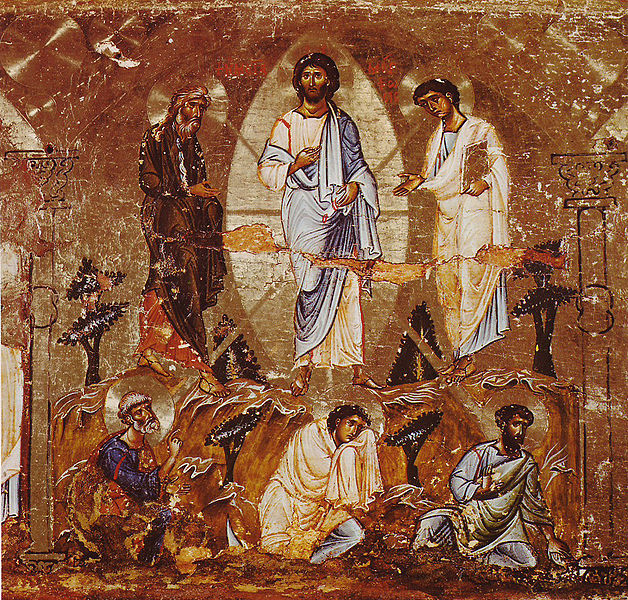
Now of course we may well hear those words of Paul, about the heavenly call, and then in the context of the gospel reading this morning, assume that this orientation involves us in some ethereal contemplation of Jesus upon the mount of Transfiguration – we might with Peter say ‘this is wonderful! – This is what it is all about! Lets stay here. Notice that he makes this request, Moses and Elijah are just leaving Jesus – once more Peter opens his mouth without knowing what he is saying. Just as he says to Jesus, This must never happen to you – so also he gets in the way. They are all going – Jesus is on his way – Peter wants to stop. Jesus tells Peter what is to happen, and Peter gets in his way – ‘Get thee behind me Satan, for you do not have the things of God in mind but the things of man’, Get out of my way!! you are facing the wrong way – So also the Cloud and the voice are given  to Redirect – to Re Orient Peter. While [Peter] was saying this . . .’ a cloud came and overshadowed them; and they were terrified as they entered the cloud.

As you know, I am just recently back from retreat – a whole week alone in the presence of God. Over and over folk say – I hope it was a lovely time, I hope it was a refreshing time, oh you are so fortunate – this sounds like bliss . . . judgement begins with the people of God – it is a terrible thing to fall into the hands of the living God. Whilst I do look forward to retreat, I know that in the end I am walking in with my own sentimentalised understanding of what a week in the presence of God is like. My own domesticated version of God, an idol, and not at all like Jesus.

They were terrified as they entered the cloud, and a voice came from the cloud, that said “This is my Son, my Chosen; Listen to him” Orienting our lives on Jesus, requires listening to him. We go into whatever our desert place is – that extra hour in the day we have carved out to prayer, to Listen to him. Our chief problem in the church always has been and always will be our deafness to what Jesus says. And so at every Eucharist we are exhorted “Hear the gospel of our Lord Jesus Christ . . .” and we respond “Praise and glory to God” and having heard “this is the gospel of Christ” “Praise to Christ the Word!”
Again, as I said last Wednesday, when we again heard the story of Jesus in the Wilderness being Tempted by the Devil, it’s worth asking ourselves “What was the Good News we heard in THAT!!!??” Put another way, are we hearing the Good News, Are we hearing Christ, do we begin to understand what it is he is saying? Peter what he must think of as “Oh the most wonderful of experiences” But he hasn’t heard . . . What has Jesus been talking about? Well he’s been talking with Moses and Elijah – ‘speaking [with them] of his departure which he was to accomplish at Jerusalem’

Luke seems to suggest that the disciples are not privy to Jesus conversation with Moses and Elijah – it was not for their ears. We might perhaps think this strange? Jesus is talking to Moses and Elijah and the disciples are half asleep. Listen to him?? Yes Listen to him – for Jesus had already spoken of these things with his disciples . . . our gospel begins with the words – about eight days after saying these things . . . what things? Jesus has just confirmed Peter’s suspisicion that he is the Messiah – Wonderful!! Good News!! and then he says “The Son of Man must undergo great suffering, and be rejected by the elders, chief priests, and scribes, and be killed, and on the third day be raised.” 23Then he said to them all, “If any want to become my followers, let them deny themselves and take up their cross daily and follow me. 24For those who want to save their life will lose it, and those who lose their life for my sake will save it.

As Jesus later spoke with Moses and Elijah about his departure . . . so he has already spoken to the disciples . . . in terms that they have not heard, they have not Listened – this is my Son, the Chosen, Listen to Him – why should the voice say this except that they have not listened. There they are up the mountain – the dream like has become their reality – half asleep – AH! THis is it! But no – this is the dream – the reality was those words thay had not listened to “The Son of Man must undergo great suffering, and be rejected by the elders, chief priests, and scribes, and be killed, and on the third day be raised.”

Jesus has spoken of his departure – literally his Exodus – ‘Which He was about to accomplish at Jerusalem . . .’ which He was about to accomplish. Which HE was about to accomplish . . . the hard word of the gospel is this – it is not about You – it is not about me – do you want ot save your life? you will lose it. But if you lose your life – then you will save it. The gospel is not about the fulfilment of our lives – it is about the end of them – so that His life might become everything. this Christian Life is All about Christ – it is not our life, it is His Life.

When God enters the covenant with Abraham this is made so very clear – I don’t know when you last made and agreement with someone who was asleep – but God puts Abraham out of the picture. A deep sleep fell over Abraham and God’s agreement is made with himself – it is between God – between the Father and the Son. He will accomplish it – All the glory will be His – my glory I share with no other. He does not entrust himself to a man, for he knew what was in a man . . . Peter has not listened – he has not got it. and as soon as they come down from the mountain, all hell breaks loose. Before the transfiguration, Jesus tells the disciples what the score is, but they do not listen – they think it is all about them. When Jesus comes down from the mountain, what does he find but whilst he has been away the other disciples have been trying to take things into their own hands. A boy is demon possessed, his father is at his wits end – the disciples have seen Jesus in action, and taken matters into their own hands – to absolutely no avail . . . its not about them, or what they do – they didn’t hear the words about having to lose their life – we can do this – and all hell has broken loose – the boy is dashed to the ground in convulsions – the fatherof the boy is at his wits end “I begged your disciples to cast it out, but they could not” and Jesus responds “you faithless and perverse generation, how much longer must I be with you and bear with you”. Like the children of Israel long ago when Moses went up the mountain they cannot wait for God – their eyes cast around for ways in which They can take things into their own hands and Aaron casts them a golden calf – something to entice the eye, something to make them feel important, at the centre of things, with a respectable God like all the other nations – one that doesn’t speak.

So the disciples take matters into their own hands – they think it is all about them. Their lives need reorienting – redirecting, to Christ – to look to him – to listen to him, like him to live only in response to the word of the father. But this is such a hard hard lesson – it seems we are hard wired to make ourselves the centre of the story.

Yes – there is a time when we are called to act in the name of Jesus. But it comes hedged around with a terrible warning – a little later on Jesus sends out 70 disciples, and he tells them what to do – and so they go – and we know the story – they come back rejoicing – full of themselves’Lord in your name, even the demons submit to us” and Jesus calls them round and says, look, let me tell you something, Long time past I watched Satan fall like lightening from heaven’ His Sin – why did he fall? He wanted to be the centre of things – do Not rejoice in what you have done in my name “I am an unworthy servant – I have only done that which was asked of me” No Rejoice that your names are written in heaven. This is not about what you do, it is about what I have done

We NEED the disciplines of lent – we need to be radically decentered, dethroned – this Good News, this Gospel is NOT about us. Thank God!!

Sermon for Sunday February 17th – Evensong – Jonah – Life of God

Jonah under the gourd vine

Sermon for Sunday 17th February 2013
EVENSONG
Jonah 3
Luke 18:9-14

‘God, I thank you that I am not like other people: thieves, rogues, adulterers, or even like this tax collector. I fast twice a week; I give a tenth of all my income.’

And we all think, ‘God I thank you that I am not like this tax collector with his puffed up self righteousness . . .’ Jesus told this parable to some who trusted in themselves that they were righteous and regarded others with contempt.

Jesus’ parables have a habit of getting Us – we think that this one is about those dreadful people – those self righteous folk, and then it sneaks round the corner and comes up from behind, to undo us

Earlier this week I was in the company of a Saint – someone who offered me a cup of tea in the midst of a demanding day – not just a cup of water, but a cup of tea and some very unLenten cake – certainly, she will not lose her reward – but what marked this lady out was her pity, her mercy. As we talked of someone of a fair degree of notoriety, a real rogue – all that was in her voice and her demeanour was mercy and pity – no judgement – just mercy and pity.

Blessed, says Jesus, Blessed are the merciful, for THEY will obtain mercy – Father, forgive us, as we forgive others – the merciful receive mercy, the forgiving receive forgiveness. Those who reflect the image of God, receive the image of God in themselves.

At the heart of the Christian faith is God’s Urgent desire that his children once more reflect his image – become like him – merciful, compassionate, slow to anger and abounding in love. This is why Christ comes to die for us, that we might be restored to the fullness of the divine image, that that which was seemingly irretrievably broken and damaged, that that humanly speaking was beyond hope, might reveal the life of God in the world. He comes to Save us, and that Salvation is the full restoration of who we are.

To be frank, one of the reasons at root we make such a poor fist of the Christian life is actually a subtle rejection of this life. We’re quite happy by and large with continuing to be in charge of our own life – to judge those we think worthy of judgement, to withold forgiveness and restoration to those whom, well, ‘You have No idea of how they have hurt me!!’ – we remain hidden from the life of God – His way of doing things when we are confronted with it seems Outrageous – at one level or another, we Are Jonah

The book of Jonah is one of the great books of the bible for so many reasons – it is the absolute epitome of an hilarious Hebrew story, full of humour, full of wonderful detail – and it encapsulates the Gospel, the Good News. This story is all about the Outrageous Love of God . . . and the smallness of the unredeemed prophet who sits and sulks at God’s mercy.

It has a powerful parallel in the parable of the Prodigal Son – Jonah is the elder son, the one who does not live with the mercy and forgiveness of the father – who Will not enter into the joy of his master. God’s forgiveness is too much for him to swallow. As I’ve said before, Once in my time of ministry, I discovered someone who really Understood, the story of the prodigal. Telling the familiar story in a small group, someone exclaimed – ‘That’s not fair!’ – interestingly, it was an eldest child – the parable had snuck round the back and her defences were down and she was exposed to the recklessly abundant mercy of God – and it was too much for her – she couldn’t swallow it. She, like the elder Son and like Jonah couldn’t allow herself to live in a world where the love of God truly reigned, where all of a sudden she wasn’t the judge of those around her, where those she thought were worthy of getting their just deserts jolly well got them . . . I’m glad to say that my friend has made some progress in that area now, but it is a long journey, into the reality of the Life of God, his outrageous Love, his Utter mercy, and his Complete forgiveness, it is hard to swallow

Which is an appalling cue for the story of Jonah and the fish . . . Jonah as we know has heard God – the word of the Lord came to Jonah son of Amittai, saying, ‘Go at once to Nineveh, that great city, and cry out against it; for their wickedness has come up before me.’ Nineveh – in the story of GOd’s people a byword for wickedness and evil – out of the line of Cain was proud Nineveh built. It is like being sent to some dreadful city in Mexico or Columbia, controlled by the drugs gangs – full of Violence and hatred and death – a place beyond human redemption – And he does what any reasonable person would do – he flees – he runs off in entirely the opposite direction – But Jonah set out to flee to Tarshish from the presence of the Lord – Immediately we are confronted with the humour of the story – ‘where can I go from your Spirit?’ says the Psalmist
Where can I flee from your presence?
8 If I go up to the heavens, you are there;
if I make my bed in the depths, you are there.
9 If I rise on the wings of the dawn,
if I settle on the far side of the sea,
10 even there your hand will guide me,
your right hand will hold me fast.
11 If I say, “Surely the darkness will hide me
and the light become night around me,”
12 even the darkness will not be dark to you;
the night will shine like the day,
for darkness is as light to you.

Our hiding from God is perhaps the most ridiculous thing about us – but Jonah does what we all do – flee from the command of God – to Love, to show mercy, to declare forgiveness – but God as business to do with Nineveh and also Jonah – and Jonah is not let off the hook – another bad cue for the fish.

The fish is the place of repentance – deep in the smelly innards – Jonah is confronted with the reality of a life away from God. It’s one of those moments when the reality of our lives breaks in – like the prodigal we discover ourselves sat amongst the pigs, hungry for swill. The idolatries of our lives are revealed for what they are – the truth of a life separated from God hits us – we discover we are in hell and out of the belly of Sheol we cry to the Lord. So Jonah cries out to God from the belly of the fish As my life was ebbing away,
I remembered the Lord;
and my prayer came to you,
into your holy temple.
Those who worship vain idols
forsake their true loyalty.
But I with the voice of thanksgiving
will sacrifice to you;
what I have vowed I will pay.
Deliverance belongs to the Lord!’ And the fish spews him out – and so we pick up with the story this evening, The word of the Lord came to Jonah a second time . . . and of course we immediately see the grace and mercy of God, in not abandoning Jonah. Of course we maybe miss this – we think of being abandoned by GOd in the midst of our circumstances, which we never are – but here is something deeper – that God is working with Jonah through calling him to serve him.

When Jesus calls the disciples, they think that they are the centre of things – James and John want to call fire from heaven, Peter is continually setting himself up as the head of operations, even to the point of telling Jesus what he can and cannot do. They think that as his servants, they have made it – but actually in calling them to serve, to be involved in this Redemption, he is also working on them – God works his purposes out through his people, Through Jonah and Peter and James and John – but as he does this he also works out his purposes In his people. We need saving, every bit as much as those amongst whom we live and work and serve. God is at work through his church, he is also at work on and in his church, calling us also to the life we are chosen to proclaim

So Jonah, chosen to proclaim the judgement of God, and his mercy in the call to repentance – is also the object of God’s Saving love – this has as much to do with Jonah as it does with Nineveh. And Nineveh is converted – Extravagantly so! Jonah cried out, ‘Forty days more, and Nineveh shall be overthrown!’ And the people of Nineveh believed God; they proclaimed a fast, and everyone, great and small, put on sackcloth.
When the news reached the king of Nineveh, he rose from his throne, removed his robe, covered himself with sackcloth, and sat in ashes. Then he had a proclamation made in Nineveh: ‘By the decree of the king and his nobles: No human being or animal, no herd or flock, shall taste anything. They shall not feed, nor shall they drink water. Human beings and animals shall be covered with sackcloth, and they shall cry mightily to God. All shall turn from their evil ways and from the violence that is in their hands. Who knows? God may relent and change his mind; he may turn from his fierce anger, so that we do not perish.’  When God saw what they did, how they turned from their evil ways, God changed his mind about the calamity that he had said he would bring upon them; and he did not do it.
We are so distracted by the fish- is it a real fish – is it a whale – is it just a metaphor – Jonah and the whale is the story we tell in Sunday School – not God and the Repentance of Nineveh – this place of wickedness ad hate and death – and they repent.
AND God forgives – Jonah does not stick in the throat of the fish – but God’s forgiveness sticks in the throat of Jonah. And his heart is revealed. He has not come to Nineveh because he has pity on the people of Nineveh – he does not come to Nineveh because he has mercy, but as the utterly unwilling servant – he would call down fire – God has poured down pity and mercy and forgiveness. But this was very displeasing to Jonah, and he became angry. He prayed to the Lord and said, ‘O Lord! Is not this what I said while I was still in my own country? That is why I fled to Tarshish at the beginning; for I knew that you are a gracious God and merciful, slow to anger, and abounding in steadfast love, and ready to relent from punishing. And now, O Lord, please take my life from me, for it is better for me to die than to live.’
Jonah cannot accept the Love and mercy of God. He has worshipped God with his lips from the belly of the fish – but his heart is far from him. Like the elder son in the parable, he cannot enter into the Joy of the Lord – he cannot rejoice that Nineveh has repented – he is as yet Far from the Kingdom of God – far far more troubled over a withered plant, that had given him shade, than anything or anyone else. And God opens the door to him ‘should I not be concerned about Nineveh, that great city, in which there are more than a hundred and twenty thousand people who do not know their right hand from their left, and also many animals?’
People are caught up in wickedness and sin – and we don’t know why – but we try and separate out the worthy from the unworthy – God’s blanket forgiveness of Nineveh is voiced in terms of pity – ‘they do not know their right hand from their left’ – like the saint I was with the other day, all there was was mercy and pity – as there is from the heart of God revealed to us in Christ. ‘Father forgive them, for they do not know what they are doing – and we say – YEs they do, It’s obvious isn’t it???’ And so we judge others and in judging others judge ourselves, being unknown to ourselves guilty of the very same things of which we accuse others
We see the Pharisee in all his pompous self righteousness ‘I thank you that I am not like other men – and we think I thank you I am not like that Pharisee . . .’
Jonah’s outward actions were right, but his heart was all wrong – Jonah’s story is a great story for Lent – a time, not for outward displays or actions, but for opening our hearts to the inner work of God – soaking in the utterly unreasonable love and mercy of God. Allow this story to confront us – to question us. What is Our Nineveh? What work of mercy are We fleeing from? What is the plant we are more concerned for than 120,000 souls and many animals? What is the scope of the outrageous love and mercy of God, and where are we holding out on it?
We see the mercy of God, the outrageous forgiveness and Love, we see that we cannot forgive everyone for everything, that we do not love our neighbour as ourselves – in God’s mercy he shows us that we are yet far from the Kingdom of God, and then if we like the prodigal come to our senses – we say with the Publican, Lord have mercy on ME, a sinner . . . and finding mercy from God, we grow in that mercy and pity towards others – those who do not know their right hand from their left, finding the words of Jesus on our lips and in our heart, Father, forgive them, for they do not know what they do.
Amen

Sermon for Lent 1 – Year C – Sunday February 17th 2013

Sermon for Lent 1 – 2013 – Year C
Deuteronomy 26:1-11
Psalm 91
Romans 10:8b-13
Luke 4:1-13

“For we do not have a high priest who is unable to sympathize with our weaknesses, but we have one who in every respect has been tested as we are, yet without sin. Let us therefore approach the throne of grace with boldness, so that we may receive mercy and find grace to help in time of need.”

‘that we may receive mercy and find grace in time of need . . .’

Just this week I heard the story of a man who was in some dire circumstances in his life and went in search of help to a monastery. As is the custom, he was given a director for his time of retreat and he poured out all his problems to the monk, but the monk didn’t respond to them, instead he told him to spend the day meditating on a portion of scripture. Well the man went to his room and for the whole day meditated on the scripture – but nothing came, nothing happened.
The next morning her returned to the monk and told him and started to tell him all his problems again, after all THAT was what he wanted sorting out, but again the monk didn’t respond to anything the man had sent, and gave him a passage from scripture to meditate on – the same one. So again, the man went away and spent another day with this passage – and it was like a brick wall to him – it wasn’t giving him answers – it wasn’t solving his problem. Well the third morning he goes back to the director and the same thing happens, he tries to pour it all out to this monk who doesn’t seem to be interested in him and his problems and again the monk gives him the same passage of scripture, and about half way through the day, God broke through.

What this story illustrates is how distracted we are, how consumed with ourselves -the man was so tied up listening to his story and rehearsing it over and over again, it took God two and a half days to get through to him. And in many ways, distraction is the root of our problems. This past week I have been on retreat. Seven days ‘Away from it all!!’ Sounds wonderful doesn’t it. Seven days when you can leave everything behind and just concentrate on God . . . Well you only need to go away from everything else – all those things that you think are getting in the way of your relationship with God, to understand that they follow you – you carry them around with you. That the problem you have Isn’t with all those people and situations – it is the problem of your heart, that wants to pay attention to anything, rather than to God.

Put yourself in the situation of that man at the monastery – I wonder – could we meditate on a short passage of scripture for an hour, even . . . he has to sit with it for two and a half days, so distracted is he. The problem isn’t that the scriptures are unclear, it is that we are deaf ad blind and we need healing, we need the distractions stripped away. We don’t know how distracted we are from God, until God is all we have

Way back, in the Garden, the snake employs just this technique. The MAn and the Woman had their attention on God, and like a conjourer, the snake distracts them, and all of a sudden God has disappeared – Here ‘look at this tree, look how good the fruit is to eat, don’t pay attention to God . . . and they look at the tree’. And distracted, they forget whose children they are, they forget what the source of their life is . . . And here is the tragedy – we forget who we are – this is why we sin. We forget whose children we are.

And so we come to the season of Lent – it is a time when we follow Jesus into the wilderness – it is a time of preparing ourselves for Easter, and there is only one way we can do that, by dying to our selves – by refusing to make ourselves and our endless stories about our lives the centre of everything. And Lent to be properly observed needs to have Wilderness space in it – Empty space – Space where you are just left with yourself, without distractions – place where we discover that in general we have ordered the universe around ourselves not God

Jesus full of the Spirit, returned from the Jordan, returned from his baptism where God had declared him to be his Son and was led by the Spirit in the wilderness, where he was tempted by the devil for forty days. Tempted, tested – had that word from heaven, had that sense of who he was, had it sunk into the very fibre of his being? – or was it just another thought – ready to be blown away. Everyone of the temptations a distraction from the Life of God his Father.  – Everyone of the temptations to deny God – to deny who he was, cleverly dressed up as an opportunity to prove who he was, to make himself the centre of the story.

he was famished, and the devil said to him, ‘If you are the Son of God . . . an invitation not to faith but to doubt . . . command this stone to become a loaf of bread’ As Alexander Schmemann notes – the temptation involves food, just like the apple in the garden of Eden – food is a great distraction. We even eat to avoid things. Unlike Adam and Eve of course, Jesus is famished – they are so much more like us – they have Everything they could possibly need. Jesus is alone, with no food, and here he reveals how it is God, not the food that is the true source of his life. God my Father is the provider . . . I rest in his provision.

I am reminded here of the challenging words of Jesus in John’s gospel, my food is to do the will of the one who sent me – my life is found in humble obedience to my father, he will provide all I need. I wonder if we know what it is to feed on doing the will of God?

Again Satan comes to him – Shows him . . . how easily we are distracted by what we see . . . shows him all the kingdoms of the world . . .  ‘Just worship me and you can do whatever you want!’ ‘If I ruled the world, every day would be the first day of spring . . . If I was the king of the Jungle, I tell you we’d have this place sorted out in no time . . . how easily we think to ourselves that God doesn’t know what he is doing – how readily we seek to assume command . . . all this will be yours – turn your attention from God at the centre and then you will be able to put everything right – the Central delusion of modern life in a secular age – we can fix it

all you have to do . . . note how each of the temptations is carefully crafted – just turn the stones into bread, just worship me, just throw yourself down – the consequences hidden – just eat the fruit of the tree – you have everything to gain – the losses carefully hidden. The gain seems so great, the disobedience so small – after all you are Very hungry, after all surely to rule all things is what its about, after all it would be worth it, just to check that God’s word was sure, no? Just a little test??

This is the very nature of sin, small subtle distractions from God – generally none of us face temptations to commit adultery or murder or steal of go to court and lie about our neighbours – rather we’re just distracted – and gradually we are led deeper and deeper into the woods and then wonder – where is God. We’re distracted by what’s going on around us – all those people who are making our lives difficult, we’re distracted by things – and carefully we listen to those little rationalisations – after all, surely it can’t do any harm. NOt realising that we’re profoundly lost, we try and follow the most convenient track – This must be the way . . .

Of course we could then go out paranoid into the world, trying desperately to avoid all these tiny sins – another distraction – distraction from God.

Lent is a time not to try desperately live good lives, looking at the myriad possibilities to sin and fighting to avoid them – but rather a time to clear away distractions – to turn to God in faith. Faith at its simplest is this – to attend to God, to live in attentiveness to God. Jesus is tested, but his attention is on God. This is why prayer is the essence of faith – to pray continually as St Paul says, is to live in faith, with our eyes upon God in Christ. And down thorugh the years the church has called us to three disciplines of attentiveness in Lent. Prayer, fasting and almsgiving
Prayer first – the essential discipline. Just try sit in the silence in the presence of God, try to attend to God for an hour, and all of a sudden you will understand why you need to pray. Oh it sounds like heaven! But within a minute, this distraction or that comes flooding in and you relaise ten minutes later that you’ve been thinking about the shopping, or those people who are giving you a hard time, you haven’t been paying any attention to God. So for Forty days we are called to a special discipline of prayer – in large part that we might realise how much we need to pray. That we are actually permanently mentally distracted

Then Fasting. Here we learn what really drives us – Food is the most basic of our physical needs. And if we do fast, then we rapidly become aware of how controlled we are by it – and we realise that its not just our minds – our bodies are screaming for attention to and we realise how often we live unthinkingly in response to our physical needs – that our lives really aren’t as controlled by the love of God as we had fondly imagined

Then Almsgiving – always a thorny one. John Wesley’s dictum . . . if you want to be free of the power of money, give it away! It is often said the last part of a man to be converted is his wallet – I have to say I don’t know if it also applies to a woman 🙂 I know few if any people who believe they are no controlled by their financial security – few who belive the words of Jesus, that it is a straight choice – we don’t control money, it controls us. The voice of the snake . . . doesn’t scripture say that you should provide for the needs of your family, you will need a pension and all those sort of things – you can’t really expect God to provide for your needs . . . or more subtly, well of course God has given you all this money precisely as a sign of his care for you . . . Seriously if truly it IS God who has given you your wealth and it wasn’t your anxious hoarding that has accumulated it – your anxiety laden attempt to secure yourself against the future – if God really has given you it – then  it is for one purpose – that you might be a blessing to others

Well that is a fairly negative look at the three disciplines – the painful angle if you like – but as the verse at the outset reminded us – we find mercy and grace in our time of need from Christ. Mercy, severe mercy at times in his exposing what is really controlling us – but also Grace. If we follow in his path – in prayer we grow into a deeper and deeper apprehension that we are his children – the more we want to attend to Him, to listen for His voice. Fasting teaches us dependence on God – note how that sounds negative!! All he has is dependence on God – but THIS is to be fully ALIVE!!!! And when we learn that God our father really DOES provide, then we are set free in generous love – we attend to God in prayer – through fasting we learn the Joy of dependence upon him ad so enter deeper into his life of GEnerosity – more and more we remember who we are, that we are his children and that attention to him and dependence upon him and imitation of him is the most natural thing.

But none of this comes from us – it is only possible because there is one who Lives – one who has conquered death and sin, one whose life means that actually we don’t have to be distracted. Jesus goes into the desert to be tested – has his identity as the Son of his heavenly father taken root in his heart, and he emerges triumphant for he lives out of complete dependence upon God. God will provide, I will worship God, I have no need to test him – who could doubt the father’s love?

And so he is obedient even to death on a cross – for he entrusts himself to the one who even raises the dead – and so becomes the source of life and light to all who trust in him – who turn from their distractions, who repent – who attend to him and walk in faith. MAy God grant to us all a Holy Lent, and may we all grow in grace in the footsteps of Christ.

Sermon for Candlemas 2013 – WITH RECORDING

Sermon for CANDLEMAS 2013
Malachi 3:1-4
Hebrews 2:14-18
Luke 2:22-40

RECORDING OF SERMON – CANDLEMAS

The Lord is not slow in keeping his promise, as some understand slowness.
He is patient with you, not wanting anyone to perish, but everyone to come to repentance.
2 Peter 3:9

A little earlier this week I was reading a blog by my former bishop back in England where he strongly recommended a book on a theme about which I was very interested. Back in the times of monasteries, St Benedict had said that to enter a monastery you had to make promises, take vows – and there were four. You had to give up your possessions – a vow of poverty – you had to give up any idea of getting married – a vow of chastity – and you had to promise to do as you were told – a vow of obedience. These were the three classic monastic vows – but St Benedict added a fourth – you had to promise to stay – a vow of stability. You had to stay put – in the place you had been called to – not go gadding off and moving around – not flitting from one monastery to another. You know, if you didn’t like one – well you go and try and find another more suited to you. And it is that vow of stability in which I was particularly interested.

So I did what we all do when we want a book – I went to Amazon – only to discover that it wasn’t going to be released until February 21st!! Nearly a whole month!!! But then I found it was available on Kindle!! YES!! [Kindle – ‘start reading this book in less than a minute’] And I clicked on the link “ Due to copyright restrictions this Kindle book is not available to buy in New Zealand”!!!

But I want it NOW!!! I wonder how many of us have had that experience of driving a car and you’re stopped at lights, and for a moment you attention drifts away and you don’t notice the lights change – SUDDENLY the blare of a horn wakes you – my the light has been green for a whole two seconds!!!

We are not good at waiting [wishing our lives away – ‘can’t wait to go to School!’] – Waiting requires us to stay put, to stay in one place.’Oh I haven’t got time for that, I have to be here and here and here’ – but nowadays we can be quite still and yet not staying put. I wonder how many of us rather than sit down quietly for the evening with a good book, sit in the same place all evening with a laptop or a tablet and flick from place to place to place on the internet – Tumblr one minute, then Facebook, then back to Tumblr – checking your emails, or a friends txts. [Phone] Our bodies in one place – but our minds moving from place to place to place [And by the way – don’t say you’re multistasking – all the psychological evidence is that when we behave like this we are not paying attention to anything – it takes several minutes for our brains to move from one task to another – in other words as we move from one to the other to the other – we haven’t actually paid any attention to any of them!]

And because we are not patient, we don’t stick with something, we don’t attend to it – we can’t wait for something more. If something doesn’t deliver immediately we give up on it.

We’re not good at waiting and so we waste our lives and fritter them away. Jesus tells a story with which some of us are familiar – He tells a story about a young man who cannot wait – he cannot wait for his Father to die – because when his father is dead he will get all that belongs to his father – so he tells him. The father has two sons, and so he divides all he has in two and gives have to his impatient son – who runs off . . . and spends it all . . . and is left with nothing . . . because he couldn’t wait – he had His Life to live and he was jolly well going to get on and live it – and then its all spent, all gone . . . and Jesus say’s ‘the young man came to his senses’ What am I doing? BAck home even those people who worked for my dad had all their needs taken care of – they had plenty to eat and wear, and here I am with nothing . . . all because he couldn’t wait

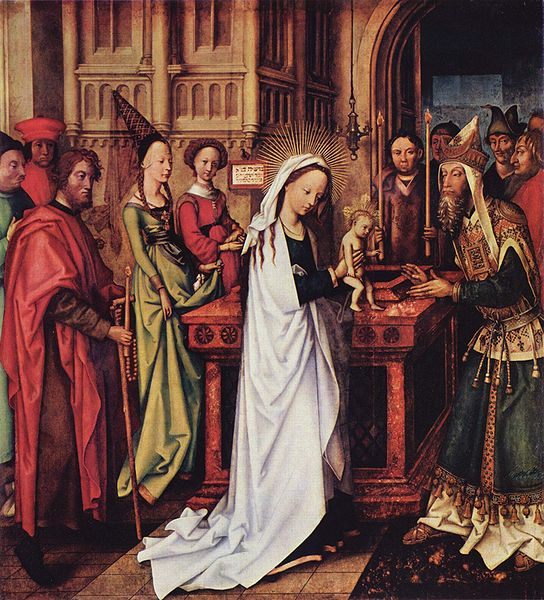
Today we celebrate the Feast of the Presentation of Christ in the Temple. The End of the season of Epiphany – it’s culmination, the End of Epiphany and the End of Waiting. God’s people have been waiting – in the words of the prophet Malachi, ‘The Lord whom you seek, will suddenly come to his temple’. The one you have been waiting for . . . he will suddenly come to his Temple.

Malachi wrote those words 400 years before!! 400 years – waiting for 400 years

And when MAry and Joseph bring Jesus to the Temple – there are two people waiting for them – Simeon and Anna – an old man and an old woman – who have been waiting their whole lives for this moment . . . waiting for the father’s gift

Can we begin to imagine what it might be that was worth waiting your whole life for? What would we give up our lives to wait for??

Simeon holds Jesus in his arms and utters an extraordinary prayer – Lord – you have allowed your servant to depart in peace, according to your promise. You promised and that was enough. I waited and although I waited my whole life, you have been good to your word – I have seen what I was waiting for. Anna and Simeon were waiting for the same thing – Simeon we are told was waiting for the ‘Redemption of Israel’ Anna sees the child and she goes out to tell everyone who is waiting for the redemption of israel.

What is this?? What is Redemption?? What does it mean to redeem something? Why is this so important??

Well it’s all tied up with that visit of MAry and Joseph to the Temple – when you had a child you came to the Temple to offer a sacrifice, a sacrifice of purification according to the ritual law. But in the case of a first born son – there was a second sacrifice, or payment to be made. According to the law, all the first born sons belonged especially to God and so you went to the Temple effectually to buy them back, to Redeem them. When someone takes something from you you can pay them and then they have to return it. So when your first born son came along, you paid 5 shekels to the Temple, to buy them back, to redeem them

But listen When the time came for their purification according to the law of Moses, they brought him up to Jerusalem to present him to the Lord 23(as it is written in the law of the Lord, “Every firstborn male shall be designated as holy to the Lord”), 24and they offered a sacrifice according to what is stated in the law of the Lord, “a pair of turtledoves or two young pigeons.” No 5 shekels. They made the sacrifice of the birds as required for the purification following the birth of a child – but no redemption price, for their son. They presented him to the Lord – they gave him to God – they did not pay the price for him, for He is the one who pays the price for us

Simeon and Anna were waiting for the one who would pay the price to bring us back to the one who rightfully we belong to God.

The young man in Jesus’ story had forgotten whom he belonged to – he had forgotten whom he was and he was utterly lost – he had lost everything, squandered everything, but he thought he’d cut a deal . . . so he walked home with a careful little speech – ‘You know I’m really sorry – I’ve done an utterly terrible thing – I deserve nothing’ Perhaps there are some amongst us who feel that way – I know from time to time I do – but here is the amazing thing – the son’s father had been waiting for him – watching out for him – longing to see him back – waiting for him to stop frittering his life away – waiting for him to come to his senses – to stop – to come home

When we think of impatient Sts – I am sure Peter comes to mind – but St Peter too, comes to his senses – he writes much later in life The Lord is not slow in keeping his promise, as some understand slowness. He is patient with you, not wanting anyone to perish, but everyone to come to repentance.

God’s people had waited 400 years . . . finally their redemption had come – the price had been paid – now as God in Jesus came to his home – the price was paid – anyone now could come home – the waiting is over. Our deepest need, the life of GOd which transforms everything is now available – we don’t have to wait – we can run home. He is waiting for us

As he waits for us today – as in the Eucharist we come to him – he has paid the price in his body and blood – he is pouring out his life for us. The waiting is over, so like Simeaon and Anna – let us come quickly – let us rejoice – let us run to him. The one who has been waiting for us ever since we left home

Sermon for Epiphany 3 – Sunday 27th January 2013 – ‘We are the Body of Christ, in whom are fulfilled the Law and the Prophets’

Sermon for EPIPHANY 3

EPIPHANY 3 [click here to listen to the Sermon]

1 Cor 12:12-31
Luke 4:14-21

I want to begin this morning with a simple exercise – not of the physical type, but it has to do with the body.

I’m going to say a few things to you as a congregation and I I want you to respond appropriately – I’ll say a phrase and I’d like you to respond back to me

Now everyone is a little twitchy – this sounds difficult! – Don’t worry they are very familiar phases

Here goes

The peace of Christ be always with you
And also with you

There – that wasn’t too painful 🙂

Ok – a couple more

E to Whanau, we are the body of Christ
By one spirit we were baptised into one body

Keep the Unity of the Spirit in the bond of peace
Amen. We are bound by the love of Christ

Back in England, I used to say from time to time that I preached the same sermon every week and no-one listened – there I would say pretty much all we have just said ‘We are the body of Christ, in one spirit we were all baptised into one body, let us therefore pursue all that makes for peace and builds p our common life’ – It being the less democratic Church of England, I got to say it all 🙂 But here we say pretty much the same thing although to each other, which I like – but do we hear what we are saying?

As some of you have noticed, I preface the Lord’s prayer with the words ‘we are very bold to say’ – because it is outrageously Daring to address God as Father – to say we are dependent on him for daily bread, and to give him leave to use our forgiveness of others as the measure for his forgiveness of us – as Jesus says, the measure you give will be the measure you get . . . Daring words – Daring prayer – calling us to a largeness of Life.

Yet hardly less bold and daring, and certainly no less demanding are the words we’ve just rehearsed . . . By virtue of one baptism of the spirit . . . We are the body of Christ . . .

We Are the body of Christ. St Paul in his letter to the Corinthians as we know says this but he is not as it were struggling to find some metaphor for the church . . . ‘ermm let me think, the church, well I guess it is like Christ’s body!’ . . . as if this were just one of many possibilities – no Paul starts of saying this . . ‘For just as the body is one and has many members, and all the members of the body, though many, are one body, so it is with’ . . the church? No. ‘So it is with Christ’ He goes on to describe the church ‘For in the one spirit we were all baptised into one body – but he is talking of Christ. His primary reference is not the church, ‘the church is like . . .’, no it is Christ.
Paul in describing the church understands the Church as Christ’s body – the identification of Christ with his Church as being total – and this is why for so many many years the idea of Schism in the church was unthinkable. When Martin Luther stuck his theses to the door of Wittemburg Church, he wasn’t thinking ‘Hah – that will show you, I’m off to form my own church!’ The idea would have been ludicrous to him. There is One Body – there can only be one church!’ But of course Luther lived also in an age where the spirit of the age, the philosophy of the world was driving heavily towards Individualism and fragmentation – the end of which we see in our own age.

No – for much of the history of the church and pretty definitively for the first thousand years the idea of there being more than one church was anathema – you could not divide the Church for Christ is One.

It strikes me that perhaps the greatest challenge the church faces in our age is this complete lack of sense of who we are – that we are the body of Christ

In the Church of England service, as I said the words before the Peace were slightly different and I think helpfully so – for the Priest would say – let us therefore pursue all that makes for peace – pursue peace – work for peace, amongst ourselves . . . and builds up our common life. Our common life . . . it is an interesting phrase – one worthy of meditation.

Back in the Middle Ages, when Christendom seemed to sit astride Western Europe – the great theologian Thomas Aquinas applied his mind to what he called, ‘The Common Good’ – that which is good for all. And our own Andrew Bradstock is busy doing some work on this at the moment I know.

Well in one way or another we are all Thomists, or at least his thinking about society took deep root. But his conception was of a whole people Under God – the Church was everywhere – it held all but supreme power – to speak of the common good was in a sense to speak of the good of the church – what else was there? There were a few heretics – but generally you hounded them away or burnt them 🙂

But of course those days are long gone although their perception still holds sway – so now when we speak of working for peace – we do Not primarily think of that amongst ourselves, but rather of working for peace in society, ironically from a deeply fractured and fragmented church. Of course we can think of this in terms of the witness of a church of many denominations – but it is more true of the local church which is Always where people either do, or do not encounter Christ.

Our common Life – it is an interesting question. Do we have a common life? When people encounter us as a body do they find that our Common life, our Life Together (to use Dietrich Bonhoeffer’s phrase) speaks to them of Christ. In what sense apart from this hour or so on a Sunday do We have a common life, or is the Individualism which so thoroughly infects our society also infect us? St Paul says ‘the eye cannot say to the hand, I have no need of you’ Is there a member (good word) of this church whom we say in effect we could do without? Do we recognise deep down that we Do Need each other, that we cannot be the church without each other – and if we answer Yes to that, then how is that expressed?

Through Lent I will be running a series of studies into the life of the church and I do hope that we can express some of that common life in coming together around the Word of God for a time each week – however we are still in Epiphany, and as I have said, Epiphany is for meditating on the manifestation of Christ. Paul let us not forget says, as the members are one body, So it is With Christ – he would have us looking to Christ. And so he is manifested – in the adoration of the magi – in his baptism – his Glory revealed at the Wedding at Cana when the bridegroom comes for his bride, his people – and this week he is manifested as the one who fulfills the Law and the prophets.

Imagine the dramatic scene – he comes to those who were his own – to Nazareth where he was brought up He unrolled the scroll and found the place where it was written: 18“The Spirit of the Lord is upon me, because he has anointed me to bring good news to the poor. He has sent me to proclaim release to the captives and recovery of sight to the blind, to let the oppressed go free, 19to proclaim the year of the Lord’s favor.” 20And he rolled up the scroll, gave it back to the attendant, and sat down. The eyes of all in the synagogue were fixed on him. 21Then he began to say to them, “Today this scripture has been fulfilled in your hearing.”

He Is the Messianic servant long foretold – but his words are staggering and like the words of the Lord’s prayer, like the words of the peace, I think we miss their import. “Today this scripture has been fulfilled in your hearing” Has been fulfilled. Not I have come to announce a great new project that I want you all to get in on – there’s work to be done folk – no – Today, this scripture has been fulfilled. Christ is the fulfillment of the words of the prophet – In Christ is where they are fulfilled. And the world makes its judgement. For the people of NAzareth it was quite clear they wanted none of it – they went to throw him off the cliff. Why do you throw a man off a cliff for announcing a project of good works? You don’t. He had had the temerity to say that in HIm ‘It is finished’ – ‘It is fulfilled’ In him!

But we look around at the world and say – we can’t see it – but we are looking in the wrong place – it is fulfilled in Christ – in his very being, in himself, in his body . . . where should we see good news for the poor? In his body, in the church – ‘there were no poor amongst them’ – Where should we see people set free from all that binds them? In Christ, In his body, in the church. Where should the blind see? In Christ this is fulfilled – in his body – in the church – ‘I once was lost but now am found, was blind but now I see’

And we look around and say ‘are you serious?’ How can this be? And the world may well ask the same questions. How can this be? ‘Then Jesus, filled with the power of the Spirit, returned to Galilee . . .’ When the day of Pentecost had come, they were all together in one place. 2And suddenly from heaven there came a sound like the rush of a violent wind, and it filled the entire house where they were sitting. 3Divided tongues, as of fire, appeared among them, and a tongue rested on each of them. 4All of them were filled with the Holy Spirit. how can it be? It can be, if we are once more filled with power from on high – it is the Life of Christ that makes us the body of Christ. It is His Life that is Our Common Life

Glory be to God for all things

Let us pray
Come Holy Spirit, fill the hearts of your faithful and kindle in us the fire of your love.
Send forth your Spirit, and they shall be created, And You shall renew the face of the earth.

Amen

Sermon for Epiphany 2 – Baptism of Christ

Epiphany 2 BAPTISM OF CHRIST

LINK TO SERMON RECORDING BAPTISM OF CHRIST 2013

Acts 8:14-17
Luke 3:15-17, 21-22

And all of us, with unveiled faces, seeing the glory of the Lord as though reflected in a mirror,  are being transformed into the same image from one degree of glory to another;
for this comes from the Lord, the Spirit.

Last week we celebrated the Epiphany of Christ, and we are now in the season of the Epiphany which extends until the first Sunday in February when we shall celebrate Candlemas – the feast of the Presentation, albeit a day late, for that feast, falls on Saturday February 2nd.

This habit we have in the church of shifting festivals to the nearest Sunday is a symptom of something which I fear in the end will do us no good. Of making faith fit our lives, rather than making our lives fit our faith. Christmas is unusual, to an extent in that we still come to church on that day irrespective of whether or not it is Sunday, and some folk still come to worship through Holy week, but on the whole we have given up on the celebration of major festivals on the day they fall. We either transfer them to an adjoining Sunday, or ignore them altogether. When, I wonder was the last time we celebrated The Feast of the Transfiguration?  It strikes me that such a festival, with its theme of the Glory of Christ, falling as it does in August . . .??? Does anyone know the date? Well it is August 6th – a time when here in New Zealand we are stuck in the darkness of winter. What a wonderful idea to come to church in the darkness and find it ablaze with candles as we celebrate that feast.

Taking time out to worship according to the calendar might not seem much, but it is a simple discipline of ordering our lives to faith – and it is in the accumulation of such small things that our distinct Christian identity becomes more manifest – as we are conformed to the Life of the risen Christ in the church. The gift of the whole season of Epiphany is about the manifestation of the Glory of Christ. Four weeks to contemplate Him. Actually the church gives us half the year to contemplate Christ. From Advent, through Christmas and Epiphany, with perhaps a brief break, then into Lent, and then Easter, Pentecost and Trinity – the subject of our attention is not ‘how to live the Christian life – how to be relevant in the world – how to do mission’ – no. for half the year we are called to attend to the person and work of Christ and that is very necessary.
The crying problem of the church today is not the irrelevance of the church to the world – that church doesn’t fit the world we live in – it is not fitting our faith to our lives – no. It is that so often church does not fit the life of God revealed to us in Christ, and that I suggest is in no small part because we give insufficient time to the contemplation of his glory.
Epiphany especially is given to us for that contemplation. The Glory of Christ is revealed to us – the traditional readings are his revealing to us in the visit of the magi, in the changing of water of wine at Cana where he reveals his glory, the presentation at the temple where Simeon cries out ‘I have seen thy salvation which thou hast prepared in the face of all people’, how he is revealed as the Servant of The Lord, the fulfillment of Scripture at Nazareth = and today – in his baptism – he is revealed as the Son of God – and Uniquely baptised with the Spirit. He is Clothed with the Spirit of God. The Spirit that had departed the Temple and caused the people to cry in dismay ‘Ichabod’ – the Glory has departed. He is clothed as were Adam and Eve at first, not in animal skins, but in the Glory of God. Having taken their life in their own hands, the glory departed.
Perhaps we do not notice this, because unlike the Israelites of old, like those first disciples at Cana, we have not seen his Glory – we do not see how our lives are so small in comparison with the Glorious majesty of God revealed in Christ – we seek too readily to move away from contemplation of his glory – his beauty, his majesty. We want something Practical – some hints and tips for Our everyday lives, not realising that he seeks to utterly transform the essential nature of those lives.

A few weeks ago I saw a rather sad Facebook post – it said ‘Of course if it had been three wise women who came to the tomb, they would have brought something Far more practical, like a supply of nappies and a blanket!’ And it struck me as very sad that someone would use what is a story of immense mystery – something which Mary ponders in her heart – was used to make cheap political gain from. I wanted to say “can you not see?” Can we not see His glory? Have we not been held captive by it? That these gifts tell us here is a child like no other . . . like no other. He comes to be one with us – but he is like no other. He embraces fully our humanity . . . but he is like no other

Jesus comes with the crowds – they are All coming for baptism – he is in the crowds that are all asking if John the Baptist is the Messiah – their Messiah stands among them – they do not see his glory. They do not recognise their Messiah. They look as anyone else would look – John in his own way is impressive – he stands out, certainly! ‘Perhaps he Is the one’, they are all thinking. But they are wrong. They do not See.

So Jesus comes to be baptised . . . and his baptism sets him apart. 21Now when all the people were baptized, and when Jesus also had been baptized and was praying, the heaven was opened, 22and the Holy Spirit descended upon him in bodily form like a dove. And a voice came from heaven, “You are my Son, the Beloved; with you I am well pleased.” His baptism is like no other – he alone is baptised with the Holy Spirit. He alone is declared to be the beloved of God. Just this week I was reading about perhaps the cardinal sin – that of Envy. It is said that Jesus was crucified because of the Envy of the Pharisees – he was like no other – there was something about him that set him apart. He was a tall poppy – and we know what we do with tall poppies! The Life of God is Too Big for us – let’s cut him down to size.

And we also try to cut him down to size. ‘Let’s think on something practical – lets not contemplate the mystery, the gold of kingship, the frankincense of the one who ever lives to intercede for us – the Myrrh – his death’. A death foreshadowed in his humbly going down into the water of baptism.  How readily we turn from thinking about Christ to thinking about ourselves. How often do we think of our baptism, how infrequently, even on this Sunday, about His.

This setting apart of Christ at his baptism is I suggest an offense to our modern predilection for not wanting to know of anything more beyond the scope of Our lives. As I meditated upon this earlier in the week, I was reminded of a story – a story with which this ‘cutting down the tall poppy’ was thrown into a horrible irony and contrast.

It is said there was an old woman, who was in hell. The angels of God as they are wont to do sought desperately to find a way to bring her out of hell, and discovered that Once in her life, she had committed a kind act. A passing stranger had asked her for food, and the woman had thrown him an onion. Well it wasn’t a Huge thing – but the angels saw in that a hint of goodness and thought that this might draw her out of hell. So they lowered an onion on a long stalk down into hell and called on the woman to take hold. And as she did – they began to draw her out of the lake of fire. But others seeing that she was being drawn out clung to her clothes, and miraculously many people were being drawn out of hell – until the woman realised what was happening and spat and screamed at them – get off! this is My onion!! and at once the onion stalk broke and they all fell back into the fire.

Well, what we might ask is the parallel between that sad story and our thoughts on Jesus – on our discomfort with him being set apart – like no other . . . well it is simply this – that it is precisely because he is not like us, that He is able to draw us out, to draw us upwards – to draw us into His life – and our cutting him down is like the cutting of the onion stalk. We are saying to Him – don’t be different!! We can’t attain to you – stay down here with us. But he says, why would you stay down there – no you cannot attain to me – so I will come down – to draw you up.

Christ does not come to us to leave us where we are. All our attempts to deny his otherness – that he is like no other – prevent him from doing what he comes to do – to draw us up into the fulness of his life. A life for which we have very little feeling because I suggest we have given little time to contemplating his glory – we are not thirsty for the Life he brings.

Until His Life is released into the world at Pentecost He alone is baptised of the Spirit – perhaps those who had not yet received the Holy Spirit in our reading from Acts were those whom Jesus disciples had baptised before his Passion as John recounts in his gospel. He passes through death, to be raised to new Life – so that we might follow him – so that we might ourselves follow that path – so that we might know His Life, as he baptises us with the Holy Spirit – with His Life.

As I said last week – our faith is not a set of ideas – a moral scheme for living better – a set of ideologies – it is not even About Jesus – it is Christ – His Life is our Faith The more our lives are turned to him, shaped around him, the more we will find the Life he offers us – and to go back to that story of the sad woman – the more, seeing that we are being drawn up to Life in him, others will want to hang onto our coat tails and be drawn up also.

So let us not be quick to turn from the contemplation of his glory, for as St Paul tells us that is key to the transformation of our lives, as we ‘contemplating the glory of the Lord as though reflected in a mirror, are being transformed into the same image from one degree of glory to another;’

Amen