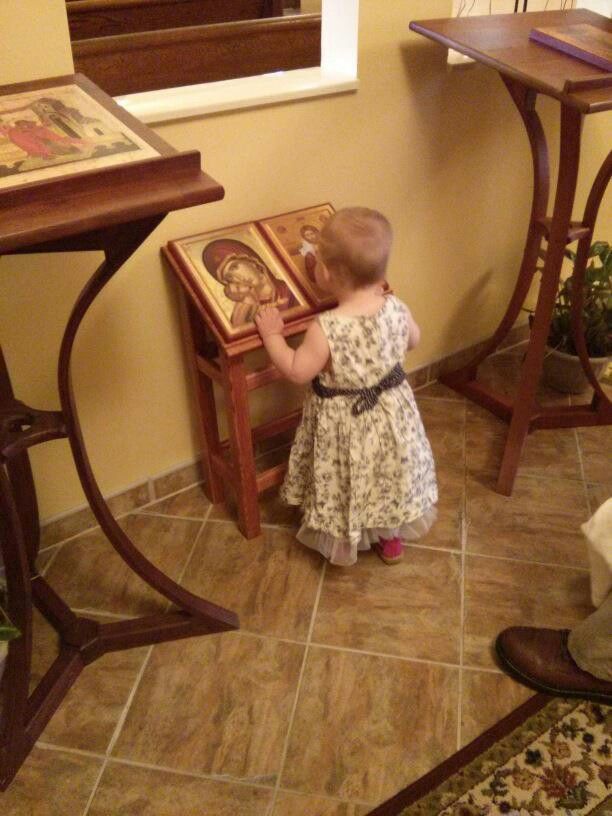
Lent 2 – Year B ‘The meek shall inherit the Earth – Yeah Right!’

Sermon for Lent 2 – Year B
Sunday March 1st 2015

Mark 8:31-38

The meek shall inherit the Earth
Yeah, Right!

Fundamentals

A couple of years ago I had a dream. It was so striking that I wrote it down in my journal. In it I was in a canoe paddling up a stream. The stream, as streams do, became narrower and the water shallower, therefore the effort of paddling became greater until I grounded. Of course the obvious thing was to turn the canoe round, but the stream was too narrow

It must be said, when I ponder that dream and its meaning for me, the contemporary church also hoves into view. The stream getting narrower and shallower, perhaps a metaphor for falling numbers? And trying harder and harder . . . perhaps we need to get our bearings. To remind ourselves of one or two fundamentals . . .

1. God is not relevant to our lives

I have pondered often and long about why so many of us are at the very least hesitant about ‘sharing our faith with others’ – and the answer that came to me in the early hours of one morning this week was that we imagine the conversation in our head – a little like this.

I’m a Christian
I’m not
My faith makes a real positive difference to my life
Really? What? We have been friends for a long time. Your life and my life – they are pretty similar – indeed in many respects you might say I have a better life than you, no?
Well, yes, errm – I see what you are saying, err but I have a profound peace in my heart
Yes. Good. I’m happy for you. I find a walk on the beach does that for me. Isn’t it lovely 🙂

So how are the grandchildren doing then . . .

When I say ‘God is not relevant to our lives’ I mean it. But what do I mean by ‘our lives’. I mean the lives we determine for ourselves. The life which is all about our life story – the story which people may tell of us after we die, of career and home and children and hobbies etc. etc. The lives into which we try to fit God rather like a new kitchen accessory – a Unique selling point in a house, or in this case a life

We have grown up in a culture which springs from Christendom – a world where ‘everyone was a Christian’ – God was in his heaven ‘watching over it all’, and all was well with the world. ‘God’ in this scheme was there to sort out the difficulties of our lives. Like a kindly chaplain, or a Spiritual plumber, or indeed a kindly parking attendant who found us that parking space we really needed or otherwise we’d be so stressed at that important meeting with the bank to discuss our mortgage . . . God is ‘there to look after us’. But of course, for our friend with whom we are in conversation, they pretty much manage to get along very well thank you very much without any of that, and also they have spare time on a Sunday to use as they wish . . . and of course should life’s circumstances become difficult then perhaps we don’t really need this church stuff anyway because God is there looking after us, or perhaps he isn’t and actually it doesn’t seem to really make any difference . . . after all there are lots of helpful guides to having a better life – some are religious, some aren’t . . .

2. Our lives are not relevant to God

Sorry if we find this thought troubling, but they’re really not. God does not spend every moment of his waking hours figuring out how to get our lives sorted out so that we can have the life we always dreamed of . . . indeed we may have noticed that 🙂 And vice versa, there is nothing we can do to ‘help God’. On the one hand the dominant expression of faith is that ‘god is up there somewhere looking over us’, and on the other, the Church seems obsessed in what Margaret of Sienna calls ‘solicitudo religioso pro Deo’ To translate roughly, ‘a blasphemous anxiety to be doing God’s work for him’. Whatever, ‘God’ is largely absent from the proceedings
Like in the canoe dream – people paddling harder and harder as the stream narrows and the water shallows. The church is busier than ever, getting the message out, endless committees, initiatives etc.etc.etc. ‘God’ becomes an ever vague shadow, out there, somewhere, perhaps??

Last week I concluded that we would do well from time to time, not to put ourselves in the disciples’ position, as they observe Jesus healing people, but rather to place ourselves in the position of those who are healed, in other words, In Jesus direct line of sight.
Well, let’s do that this week and where is Jesus looking, oh yes he’s looking at his disciples. He is telling them, quite openly that he ‘must undergo great suffering, and be rejected by the elders, the chief priests, and the scribes, and be killed, and after three days rise again.’

And we all know Peter’s response – And Peter took him aside and began to rebuke him.

Now let’s just pause at this moment. Immediately before our gospel reading, Peter has declared that which God has revealed to him, not what he has figured out for himself, what God has revealed to him, That Jesus is the Messiah, the Christ, the Anointed one, The King of Israel . . .

And Peter took him aside and began to rebuke him?????!!!!!!

3. The problem is ‘Our Lives’ . . .

Jesus words seem like madness to Peter – but it is Peter who has the problem . . . turning and looking at his disciples, Jesus rebuked Peter and said, “Get behind me, Satan! For you are setting your mind not on divine things but on human things.” Jesus tells Peter ‘You don’t get it! You don’t have a clue! You are the One trying to destroy my work . . . and we, like Peter have So much confidence that we do get it . . . but as I said, we cannot give a coherent account of what IT is to those amongst whom we live

The problem is ‘Our Lives’. When we listen to what Jesus says, it seems utter madness, we are there with Peter. Jesus says ‘The meek shall inherit the earth’ – and we rebuke him saying, that’s a nice sentiment Jesus, but actually its the hard work and fine accounting skills, its our genius that will get us what we want . . . and the moth and rust will corrupt and if we store it all in vaults after our deaths, the thieves will break in and steal.

I was in a church meeting a long way from here earlier this week, where the wheels of power were turning. We were planning and proposing. And someone gave a very lengthy account of a significant event in the life of the church and credited one person with all the credit and said how much we owed them by way of thanks, and no one batted an eyelid . . .
No one – myself included – said, ‘Let us pause and offer profound thanks to God without whom Nothing is possible. It was as if God didn’t even exist.’ We’d pulled it all together.

We modern westerners are So in control of Our Lives – and thus the way we run them is in direct opposition to the way of Jesus – Jesus who says ‘The meek shall inherit the Earth’; ‘do not store up for yourselves treasure on earth’, ‘unless you become like a little child’ How could a child even begin to run the church as we do??? Jesus who says For those who want to save their life will lose it, and those who lose their life for my sake, and for the sake of the gospel, will save it. For what will it profit them to gain the whole world and forfeit their life? Indeed, what can they give in return for their life?

4. Jesus response to the problem of ‘Our Lives’

He called the crowd with his disciples, and said to them, “If any want to become my followers, let them deny themselves and take up their cross and follow me.”

As I was painfully reminded this last week by a friend, we miss the horror of what Jesus is saying here. The Cross has become a pretty item of jewelry – or we talk about it is terms of the sufferings that are common to all human kind, broken relationships, illness – ‘We all have our cross to bear’ we sigh. Jesus speaks to the whole people of God, who symbolised by Peter have their minds set on human things and faces them with something horrific. No one there, none of the readers of Mark’s gospel in the first 300 years will have not seen, in all likelihood Many Crosses, not hanging round people’s necks, but with people hanging on them. ‘You really don’t want to go there’, but Jesus says this is the Way.

Pontius Pilate wanting to let people know where the real power lay, didn’t always bother with wood, bit of a waste, he would nail people to the walls of Jerusalem. Everyone knew the horror of it and had seen how literally excruciating was the death of the Crucified, over hours in unendurable agony. The utter destruction of a Life – indeed bodies were left there to be devoured by wild animals and birds.  So horrifying that people could not bear to speak of it or write about it. Truly A Satanic tool.

Jesus takes Our Lives to the Cross, and we are called to follow him. Indeed this is the meaning of our Baptism – not some folk rite, so that we are in on this Chaplain God and can expect his services. Christendom neatly sidestepped the Cross and delivered up a faith of the irrelevant God, placing the human and our lives back in the centre of things. But our Lives are only the centre of things if w are In Christ, the Crucified One. We are baptised into his death so that He might be Our Life, Our All in All. As St Paul puts it in Colossians, ‘For you died, and your life is hidden with Christ in God’  Our baptism is the End of Our Life. The end of Our agendas, the end of Our plans. The life we now live we live by faith in the Son of God. For truly Christian life to begin, Our Lives must end. He must become Our Life. The Risen one

And So we come here, we confess our Sins, that once more we have lived for ourselves and not for Him who loves us, We feed on his word which is Life giving Like honey on our lips, we respond in words irrelevant to the World, the Creed, and in his infinite Grace and Mercy, he feeds us with His Very Life.
Glory to Jesus Christ
Glory for Ever

Transfiguration – The Word became flesh and we have seen his Glory

Sermon for Sunday next before Lent – Transfiguration

Mark 9:2-9

‘And the Word became flesh and tabernacled amongst us . . . and we have seen his Glory.  Glory as of the Father’s only begotten, Full of Grace and Truth’

και ο λογοσ σαρξ εγενετο και εσκηνωσεν εν ημιν, και εθεασαμεθα την δοξαν αυτου, δοξαν ωσ μονογενουσ παρα πατροσ, πληρησ χαριτοσ και αληθειασ.

Just the other evening we had a most wonderful experience in our Baptism preparation class, when one of the youngsters excitedly made a very deep connection between what we had been talking about and the story of our faith.

She suddenly exclaimed ‘Jesus was buried and raised in a Garden!!’ and as she did so, her face lit up and glowed in the way it only can when we have come to see something of Christ and his truth deep within us. Of course, it may be that for many of us, the Deep Significance of this is veiled for us. I know it was for me for many years. It was for example only six years ago, after I had been ordained ten years and was supposed to be at least moderately advanced in my understanding of our faith – I remember the excitement of the discovery – that I first saw the significance of Mary’s mistaking the risen Jesus for the gardener . . . For after all the Creation is a story which focusses on a Garden, and here is the New Creation, and as in the First Garden, The LORD placed a man ‘to till and to keep’ . . . well I’ll allow you to fill in the blanks 🙂

As we explored Why so many of us are so lacking in these insights, we were reminded that for all we have ‘Moses and the prophets’ we do not know the story anywhere near as well as those first Christians did. From time to time, people will speak about unearthing deep truths like this, as if they were hidden away, but for those first Christians, that was not really the case. They would have made the connection instantaneously – they would read about Jesus being buried and raised in the garden and would have known of what John spoke. Why?? Because they carried the story with them wherever they went.

A young Jewish child would attend what we might call Torah School, indeed this is true of many Jews to this day. From the age of about 4-8 they would learn Torah, that is all the first five books of the Scriptures, by heart. Then they would go to another school, so that by the age of about 12 – they would know the whole Tanakh, The Law and the Prophets – by heart . . . 1

So for example in that chilling tale of The Rich Man and Lazarus, when the Rich Man is burning in Hell, because he ignored his brother, and asked ‘Father Abraham’ to send a messenger to his brothers warning them, Abraham replies ‘They have Moses and the Prophets. They should listen to them’ They have Moses and the Prophets – they have committed the Tanakh, all of that which we call Old Testament to heart. They KNOW this stuff, they KNOW they must love their neighbour as themself, they KNOW that the LORD will require an account for how they have been obedient. He as good as shrugs his shoulders – ‘they Know this stuff already – they’ll either obey or not’ Insofar as their is any fatalism in our faith, it is not with respect to the Will of God – it is with respect to our response.

So it is with the Transfiguration of Jesus upon the Mount. It’s meaning is plain if we know the Story. But if we are not familiar then of course it will seem very strange. If our imaginations are soaked in Tanakh – then some things as it were hit us in the text. For example Peter’s babbling . . . we tend I think to suppose that what he says has little or no significance, after all ‘He did not know what to say, for they were terrified’, but the more we immerse ourselves in the story, the more it gets into us, the more we see that nothing is as it were insignificant in the gospels. Like the garden in which Jesus was buried, nothing is incidental. “Rabbi, it is good for us to be here; let us make three dwellings, one for you, one for Moses, and one for Elijah.” Why dwellings?? Here we must admit that we are very poorly served by those who translate the Scriptures for us. If those who translate the Scriptures are not attentive to nuances in the text, if they are merely trying to ‘get the language more up to date’, then we have a problem. Literally Peter says ‘Let us make three tabernacles (σκηνασ,) . . .’ We assume that Peter, babbling away is talking about let’s stay here permanently – but out of his mouth, unbeknownst to him comes the words, ‘let us make three tabernacles . . ‘ And immediately the early Christians who were let us always remember, Jewish, will Get it! Tabernacles!!

Every year they celebrated the feast of tabernacles. This is recorded explicitly in John’s gospel, and implicitly here in Mark and also in Luke and Matthew in the story of the transfiguration. This was the feast where all the people came to Jerusalem and made for themselves ‘tabernacles’, booths or huts made from branches and lived in them, in large part to remember when they had lived in tents in the Wilderness . . . and God had dwelt in their midst. Except of course at this point, in the presence of the Glory, the Shekinah of God they are terrified. They have not known the Presence of God like this since his Glpry filled the Temple under Solomon, or when like a pillar of cloud by night, or fire by day The LORD had dwelt in the midst of his people.

And then, Moses and Elijah. Again Jewish listeners don’t need any translation. The Torah, the first five books of the Scriptures – the books of Moses – and next The Prophets, which for Jewish readers included and includes all what we would call ‘the historical books’, in the midst of them was the Great prophet Eli-Jah – literally, The LORD is God, whom they were waiting for the appearance of before the coming of the Messiah. The Law and the Prophets – embodied, taking on flesh in Moses and Elijah, and in the midst of them??

Jesus took with him Peter and James and John, and led them up a high mountain apart, by themselves. And he was transfigured before them, 3and his clothes became dazzling white, such as no one on earth could bleach them.

We note that Peter is there – we hear his inspired babbling, but there also is John . . . The one who will write these words . . . The Word became flesh and tabernacled amongst us and we have seen his Glory . . . This is no metaphysical speculation. John was there upon the mountain – he saw the Law and the prophets embodied in Moses and Elijah, and ‘Then a cloud overshadowed them, and from the cloud there came a voice, “This is my Son, the Beloved; listen to him!”

The Word made flesh . . . and we have seen his Glory . . . down through the years, the children of Israel had had the Law and the Prophets, and constantly the word came ‘listen to them’ To Listen to Hear is to Obey. They Knew the Law and the Prophets, but had not been faithful and obedient. Now comes Obedient Israel in the person of the Son of God, made flesh – fulfilling in himself The Law and the Prophets . . . and in the church’s year we hear this story now to prepare ourselves for Lent, to see and to follow the obedient one into the wilderness once more, to as it were Enflesh that story of the people of God in the wilderness, but this time in Obedience as he makes his way to the Cross and the burial in the grave in the Garden from which he will be raised  . . .

One final point as we gather here at the Lord’s table. We might still be wondering how those Jewish children stick at their memorising – well the teachers knew a thing or two about human nature 🙂 Before they are old enough for Torah school, children have little wooden blocks with the Hebrew letters on them, and their parents or teachers put honey on the blocks . . . reminding them quietly as they do what any child would do, ‘Your Word is like honey on my lips’ . . . or perhaps as we might put it as we come to the Sacrament, ‘Oh taste and see that the LORD is good’

May the LORD in his love and mercy give us such a hunger for the Life of His Son, a deep desire to hear and obey, to truly listen to The Word made flesh, to take it deep into ourselves – and may he open our eyes as he did for one of our younger brethren just the other night, to behold his Glory. And may we as we feast on the Obedient one, be drawn deeper into lives of Love and faithfulness, ever more reflecting That Glory

Sermon for 4th Sunday after Epiphany – Year B – 2014. “Responsibilities before Rights”

Sermon for 4th Sunday in Epiphany – Year B – 2014

1 Corinthians 8:1-13
Mark 1:21-28

Life together – Responsibilities – not Rights

Jesus said to his disciples, ‘Occasions for stumbling are bound to come,
but woe to anyone by whom they come!
It would be better for you if a millstone were hung around your neck and you were thrown into the sea than for you to cause one of these little ones to stumble.

On more than one occasion, I’ve come close to being killed in the Scottish mountains, but it was probably the first occasion that sticks most forcibly in my mind. In the days long before OSH I was part of a school party climbing in the Cuillin Hills – the most technically demanding ‘walking’ territory in the UK. It was just Easter and large parts of the hill were covered in snow and ice. On a day with no views, our guide had led us to the highest point on the Island, the summit of Sgurr Alasdair, and we had just begun to descend by ‘The Great Stone Chute’ – a 1000’ scree filled gully, that was on this occasion full of snow in the upper reaches. The previous day, with a couple of friends we’d climbed such a gully and so I had few if any fears . . .

Moving-Together-on-a-PD-Alpine-Ridge_medium

Only two of us in the party were wearing crampons. So everyone else dutifully took their axes and started the very slow and laborious business of kicking steps in order to descend. I was one of the two with crampons. I had no idea how to use them, but it seemed straightforward enough, after all they dug well into the ice and my friend with the other set also thought so, as he (somewhat more experienced than I) set off at a fair trot down the gully. I wasn’t sure. But it was too tempting . . . so I set off after him, and after about three of four paces slipped. Covered in waterproof gear as I was, this was for about three or four seconds a far more fun way to descend, until I realised that I was accelerating at an alarming rate. I’m not sure how far I fell. All I know is that something in my head kicked in – In my minds eye, I saw the instruction manual I’d read on Ice axe breaking (I kid you not! This WAS before OSH 🙂 ), and performed a perfect self arrest. Our guide when he got down to me, was I guess mighty relieved, not least as he told me later because as a member of the mountain rescue team, he’d recovered the body of a man from that same place just the previous week, who’d been unable to stop . . .

And of course, reading St Paul’s junctures regarding eating meat ‘sacrificed to idols’, this incident leapt to mind . . . OK, so I might need to fill in one or two gaps 🙂

Right at the beginning of our shared story, in the early chapters of Genesis, a question is asked which reveals the depths of our human predicament. Cain asks God, ‘Am I my brothers keeper?’ In the time of Jesus, human’s being rather sophisticated and advanced in their deceits, the question has evolved, progressed, and it is now – ‘Who is my neighbour?’

Cain’s question can be rephrased, ‘Am I responsible for the life of my brother?’. The question of the Rabbis, foolishly assuming we all know the answer to the first question in ‘Yes of course you are!’ sought to evade responsibility by asking ‘Yes. But Who counts as my brother? my neighbour?’ This was how rabbis worked. You asked a question and they answered with a question. It’s something we find Jesus doing all the time. At least they accepted in principle that one bore responsibility for the life of their brother . . . which is perhaps more than can be said for our age.

Back to that cold mountain. First thing to note. No-one suggested that my friend was careless of MY safety when he, with far greater experience and knowledge started almost to run down the gully . . . it must be said that my method of descent was somewhat faster ultimately 🙂 This in itself was somewhat of an indictment of the day as the first rule of mountaineering is that we do need to look out for the other. If for example you are roped together crossing a sharp ridge and our companion falls to one side of the ridge, you must throw yourself off the other side, thereby saving both of your lives . . .

The questions – ‘Am I my brother’s keeper?’ ‘Who is my neighbour?’ are indicative of our desire, having freed ourselves from God, to disconnect ourselves from one another. We most certainly don’t really consider the metaphor of a party of people roped together along a treacherous ridge to be a metaphor for life in general, let alone the life of the church.

But let us say we take as Truth, that we Are responsible for the physical aspects of the lives of one another. That we shall have to give an account of our feeding of those who are hungry, etc. Surely we’re not responsible for the state of their souls???

As I said last week, The Protestant Reformation, though in many regards well intended, was an exercise in thrashing around in the dark and did as much if not more harm than good, thus is the effect of most if not all human attempts to ‘put things right’. One of the big negatives was that it gave the impression that this Salvation Life was in essence a matter of individual beliefs, not Shared Life in and through which we are Saved, that is ‘caught up into the Life of God through Jesus Christ’. And of course, because it became a matter of belief, it was disembodied and the idea of a Soul became less and less significant.

We know how it is with souls in this day and age. We kind of assume we’ve got one, but our interest in them goes little further than posts on Facebook regarding the likelihood that animals have them as well. The idea that it is something which we should attend to – seems somewhat alien (after all, how many have been brought up in the church being taught how to attend to the sate of their soul??). The idea that we are as responsible for the state of another’s Soul!

My long term Spiritual Director was an immensely wise woman. One of the very first to be ordained a priest in the Church of England. One day talking about her own experience, she recounted her latest session with her own Spiritual Director, another woman. Christine, in discussing the trials and tribulations of parish life had said, ‘Well, at least I’m not responsible for their Salvation!!’ To which her Director came back to her quick as a flash ‘Whatever gave you that idea!!!’

Paul, unlike us, does not understand the human condition in individualistic terms. He knows that his life is with his brother. That we are all mutually and totally interdependent. This is why he is so strong in his letter to the church in Corinth on their factionalism – on their lack of sacrificial love for one another – their lack of concern for one another that they will happily make sure they are well fed and take no heed to their brother or sister who is not. And those who have no concern for the effect their actions has on the soul of the other. The Corinthians were so full of their own self importance, this message of freedom in Christ, that they imagined they were free to live utterly as they saw fit – without any thought for the soul of their brother.

As we come to it, we meet the matter of meat sacrificed to idols where Paul sets out the problem. For a devout Jew, and indeed for other God fearers, idols were to be fled! and to eat meat sacrificed to them . . . was to participate in the life of the idol. But Paul had come with this message of freedom in Christ, telling them that idols were nothing at all. And so SOME amongst the Corinthians happily ate meat even though they knew it had been used in these pagan sacrifices. And one suspects rather mocked ‘the weaker brethren’ who had doubts. Some ate with a clear conscience, but others, could not, but were being persuaded to . . . and St Paul once more, as last week shocks us. LAst week he said ‘Why not rather be wronged? If you take offence you have already lost!!’ This week he tells the Corinthians – you who are so Wise in your own eyes, You must restrain yourselves for the sake of the conscience of the other. If you are genuinely so knowledgeable, then you know that Humility is the path that you must walk, self denial for the sake of the weaker brethren. True Knowledge is revealed in laying down our lives for one another

Listen once more – I paraphrase
“Since some have become so used to thinking about idols as real,  until now, they still think of the food they eat as food offered to an idol; and their conscience, being weak, is defiled. 8“Food will not bring us close to God.” {You say} [It is true] We are no worse off if we do not eat, and no better off if we do. 9But take care that this liberty of yours does not somehow become a stumbling block to the weak. [As Jesus our Lord said – Woe to any who give such occasion!!] 10For if others see you, who possess knowledge, eating in the temple of an idol, might they not, since their conscience is weak, be encouraged to the point of eating food sacrificed to idols? {They are not fully persuaded, so they partake in what they still think of as sinful action, because you are so bold} And then his language is strong “So because you are so determined to do it Your way, because you are puffed up with your knowledge, those weak believers for whom Christ died are destroyed.  And, when you thus sin against members of your family, and wound their conscience when it is weak, you sin against Christ.

And if we find this a strange way to think, perhaps it is because we have lost sight of our own souls, and those of those amongst whom we live. Paul puts it so very strongly, If by my eating meat, my brother’s conscience is defiled, I will never eat meat again.

Which brings us finally to the consecration of Bishop Phillip North as Suffragan bishop in what would have been my Diocese back in England. Most if not all of us are aware of the consecration this week of Rev Libby Lane, the first female bishop in the Church of England. A joyous occasion and I with many others am delighted – not least my friend Dave whom we’ve met on screen, and who will soon have the joy of the inevitable ‘first pastoral interview’ with his new bishop 🙂 BUT there are still some who cannot in good conscience accept this – and so the Archbishop of York who has presided at Libby’s consecration, has asked that none of the Bishops who laid hands on her lay hands on Philip North, for I assume, the sake of his conscience. Sentamu did this I understand without consulting Fr north,, whom I know is a most godly and gentle man – for which he is being excoriated. And before we all leap to our Knowledgeable barricades in defence of The Truth – screaming ‘to hell with his conscience’, as some do over this and other matters in the church, let us pause.

Really? To hell with his conscience? Surely this can only be said by someone whose conscience has been itself killed off? As I said, we think nothing of our souls in this day. For those who say, his conscience doesn’t come into it, surely you would not yourself go against YOUR conscience??? ‘Ah!! one replies – but in this I am right!! I AM RIGHT!
As St Paul says, knowledge puffeth up . . . and so the blogosphere is full of indignation. St Paul says, those who claim to know something does not yet have the necessary knowledge – that is the knowledge of their own soul that leads them into the path of humble love . . . Paul himself is convinced in his own mind that eating meat sacrificed to an idol in not a sin, but for the sake of those who do not possess that knowledge he is prepared never to eat meat again, so seriously does he take his responsibility for the soul, that is the eternal life of his brother. He knows what Jesus says about those who lead little ones, the weak, into sin. It would be better for them to be thrown into the sea with a millstone around their neck – probably crying as they went.YES, BUT I WAS RIGHT!!!

My friends knowledge of how to use crampons had almost led to my death, as I, silencing the voice that said, that doesn’t look safe, set off in pursuit – killing off the small voice, nearly killed me. When we begin to understand a little the sinful motions of our own heart, we also learn great gentleness with those with whom we disagree, even if seriously.

St Paul once more – finally with a helpful test. He says of conscience I do not even judge myself. I am not aware of anything against myself, but I am not thereby acquitted. It is the Lord who judges me.

Our hope in truth is not that we are Right but that God is. As I once said, perhaps the most frightening moment of my life was not falling down a mountain, but when my spiritual director carefully helped me to confess that ‘I would prefer that I am right and God is wrong’. It was as if the earth had opened up under me.

It is a sign of our plight that this is true of so many . . . ‘I wouldn’t want to worship a God who didn’t tell me how right I am’

Lord have mercy on us all

Salvation – Sharing in Life, in Time and Space and Relationships. Sermon for Second Sunday after Epiphany – Year B 2015

Sermon for Second Sunday after Epiphany – Year B (2015)
1 Sam 3:1-10
1 Cor 6:11-20
John 1:43-51

Participation

‘Then Jacob woke from his sleep and said
“Surely the LORD is in this place and I did not know it!”
And he was afraid, and said, “How awesome is this place!
This is none other than the house of God, and this is the gate of heaven.”
So Jacob rose early in the morning, and he took the stone that he had put under his head and set it up for a pillar and poured oil on the top of it. He called that place Bethel’
[which means ‘House of God’]
Full Participation

The TIME of heaven and earth woven together
Well, we’re just back from our family holidays – and I’m glad to say, well rested and refreshed. Which is a good thing, for our culture has a prohibition against too many holidays 🙂 Partly of course because, as a secular culture it does not know what to do with the Holy, and thus has little time for Holy Days, which is of course where the word comes from, but we have forgotten.
In the middle ages, those times which so fuelled the imagination of our great literary heroes, CS Lewis and JRR Tolkein, it is estimated that the hardest working person worked for no more than half the year, for the calendar was interspersed with many many Holy Days – days for rejoicing and feasting – and whilst in the more Catholic inclined cultures, there are still relics of this – I vividly remember a family holiday when Paris ground to a halt on August 15th, the feast of the Assumption of Mary – by and large the grim culture of Protestantism has won out and our Salvation is no longer Gift but something to be worked for, despite the fact that it is the Protestants who ‘told us’ that Salvation was by faith alone – and so work displaces holidays, for Protestants of course have little time for the Holy, it being useless . . . Catholics may have been criticised for living as if one was saved by works, but their lives betrayed the sense that they knew they were saved by Grace and our culture which is profoundly shaped by the Protestantism of Northern Europe and now of course the United States is profoundly one of what Josef Pieper calls ‘total work’ – we rest in order to work, we go to school to learn how to work. Our culture is historically the most work obsessed of all in human history, and of course the most secular, apart from the Chinese, and they are similarly obsessed with work. Different ideologies but the same secularity. Work makes you Free is the motto of our age
So holidays are no longer holy days, and they must be limited or of course the world which we tell ourselves is sustained through Grace by the Word of Christ, will obviously stop. There is some talk of Life as Gift and Grace, but our lives reveal what we really believe. And not only are they not holy, there are few of them. The great genius of the Medieval synthesis, the product of 1000 years of Christian Imagination was this weaving together of the Sacramental tapestry.  The weaving together of Heaven and Earth – So time was woven through with Holydays – and also Space was understood to be woven together
The SPACE of heaven and earth woven together
As we look around us at all the manufactured articles which fill our houses to overflowing, and will one day fill a hole in the ground, our medieval forebears would look on with horror. ‘Where did all this metal come from? And all this plastic? What have you done to the Good Earth in order to take these things for yourselves?’ In early to mid medieval Europe at least, the earth was not to be tilled with iron, for it was to do Violence to the Creation. The idea that the mining of ‘resources’ which is central to our lives in this age, is a violent abuse of the Created order never passes our minds – yet one need only to take a moment to look at the poisoned lakes of China, the leveled mountains of The United States, the tar fields of Alberta, the hollowing of Western Australia and, yes the state of our own rivers – to know that this is profoundly true, perhaps these poor benighted medieval folk saw more clearly than we do.
The earth was sacred, in the sense that all of Creation was participating through Grace in the Life of its Creator – Christ, the one in whom all things hold together, all things. All of Creation was Created to rejoice in the Life of its Creator. For when Jesus takes on our flesh – it is not merely about God rescuing human beings from their plight – it is about the Whole Created order. The Holy Spirit inhabits the material to Save it – all of it!
And the loss of this is seen even more clearly in the huge change in our attitudes to one another.  One of the strange things about that medieval culture, which was so shot through with A Christian Imagination of existence  – was how it shaped human relating so profoundly. As someone I was reading this week suggested, the loss of that view, and particularly the shift from Catholic to Protestant understanding of faith was that we completely changed our attitudes to the poor.
LIVES woven together
One of the effects of the Reformation was to disenchant the world, to not acknowledge our everyday lives as the place of Salvation. If as the reformers taught, salvation was ‘by faith alone’, then of course the Catholic churches tiresome emphasis on Corporal acts of mercy, Caring for the sick, sharing your bread with the hungry and the like were no longer necessary. A misunderstanding of Salvation Life opened the door to secularism, with private piety – or the world which we know. Faith as a private matter – you and your soul before God – it had no dimension of works. ‘Everyday life’ was set free from ‘burdensome obligations to the neighbour, and thus also to God. One only had to think right – and then go to work and make your profits.
But this Salvation is a Life, not an idea, not a worldview, not even a theology. Salvation is a Life . When John the Baptist asks of Jesus – ‘Are you the One, or should we look for another? – Jesus Response is ‘tell him what you see – The blind receive sight, the lame walk, those who have leprosy are cleansed, the deaf hear, the dead are raised, and the good news is proclaimed to the poor.’ Jesus didn’t preach a message to John, he opinted to Life breaking out around Him. Where Christ is Present these things are happening and the world is Changed. Where Salvation Life is – these things are evident. By their fruit shall you know them . . . And medieval Catholic Europe, for all its failings knew this. The poor were not looked down on as objects of pity or disdain, rather they were in some regards looked up to, for did not Jesus say ‘Blessed are you poor!’. Some, indeed many embraced voluntary poverty – living by Grace through faith in the most concrete way, and the Rich – well the rich fed them. ‘I am my brothers keeper’ was a motto writ large on the medieval consciousness, for indeed most knew that if the let the poor go hungry, they would suffer the consequences of Hell, for to turn your back on your brother was to turn your back on the Life that flowed through all of Creation in   -and as we all know, Medieval Hell was a far more graphic reality then than now. As was Heaven . . . now largely they have faded from our imagination. The Word of the Lord is Rare in these days.
Salvation far from being something in which we all participated – in which we all shared – became a thing of piety – with the emphasis on the internal. Our lives fundamentally no different from those around us. Just as busy, just as rushing around, just as convinced that everything depends on us. We no longer understand our lives as participating in Creation, in the lives of one another – and fundamentally we have lost sight of the greatest Truth of all – that in Christ we are invited to become participants in the very life of God.
As everyone is aware, I’ve been going barefoot around the church these past weeks. As with many practices, it teaches you things 🙂 It started because I was woken up to something I had lost sight of – like the old priest Eli who was continually woken by Samuel, I’d forgotten that God speaks, sometimes in words that we can hear.  Like Samuel, who was woken from sleep, Like Jacob who also had been dreaming, God brought me to my senses. I had lost sight of the holiness of this place. So I guess it is in part an act of repentance on my place for that loss of sense of the holiness of the place, must extend to my loss of sense of the holiness of those whom I serve, and do not shake your heads in disagreement, ‘Do you not know, your body is a temple of the Holy Spirit of the Living God??’ But more than that – waking up to the Holy in this place also alerted me to how out of touch with God’s good creation I’d become. Rushing from place to place – not seeing – tied up with the importance of my life. Do you know that there is the most spectacularly beautiful clover leaf outside in the grass??
Creation is so dense with beauty that it really slows you down if we but attend. You cannot live a frenetic life in the world if you attend to it as it is – we cannot be The Church and continue to live such lives – for so many Church has become little more than a pause in a busy week – we are called to the most extraordinary participation – We are Called to know our place in Holy Time, to know our place in Sacred Space, to know what it is so to participate in Life that we know amongst ourselves the truth of loving one another ‘as we love ourselves’,  . . . And why??
In Christ Everything is Woven together
Eli had forgotten that God Speaks, as the church seems to have done – Nazareth had so forgotten her vocation that the idea that Goodness might come from her that Nathaniel scoffed at the one of whom the prophets had spoken of might come from there. The idea that the Life of Christ might flow from the Church is laughable in our culture – but it is the Truth. Because in Jesus Christ, God has joined heaven and earth. Jesus said to Nathaniel “Do you believe because I told you that I saw you under the fig tree? You will see greater things than these.” 51And he said to him, “Very truly, I tell you, you will see heaven opened and the angels of God ascending and descending upon the Son of Man.” Our Vocation is the deepest participation in Time and Space, in the lives of one another, and above all and in all and through all in the very life of God in Jesus Christ. In Jesus Christ Heaven and Earth are woven together. In Him is the fullness of Life. In Christ, the vision of Jacob comes true – Surely God is in this place. May it be said once more amongst us.

Sermon for Advent 2, Year B, 2014. ‘Waiting . . . for the Redemption of our bodies’

Advent 2 2014
Samuel Marsden
Isaiah 40
2 Peter 3
Mark 1

Waiting for the redemption of our bodies

As you can’t fail to have noticed this morning, we are celebrating ‘the best Good News since 1814’ – which raises to questions, one general one – what IS the Good News?? If a friend asked you, What is that sign on the Church drive all about? What would you say?? And secondly – waht is Anything does the Good News have to do with our bodies???

I was recently reading an article by a man who had lived through the 1930s in England. His family had been coal miners and to say his existence was harsh would be putting it fairly but perhaps also mildly. Children all sharing the same bed – a lavatory outside the house shared with several other families – poor and sometimes non-existent food – and of course disease, taking children in infancy and leading to life expentancies much much shorter than those we have come to take for granted.

When we consider the collapse of participation in the life of the church, particularly since the 1960s, one factor that I rarely hear mention of is how comfortable our lives are nowadays. After all, IF the big theological problem is ‘Why does an all loving God permit suffering?’ surely when we suffer far far far less than even our parents generations – and we do – then church should be packed with folk giving thanks to God? Surely??

And of course church has itself become  less demanding and more comfortable, as well . . .  and herein might be part of the issue. Back in England many many churches went through the business of ‘re-ordering the church’, at least when financial circumstances were better. By and large that meant making the building more ‘comfortable’. The installation of better heating and of course that perennial bane of a Vicar’s life – the removal of pews to be replaced with ‘comfortable’ chairs . . . but of course does not Isaiah 40 verse 1 say ‘Comfort ye, O Comfort ye my people . . .’ 🙂

Not long before coming here I chaired a Diocesan committee which had both the Archdeacons on it. One evening we met at one of their houses, and as the second Archdeacon came into the room he said to his colleague ‘Ah! that must be your prayer chair!!’ He was pointing at one of these.

poang-armchair__0117277_PE272441_S4

And he was right! How did he know?? Except for the assumption that one must be comfortable to pray . . . Imagine being sat on that  or indeed your own favourite comfortable chair – losing all sense of your body, its aches and pains – almost for a moment leaving the material realm and entering into the pure realm of the Spirit . . .

This turn is one of the most ancient heresies of the Church that of Gnosticism, a retreat into the realm of pure Spirit – the denial of our bodies. Which is fundamentally a denial of the heart of our faith. Our bodies are the very realm of our Life as Christians. And as we shall see the Heart of the Good News.

This Gnostic turn is seen in what happens when we pray – together as a body. When I was young it was unthinkable that one might not kneel to pray. In other words without naming it – we were bringing all of who we were before God, and in material terms almost all of who we are is our bodies. Kneeling is of course very Anglican – Other traditions stand to pray. Again very physical and perhaps more demanding. Until very very recently, not to adopt some bodily posture in prayer would be thought most odd. Why leave so much of yourself behind when you pray?

Our Faith is at its heart Embodied. Physical and Spiritual irrevocably woven together – put another way, it is Sacramental.  And thus it cannot be disembodied. Only those who think that there are two realms, one of the Spirit an one of the body could imagine otherwise. Our bodies matter – they are the Realm of the working out of our salvation – as St Paul reminds us ‘‘do you not know that your body is a temple of the Holy Spirit within you, which you have from God, and that you are not your own? For you were bought with a price; therefore glorify God in your body.’ What we do with our bodies is of ultimate significance. they are no mere shells for our ‘selves’ We are our bodies, perhaps more than we are minds in that we might lose our minds yet still live, yet we have no life apart from our bodies

Thus the central outworking of our faith – Worship and Prayer must fully involve the body for us to be present – we eat bread – we drink wine – we are baptised by our bodies being immersed in water – we annoint the body with oil after baptism, for healing and in preparation for death. We stand we kneel, we turn to face the Gospel – for in this Jesus is speaking –  As we enter the Holy of Holies at the Eucharist we change our dress. We HEAR the word with our ears, we respond in speech with our mouths – we SING and action which brings so much more of us bodily into the picture – the body resonates literally with the praise of God. We confess our sins OUT LOUD. This too is why marriage is a Sacrement, because it is Known in the BOdy, the two become one flesh

One of the disciplines of faith I have been teaching our Baptism class has been to read the Bible out Loud even when you are alone. One of the marks of our disembodied existance has been ‘reading in your head’ . St Augistine once found  the Saintly Bishop Ambrose ‘reading without moving his lips’ and thought it so odd that he mentioned it in his writings and tried to explain this Strange behaviour. But as anyone who has ever read out loud and paid attention will note – it is a very different practise. the words are embodied they resnote – all of who we are in involved rather than the very very limited part of our neural pathways involved in reading in our head – ie to read in your head is barely to read at all – indeed such practices as research shows largely shut us down. In this increasingly virtual, unreal world there is a very real sense in which we need to get out of our heads in worship. Not in the Gnostic sense of contemporary charismatic worship wherein people are enjoined to lose sense of their bodies – this is no different to praying in the comfy chair. no we get out of our heads to get our faith into our bodies.

Today as we move through Advent in this the bicentennial year of the announcement of the Good News in these lands we remember Samuel Marsden. Here on Friday, the children from Kaikorai School re-enacted that story as a means of telling the story of Christ’s birth amongst us. Earlier this year with the other members of General Synod I was privileged to visit Oihi Bay. What struck me forcibly was the sense of exposure – of the harshness of what life must have been like for Marsden and his family. Few if any of us know what it is to live in dependence of the hospitality of others. Imagine literally coming ashore in acute dependence for your physical needs, your bodily need for safety, your bodily need for shelter, your bodily need for food and water. As we have lost sense of these needs, so our apprehension of who we are has shrivelled to a point where for all we say the Self is writ large in contemporary society, we have in effect made ourselves disappear, and where is The Good News in that?  Perhaps in no small part we have lost any sense of our faith, of what the Good News is, precisely because of this bodily denial?

So John the baptizer appeared in the wilderness, proclaiming a baptism of repentance for the forgiveness of sins. And people from the whole Judean countryside and all the people of Jerusalem were going out to him, and were baptized by him in the river Jordan, confessing their sins. Now John was clothed with camel’s hair, with a leather belt around his waist, and he ate locusts and wild honey.

The people left the comfort of home to meet this strange figure in the wilderness and to be immersed in the water of the baptism of repentance

one cannot help but be struck by the sheer physicality of john the Baptist. There he is in the wilderness, the place always of God’s salvation, the place of physical dependence upon God, the place where the LORD provdes the manna, the daily bread. And dressed in what he could find – camels hair – perhaps an echoe of those skins that the LORD provided for our first parents, Adam and Eve. Living on a diet of what he could forage . . .

Announcing what?

Mark wastes no time in announcing the content of the Good News. Mark Chpater 1 and verse 1 – The beginning of the good news of Jesus Christ, the Son of God. The Good News comes to us in a body, that of Jesus. The eternal word of God of which Isaiah spoke becomes FLESH. Born in humility, having family, having nowhere to lay his head, being hungry and thirsty, whipped and scourged, brutally nailed through sinew and bone to a rough wooden cross – the Sphere of our Salvation hope is indisputably the body of Jesus. As St Paul puts it when he is asked what is the message he preaches, ‘it is Jesus Christ and him crucified . . .’ The Good News is known in a body, and in that body God in Christ reconciles the world to himself. And through faith, God raises Jesus from the dead, not as a ‘spirit’ but as a living breathing, fish eating, walking talking living breathing human.

Both Isaiah and Peter speak of the transitory nature of our lives – But the day of the Lord will come like a thief, and then the heavens will pass away with a loud noise, and the elements will be dissolved with fire, and the earth and everything that is done on it will be disclosed. The physicality of our lives laid bare

All people are grass, their constancy is like the flower of the field. The grass withers, the flower fades, when the breath of the Lord blows upon it; surely the people are grass. The grass withers, the flower fades;    but the word of our God will stand for ever. And therein lies our Great Hope – for all the frailty of our bodies, our great hope is that in the eternal Word bodily raised from the dead, we too are raised. That Christ’s triumph over death was no mere ‘vague ongoing existence’ as so many of the comfortable ‘modern’ Christians would like to think. That beyond the vagaries of mere beliefs, even our bodies are caught up in the Salvation purposes of God. So we prepare by Worshipping in our bodies, by Praying in our bodies, by fasting in our bodies, by baptising bodily,

Comfort ye, comfort ye my people, saith your God . . . the word rendered comfort means better Strengthen!! Get ready – prepare yourself, body and soul for the coming of the one who Saves us, Soul and Body

Sermon for Christ the King Sunday, 2014. Year A. ‘Breathing’

Sermon For Christ the King, 2014. Year A

Matthew 25:31-46

Breathing

It is undoubtedly a good thing that the most fundamental acts of our humanness are almost always entirely unconscious. Since we woke this morning. Each one of us will have breathed somewhere in the region of 3,500/7,000 times, and until I mentioned it, hardly any of us will have given our breathing a moments thought. That and our heart beat, another fact of our embodiedness which pretty much we rarely experience or give thought to, are those things which are at root ‘how we live’. The stopping of the heart often signifies the end of our lives, our last breath is just that. The unconscious actually delineates our lives.

As natural as breathing. Natural. Unconscious. Indeed the neuro scientists tell us this. There is perhaps no such thing as a conscious act, only a consciousness of acting. We become conscious in the act after it has begun.

And we know this in our everyday existence. We are hungry, we go make ourselves something to eat. We are cold, we throw another log on the fire; we are thirsty, we put on the kettle; we feel as if the walls are closing in, we get out for a walk. Without thinking.

Just the other day I was taking time out to try and write up a paper for a conference – when some of that became less than straightforward. Firstly, I noted that I hadn’t taken as much food as usual on my break – I was hungry. I was having to eke the food out. Eating and Food became suddenly a more conscious part of my existence, these things mattered ore than usual, indeed they mattered. Then, thinking to take a shower, I fell foul of a shower that hadn’t been used for a long time and had limed up. As a result, having switched it on, I couldn’t switch it off and it was draining a neighbour’s water supply. So I resorted to switching it on briefly at the outdoor main, filling a bucket. And using that for all necessities – including drink. Again, I was more conscious of that part of my existence – these things began to matter – for me. I woke up to the reality of my existence. It is sobering to note how ‘life’ slips us by

I haven’t any scientifically verifiable evidence to prove this, but I suspect that it is the truth, that we say Grace over fewer meals  I sense that this is the case, I may be gloriously wrong, but I don’t think so.
One of the oddities of abundance is that Gratitude disappears. We live unconsciously. When food on the table becomes something utterly unremarkable. How often do we give thanks for our breath or the beating of our hearts? How often for food, drink, warmth, freedom . . . except of course when we are made aware of our lack of them.

There is a rather strange phrase which, on those occasions we give thanks, is often used to modify the prayer – one which I am not sure I am comfortable with. ‘and make us mindful of the needs of others’. Well I suppose that it is a start, but using the discomfort of the other as the occasion of our own gratitude, at the very least is perhaps a signifier of how isolated and separate our existences have become. We are awoken to those who do not have food, or drink or are cold, or those who are imprisoned by their lives . . . and we give thanks that we are not . . . we don’t go out into the highways and byways and bring them in . . .

And I think that perhaps we say The Lord’s Prayer less than we once did. Spending time preparing candidates for Baptism and Confirmation, I am always reminded of the centrality of Prayer. When Jesus’ disciples ask him ‘Lord, teach us how to pray’ his answer wouldn’t exactly fill my one hour session on ‘The Life of Prayer’; ‘when you pray say ‘Father, hallowed be your name. ‘Your kingdom come. Give us each day our daily bread. And forgive us our sins, for we ourselves forgive everyone indebted to us. And do not bring us to the time of trial.’’ What?? Perhaps some in depth teaching on meditation? Or Intercession? What about praying for others?? Is that it?? There is nothing grandiose or large about our asking. It is just for that which we need – bread and foregiveness, the stuff of Life. It is little, and it is everything. We miss the little, we miss everything

It says much we don’t say Grace every time we eat. It says perhaps more that we perhaps only infrequently use The Lord’s Prayer when we pray alone. Again as I think about preparing people for Baptism, I think of this prayer. In the early days of the church, preparation for Baptism took up to three years. And the Lord’s prayer was one of the last things taught . . . strange that. Why leave it to last? Well I guess because it was such a staggering prayer. How staggering to pray ‘Our Father’ One becomes a child of God through Baptism. it was as if just before the baptism, you were let in on the biggest hidden thing, that through Baptism you became a child of God, one of His.
Or perhaps it was because of the politically dangerous nature of the prayer. Hallowed be Your name – no other kings. Or perhaps, that it was so demanding . . . forgive us as we forgive. Give us your breath as the breath of life flows from us – Give us this day our daily bread.
Often super spiritual types ciriticise prayers that we say without noticing, but I wonder? Perhaps they have a point. Do we linger as we pray, ‘Give us this day our daily bread’ – or do we just let the words roll through us.

Of course we must note that in a sense this is a prayer we cannot pray apart from others. We do not pray,‘give me mine’, rather ‘give us our’ In that petition we recognise that this is all about US, not about Me. That we are praying for bread for all God’s people . . . whether we recognise it or not. Do we hear what we pray?

This parable of the End has an element of uncosciousness writ large about it. Neither the sheep nor the goats recognise Christ in the hungry, the thirsty, the naked and the prisoner. It would be a poor hearing of the text which suggested to us that we might ‘see Christ in one another’, indeed I am not at all sure that that is what in the background. Rather there is an unconsciousness to all of it. If the point were to see Christ in the neighbour and thus act – the point of the teaching would be missed.

Those who feed the hungry, give drink to the thirsty, clothe the naked, and visit the prisoner have no awareness, they are not living out some moral code. They’re NOT walking round thinking ‘I see Christ in everyone I meet’. Just as those who do not do these things are not consciously ignoring Him.

One of the metaphors Jesus often uses of those who are his is Child. As I have said several times of late, it is a powerful and significant metaphor. There is something of the entirely natural about a child. A young child does not respond in life as a set of moral codes – rather to use the words of GM Hopkins, ‘What I do is me!’ Their lives are as natural as breathing.

Early memories are funny things and of course notoriously unreliable, but one very early memory I have is of being at ‘kindy’. It was perhaps my first day. I seem to remember it was run by nuns, but those who might enlighten me in that regard are now long gone. I seem to remember being upset – and I remember another child giving me a piece of his chocolate . . . I also remember that peculiar combination of apple and chocolate – but I remember him sharing. It was Grace. Pure gift. Nothing I suggest self conscious – I don’t remember the shadow of a nun telling him to share. I just remember the Gift. i look forward to meeting that boy again one day.

I don’t know how many times we’ve been told to see Christ in the hungry etc. and no doubt many will hear that today, and to any avail?? Others will be called to ‘challenge the unjust structures of society’ that there may be no hungry. The words of Jesus come back to me, unless you become like a little child, you will by no means inherit the Kingdom of God. Are children going to ‘challenge the unjust structures of society’? I wonder why we did not have the boldness to make that mark of mission the words of the prophet Isaiah – ‘to share bread with the hungry, and bring the homeless poor into your house; when you see the naked, to cover them, and not to hide yourself from your own kin’?

Nothing less than the radical transformation of our hearts will effect this unconscious response to the need of others. For it is out of the overflow of our hearts, for good or ill come, and no moral exhortation to ‘see the face of Christ the King’ in all will change that.

Of course within the covenant community of God’s people, it was unthinkable – Had not God said, ‘there shall be no poor amongst you’? Surely it is unthinkable that in the midst of so much excess, there should be scarcity?

If they do not hear the word to ‘love your neighbour as yourself’???  Our self love, our self care is unconscious. Transforming society happens not primarily at the structural level, but deep down within our hearts – transformed that we see our kin, whom we feed and clothe and share with them the little we have.

How easy it is to wish the hungry well, to pray to remember them as we eat and to ‘seek to transform the unjust structures of society’, but the eye of kinship, the simple eye of the child, sees only their kin and acts simply. I’m not sure that if we saw the hungry as our kin we would be able to pray ‘keep us mindful of the needs of others’, or having prayed that to eat.

By all means let us seek justice, but let us not tell the hungry and the naked to just wait for the day when it is all sorted out. The church has been playing this game since the dawn of Christendom and indeed often before. Paul berates the church in Corinth for the rich feed well and ignore the needs of the hungry. Then down through the ages,the game of telling the poor and the hungry to wait for heaven – if the hunger of my kin took precedence then perhaps the wider society would take notice. If God’s people identified with one another.

At the heart of this tale of the end of the ages is a radical Identification. The child of God sees their kin. The Son of Man, Christ the King, radically identifies himself with his people that that which is done to them, he  takes as done to him. This is the model of Kingship whi He alone embodies, He spends himself for his people, pouring out his life for them. Identifying with them in their plight as those who are lost ‘insofar as you did it to one of the least of these, you did it to me’ God in covenant Love takes hold of a people and identifies himself with them, and takes their fate upon himself. This perhaps is the greatest wonder of all. He sees himself in his people. It is a staggering thought. They are his Life. We participate in this Life when we similarly identify ourselves with our kin. And this is the childlike faith, the basics of our life together, like breathing

For thus says the Lord God: I myself will search for my sheep, and will seek them out. 12As shepherds seek out their flocks when they are among their scattered sheep, so I will seek out my sheep. I will rescue them from all the places to which they have been scattered on a day of clouds and thick darkness. 13I will bring them out from the peoples and gather them from the countries, and will bring them into their own land; and I will feed them on the mountains of Israel, by the watercourses, and in all the inhabited parts of the land. 14I will feed them with good pasture, and the mountain heights of Israel shall be their pasture; there they shall lie down in good grazing land, and they shall feed on rich pasture on the mountains of Israel. 15I myself will be the shepherd of my sheep, and I will make them lie down, says the Lord God. 16I will seek the lost, and I will bring back the strayed, and I will bind up the injured, and I will strengthen the weak, but the fat and the strong I will destroy. I will feed them with justice.

All Christ’s sheep will be fed. It is as natural as breathing. It will be so

The terrifying abundance of God – (Parable of the talents). Sermon for Sunday 16th November 2014

Sermon for Sunday 16th November, 2014
23rd Sunday in Ordinary Time, Year A

Ephesians 4:25- 5:2 (This reading is used as we are having a special service later in the morning)
Matthew 25:14-30

Recording includes illustrative comments from CS Lewis “the Great Divorce” not included in the text below

The terrifying abundance of God

When we hear these last words of the gospel For to all those who have, more will be given, and they will have an abundance; but from those who have nothing, even what they have will be taken away. As for this worthless slave, throw him into the outer darkness, where there will be weeping and gnashing of teeth. It would not be unreasonable to hear an alarming degree of dissonance with regard to the closing words of our epistle Therefore be imitators of God, as dearly loved children . . .

To be a dearly loved child is as we have explored these past weeks to be absorbed in the life of the parent, and learning to live through imitation. Those who have children will know how much play takes the form of copying parents, whether it be pretend driving a car, or playing at cooking in the kitchen. Who cannot have known the delight of being given a lovingly made mud pie with a side order of grass 🙂

Yet hearing the words of the master to the third servant ‘You wicked and lazy slave!’ we may be brought up short. Certainly this text has caused a flurry of correspondence amongst clergy this week. ‘What do we make of this text?’, ‘can it really be Jesus?’ One alternative reading which has become almost commonplace is that this is Jesus decrying the world as it is – where ‘Bosses’ hold all the strings of power, and those who blow the whistle on the operation are condemned. And of course that is an alluring suggestion, for we see this so clearly, Jesus is only condemning what we see in front of us and which we agree is evil. Jesus agreeing with us and condemning the World . . . yet ‘God did not send his Son into the world to condemn the world . . .’

Such a reading leaves us as petty moralists – and more importantly it leaves our eyes fixed on the condemnation of the world, which is not life giving. It leaves us as moral agents, charged with bringing in the Kingdom of God, rather than upon what God in Christ has done and continues to offer to us, as dearly loved children.

The relationship of master to slave in the time of Jesus is not as clear to us as we might like to think. ‘Slave’ is a very loaded word in our culture and understandably so. We cannot claim that ‘slavery is a good thing’ (yet we continue to allow it in many and diverse forms required to keep us in the manner to which we have become accustomed. Slavery in all its forms is as rampant as ever. Every person who works for less than a living wage is in a form of slavery. It is the only work they can get, and it doesn’t pay enough but it keeps Our world ticking over.) Actually for many of the slaves of the time of Jesus, many – perhaps not most – we do not know – for them their service was a form of social security. In a world where it was and is ‘devil take the hindmost’ – to have the security of work and usually food and shelter, was a better deal than for many. Jesus parable of the workers in the vineyard showed how it was for those who were not in a form of regular service, waiting in line on the hope that they might get a day’s work, and often not for a day’s pay.

So here is a master with three slaves and ‘he entrusted his property to them’ as he goes away on a journey. He puts it into their hands. Immediately we are told, their is an expected relationship of trust. ‘He entrusted his property to them’

But then WHAT PROPERTY!!! Five talents – probably as much as 100 years of wages at usual rates!! What trust the master has in his slaves. Immediately we see that there is a different relationship here than we might think of ‘master-slave’. Even the slave who was given one talent – 20 years worth of wages – still a huge trust.

So let us think for a moment of the first two. In clear sight in this parable is Jesus going away, and entrusting his life to his servants, the disciples. Huge treasure.

Part of our problem as we read this story is that we do not recognise what God in Christ has done for us – we fail to see in these huge amounts of money a clear Revelation of the Glory of God in Christ Jesus and the truly amazing nature of His Life. We have developed amongst ourselves over many many years in the church, ‘the myth of scarcity’, as if we have to be careful for everything, as if God is not Yahweh Jireh, The God who provides imaginably more than all we can ask or conceive.

God’s Love and mercy and forgiveness and sustenance is Superabundant. It overflows to all those in need. His Life is like a HUGE wellspring bursting up – irrepressible. He is the God who gives and gives and gives.

The first two slaves Know their master – and they get in on this almost terrifying superabundance. They live out of the masters abundance and produce more life. As Jesus says ‘Let anyone who is thirsty come to me, and let the one who believes in me drink. As the scripture has said, “Out of the believer’s heart shall flow rivers of living water.” They like dearly loved children are rejoicing in the abundance of the life of their master – and so upon his return they gladly return their version of mud pies and grass to him. They already know their Lord, they know his Joy and he just amplifies it Well done, good and trustworthy slave; you have been trustworthy in a few things, I will put you in charge of many things; enter into the joy of your master. The slave has proved worthy of his masters trust. He Knows his master . . . he knows Him.

Jesus, twice in Matthews gospel uses the chilling words ‘I never knew you’. Once, last week about those who were not paying attention waiting for him, Once in the Sermon on the Mount where he says “I never knew you; go away from me, you evildoers.”

And so it is with the third slave, except here we see, he is the one who does not know his master – it is the same difference.

“Master, I knew that you were a harsh man, reaping where you did not sow, and gathering where you did not scatter seed; so I was afraid, and I went and hid your talent in the ground. Here you have what is yours.” He calls his master a harsh man – yet his master has entrusted vast wealth to his care – we have already seen that he does not even reappropriate to himself the gains the first two slaves have made. The fact is he does not know his master at all. He believes him to be a Master of Scarcity, not a master of abundance. His master replies “You wicked and lazy slave! You knew, did you, that I reap where I did not sow, and gather where I did not scatter? Then you ought to have invested my money with the bankers, and on my return I would have received what was my own with interest.  ‘You knew me?’ Well if you believe me to be the man you say I am, the thing you should have done was to put the money to work at the bank. The master is not agreeing with the slave, the statement is a rhetorical question? If you knew me to be like this you would have behaved thus . . . The fact is you are hiding behind your own deceit – your actions betray you. You are a liar and untrustworthy.

How often in the presence of the Overwhelming abundance of God people hide – Adam and Eve hide, people ask for the mountains to fall on them. At Sinai the people, tell Moses to deal with God, He is too much for them. God’s mercy Love forgiveness and provision are too much for those who live in fear and assume scarcity, who do not rejoice in God’s provision of Daily bread, but seek to hoard and to hide.

When we refuse to believe in the Abundant Goodness of God, we show we do not know who he is. It is perhaps salutary to note that interpretations which avoid the call to the abundant life made known in Jesus have risen and risen as the church has shrunk – perhaps shrunk back in fear? As we think about the Church in this place and time, do we see a church which rejoices in the Abundance of all that God provides, or one whose story is of Scarcity – which is a lie about God, and a Lie about His Life made known to us in the Creation and fully in Christ, Risen and glorified.

The parable is about the end, but also about the ongoing judgement of God’s people when they prefer to hunker down with a small view of the Goodness of God and do not step out as dearly loved children, Imitating the glorious abundance of the Life of the God and Father of our Lord Jesus Christ.

Sam Wells in his staggeringly beautiful book ‘God’s Companions’, says that our situation has at its heart four disorders: sin, evil, collusion, and poverty of imagination. This last speaks I think most clearly into the current state of the church, which in its life is far closer to the third and last slave, than the first two.
Does our Imagination stretch far enough to See the abundance of the Father’s love for us? As always, if not there is a simple remedy, turn to face Him. Allow his Presence to fill our imagination and absorb us wholly – and then as dearly loved children live in imitation of that which we See and Know.

Amen

Sermon for ALL SAINTS – 2014 Year A

Sermon for ALL SAINTS 2014 – Year A
Revelation 7:9-17
Psalm 34
1 John 3:1-3
Matthew 5:1-12

Uncomfortable clothes . . .

See what love the Father has given us, that we should be called children of God;
and that is what we are. The reason the world does not know us is that it did not know him.
1 John 3:1

For those of you who are following its progress, the beard has got to the itchy stage. 🙂

I’m informed that this is the stage at which a lot of men give up – we don’t like discomfort!! But discomfort is at once a non-negotiable aspect of the Christian life, and one which is intensified in this present age.

We will all have seen comedy films where a boat is sat by a deck and someone tries to get into the boat, but as they do, they have a foot on the deck and a foot in the boat – I will allow your imagination to fill in the details 🙂

But in this age, that is also a profound illustration of how we experience our lives a Christians. For large parts of the lives of most of us, we have lived in the long shadow of Christendom. There was a sense that most people amongst whom we lived had some inkling of the Christian story, and after all didn’t we share the same set of moral values?? And after all, wasn’t that what it was all about???

Wasn’t it? Yet there is a sense of drifting apart – The church often tries to fix this – to ‘try to be relevant’ as if the answer was to be found in chasing after the world – we don’t like the discomfort.

I wonder how many of us have known a profound discomfort upon plucking up the courage to try and give witness to our faith. Our children I suspect know this far better than most of us as adults. We tell someone ‘I am a Christian’ – ad quick as a flash the rejoinder comes back ‘I live a good life’, or ‘I don’t need such things, my life is very fulfilling’ And we are uncomfortable . . . where do we go from here? Is that all there is? A vacuous sameness? A comfortable nothingness?

Come back to that boat – let’s call it our Waka. For many years, to our eyes it has sat by the dock, but now it seems to be drifting off, or is it? Is it not that the dock is drifting away? We thought our ‘values’ were somehow universal. If we could at least live in a world where we shared values, then we could be comfortable. But who said that the Christian Life was about values??

This is not what Jesus tells us ‘you must be born again – unless you are born again you cannot see the Kingdom of God’. St Paul when berating the Galatians tells them with regard to their conflicts on circumcision –  ‘What counts, is a new Creation!’ We might say ‘Values?? What counts is a New Creation!’ And our own St John speaks these words to us – to all who received him, who believed in his name, he gave power to become children of God, 13who were born, not of blood or of the will of the flesh or of the will of man, but of God. – And again in the epistle this morning ‘See what love the Father has given us, that we should be called children of God; and that is what we are. The reason the world does not know us is that it did not know him.’ These words are to say the least ‘uncomfortable’ especially when we have grown up in a culture where we have been told over and over : ‘we are all God’s children! That is why we have these universal shared values, that is why it isn’t essential to be Christian, that is why we shouldn’t try and share our faith – because let’s face it we have nothing particularly distinct to share, and after all, trying to share our faith does makes us very uncomfortable’ We find great comfort in the crowd, however illusory it is . . .  yet, as the world abandons its pretense of Christian faith, One calls us to be with Him . . .

When Jesus saw the crowds, he went up the mountain; (Jesus walks away from the crowds – indeed he is often doing this) and after he sat down, his disciples came to him . . . Jesus is in the Waka – the disciples step off the dock. They are called apart . . . and that ‘called apartness’ is Essential to what it means to be Christian – those who are called Apart – this is the root of the word Saint!!

Next time you pluck up the courage to have that conversation about our faith, try and use a better word than Christian – a more helpful word – a word that won’t have folks telling you what good people they are – a word that has less unhelpful cultural baggage – a word that won’t have people thinking ‘well so am I’  – a word which might find you mocked and ridiculed . . . try telling them the Truth – ‘I am a Saint’

Of course, immediately we are confronted with seems to be a similar problem . . . but perhaps a more truthful one . . . that while we are comfortable calling ourselves Christian, after all for much of our lives that was not a contentious thing to do, referring to ourselves as Saints feels very uncomfortable to us . . .

It is not only our illusions about the world which are called into question – our Christian imagination is also in need of serious remedial attention. Following the death and resurrection of Jesus, nowhere are his brothers and sisters called sinners . . . something we would be comfortable with, indeed we are. If I were to say ‘you are a Saint!’ you might blush and demur – or you might say, no I’m just a common or garden sinner . . . but to be called apart – called to be with Jesus is to find ourselves in the company of those who are either called Saints, or ‘those called to be Saints’ . . . But how might we understand this? So infected is our imagination by images of ‘Christian heroes’ whose lives seem to glow with the Life of Jesus in a way we cannot see in ourselves. Well firstly of course we have to say that our vision is defective, in that we are Always looking at ourselves!

During the early part of the middle ages there was the great controversy over Ikons – they were being smashed left right and centre – Iconoclasm . . . and we have replaced them with mirrors . . . but a child, that constant ideal Jesus holds up to us his disciples, a child is absorbed in this powerfully sensate world . . . like a Saint – paying attention to what is Real

To understand what a Saint is, come back with me to last week and this photo I shared with you. I invited you to put yourself in the place of the child – whose whole imagination is taken up with God. Our Psalm today expressed it thus The angel of the Lord encamps around those who fear him, and delivers them. O taste and see that the Lord is good; happy are those who take refuge in him. O fear the Lord, you his holy ones, for those who fear him have no want.

those who fear him have no want – to fear the Lord is to have ones life set on a completely different course – as Moses is described in the letter to the Hebrews who ‘persevered as if he saw him who is invisible’. Jesus calls us to himself, like Martha’s sister Mary to be utterly attentive to him – and this means we are called out and this feels uncomfortable.

One of the reasons my school days weren’t the happiest of my life was because my parents elected to send me not to the local Grammar school, but to one ten miles away. Everyone in my village went to either the local Grammar, or the local Secondary Modern as it was called, based on the results of the 11+ exam. So I was the only child in my village to wear the Blue blazer of Heversham Grammar, rather than the Green of Queen Elizabeth’s or the Black of Milnthorpe. Many was the time I could have happily disappeared, but my blazer marked me out as different. And of course dressing differently continues to this day 🙂 But as we have been at pains to remind ourselves these past weeks, my priesthood is merely a visual reminder of the priesthood of us all – those called out – to be bearers of the Glory of God in the World which God loves. Called to be Saints

That as Jesus tells his disciples is a blessing – in these words addressed to those who have stepped out from the crowd – who have stepped off the dock and into the Waka. Blessed are the poor in Spirit, those who mourn, the meek, those who hunger and thirst for righteousness, the merciful, the peacemakers, those persecuted for the sake of Righteousness . . . A strange blessing – a powerful symbol of being set apart – not a blessing which finds much resonance in the world . . . surely these blessings of Jesus explode any illusion we might have about ‘a shared set of values’. Who is blessed in the world? Who is blessed in the Waka of the Kingdom of God?

And if this feels uncomfortable? Well I ask you to cast your mind back to The First Story – The Creation – How does God bring Life into the world? By setting apart. Day from night, Water above the earth from water upon the Earth, . . . Darkness from Light – First there is the formless and void primeval chaos, so like the modern world in which we live – incoherent, directionless, shapeless – but then God says ‘let there be light’ – and there was light.

St Paul – ‘What counts is a New Creation’

Jesus calls his disciples out from the crowd, to know their life in him. Now they see the crowd, the crowd see them – they are set apart – and, thus set apart Jesus says the most extraordinary thing to them: he blesses them with these strange blessings, so unlike the deceitful blessings of the world – the Poor, Mourning, Meek, Hungry and Thirsty, The Merciful, Peacemaking, Persecuted and Crucified One breathes his Creative Word, his very being upon this group of his disciples – making them his sisters and brothers – making them children of God and announcing this new creation of those called to be with Him in these words “You are the light of the world.”  “You are the light of the world.” Saints.
To the Glory of God the Father

Let us pray
We bow our knees before the Father, from whom every family in heaven and on earth takes its name. We pray that, according to the riches of his glory, he may grant that we may be strengthened in our inner being with power through his Spirit, and that Christ may dwell in our hearts through faith, as we are being rooted and grounded in love. We pray that we may have the power to comprehend, together with all the saints, what is the breadth and length and height and depth, and to know the love of Christ that surpasses knowledge, so that we may be filled with all the fullness of God.

Now to him who by the power at work within us is able to accomplish abundantly far more than all we can ask or imagine, to him be glory in the church and in Christ Jesus to all generations, forever and ever. Amen.

Ephesians 3:14-end

Chastity: Of the right ordering of affections. Sermon for Sunday October 26th – 26th Sunday in Ordinary time, 2014 – Year A

Sermon for Sunday October 26th 2014
26th Sunday in Ordinary Time
20th Sunday after Pentecost

Matthew 22:34-46

‘Chastity. On right ordering of the affections’

It’s always useful to have, shall we say a ‘suggestive title’ for a sermon 🙂

A few weeks back I spoke about ‘the priesthood of all believers’ – that my priesthood was only always and ever an expression of the shared priesthood of the Body of Christ, the Church. That we are a Priestly community – and in a sense anything we ever say about Church must be capable of interpretation in this respect. This is very important to us as Anglicans, for we are at once a Catholic Church, and also a Reformed Church. We seek always to be faithful to the deep tradition of the Church and therefore where unhelpful emphases arose in the Roman Catholic Church, the church was called to express a more truthful apprehension of the Gospel made known to us in and through Jesus Christ.
And so when Thomas Cranmer wrote the prayer book we now know as the 1662 Book of Common Prayer, he took a prayer which to that point was only said by the priest before the Mass – and included it as the first prayer we have until of late always said at the opening of the Eucharist. the prayer known as ‘The collect for purity’

It is a most beautiful prayer and hopefully we all know it by heart, either in 1662 English or its contemporary form. We should know it by heart – and pray it from there also. Yet I wonder how many of us have as it were paused and taken time to PRAY it. It is a prayer of the Church down through at least a thousand years, and like all good liturgy it should bring us into a deeper and more truthful apprehension of our Life in and before God

Almighty God, unto whom all hearts are open, all desires known and from whom no secrets are hid, cleanse the thoughts of our hearts, by the inspiration of thy Holy Spirit, that we may perfectly love thee, and worthily magnify thy holy name. Through Jesus Christ our Lord. Amen

And I want this morning to take a few moments to meditate upon one clause in particular – ‘that we may perfectly love thee . . .’ We come to worship – before the Living God – in a few minutes we will partake of the Bread of Heaven in the Sacrament of the body and blood of Jesus, our Saviour Redeemer, our friend and brother. So we pray in preparation that God will prepare us – we remember before God that we are utterly known by him – and in that light we pray that as we inspire – breathe in The Holy Spirit – our hearts might thereby be cleansed in order that as we move deeper into the sacred mysteries our love for him might be perfected and thus worthily we might praise his name

When the Pharisees heard that he had silenced the Sadduccees, they gathered together, and one of them, a lawyer, asked him a question to test him. 36“Teacher, which commandment in the law is the greatest?” He said to him, “’You shall love the Lord your God with all your heart, and with all your soul, and with all your mind.’ This is the greatest and first commandment. 39And a second is like it: ‘You shall love your neighbor as yourself.’ On these two commandments hang all the law and the prophets.”

And Jesus orders these two commandments. He does not put them side by side the second is ‘like’ the first. But it is not the same. And the order matters

Jesus says “You shall love the Lord your God, with all your heart, and with all your soul, and with all your mind.’ This is the first and greatest commandment – if we are to keep any commandment we must first keep this one. We say, well there are so many – I take tiem to try and concentrate at one at a time. But This commandment is First – There is a heirachy and it is one of Life giving necessity. It illuminates all of the others, even the second, indeed we cannot begin to keep the second if we do not seek to keep the first, to Love God with all of our heart, soul and mind, or as I sometimes paraphrase it – To Love God with all we have and all we are.

These words of Christ to the Church in Ephesus illuminate our predicament
1 To the angel of the church in Ephesus write: These are the words of him who holds the seven stars in his right hand, who walks among the seven golden lamp stands:
2 I know your works, your toil and your patient endurance. I know that you cannot tolerate evildoers; you have tested those who claim to be apostles but are not, and have found them to be false. 3 I also know that you are enduring patiently and bearing up for the sake of my name, and that you have not grown weary. 4

But I have this against you, that you have abandoned the love you had at first.

You have abandoned your first love – That primary Love – for God in Christ with all you have and all you are.

But what is it to Love God with all we have and all we are??

I want to offer rather than some words, a picture

childicon

And I invite you not to think about, not to be watching, but to put yourself in the place of this child – absorbed in  contemplation

For this child this is their Reality – like looking into the face of a parent – Our First Love. That when we first knew Christ – he was our reality – he was our night and day – everything we saw reminded us of him . . .

And then we grew up and many things crowded in – many of them good – many of them praiseworthy . . . but we have lost the love we had at first . . .

And what does Christ say? I – Christ Jesus, have this against you, that you have abandoned the love you had at first.  Remember then from what you have fallen; Remember – Come back to your senses – Repent – reorient your life to that total absorption in God – and do the works you did at first. Do the things that come naturally to one who loves God

you see all the other commands – they all come naturally to those who love God
What does Jesus say? ‘If you love me, you will keep my commandments’ – not with a stern wagging finger – That manipulative word that says, ‘if you really love me . . .’ Rather he is stating a purely existential truth, that as we orient our lives towards God in Jesus Christ, so that a at first we are absorbed in him, He is our Life – then His Life flows out through us.

This is what it is to be born again – We return to our true parent, God our Father in and through our brother Jesus – Repent – and then it is as if we have awoken from a bad dream – we see our brother, who has no food, and we have food, so we feed him – we see our sister who has no home, and we have a home so we welcome them in – we see our brethren poor and out of our abundance we bless them – why wouldn’t we?? Why is this so hard?? Because we have lost the love we have at first. Why is it so hard to do what God calls us to? Because we are so tied up in everything else – we have many many loves and try and fit love of God in and amongst the rest. This is what we call religion. Fitting God into our otherwise busy days – for many of us this is what we call prayer – fitting God into our otherwise busy days and often not for there are more important things, more pressing demands . . . we are upset and worried about many things and wonder why Jesus doesn’t send someone to help us, so absorbed are we in these things – so absorbed in our crazy busy lives

Love the Lord your God with all you have and all you are? This is either utterly impossible – or it is the only possibility.

Chastity – our total devotion to God in Christ is the vehicle by which our disordered affections are re-ordered. It is the means by which we enter the life we were always meant to have – as Children of the Living God. And thus absorbed in God, like this child gives utter delight and joy – and how much children are vehicles of delight and Joy – thus absorbed in God we become vehicles of blessing to the world.

In this age over and again we hear ‘the church must be outward looking’ – no ‘but then surely it can only be inward looking?? No. The Church is always and everywhere called to be Godward looking – we are called back again ad again to our first Love, the Primal Love. The Source of Life. For the World – for it is only in our paying rapt attention to God, that we can know what God calls us to

To you I lift up my eyes,

O you who are enthroned in the heavens!

2 As the eyes of servants

look to the hand of their master,

as the eyes of a maid

to the hand of her mistress,

so our eyes look to the Lord our God,

until he has mercy upon us.

Amen

Sermon for Evensong – Sunday October 19th 2014 – ‘Of inheritances . . .’

Sermon for Sunday 19th October 2014
Evensong

Proverbs 4:1-12
2 Corinthians 5:20-6:12

‘Of inheritances . . .’

Listen, children, to a father’s instruction,
and be attentive, that you may gain insight;
for I give you good precepts:
do not forsake my teaching.
When I was a son with my father,
tender, and my mother’s favourite,
he taught me, and said to me . . .

As most if not all of you know, when in England I was a very keen walker of the Lake District fells – knowing most of the 200 of them well enough to be able to wander around them in the mist without map or compass. The irony is that I had grown up very close to the Lakes but only rarely ventured out upon those hills in my youth, even though amongst my prized books were beautifully hand drawn guides to all of those hills. It was only when I lost contact with them, moving away for college and work, that I started to feel their draw.

And how much those sentiments echo what we all to often sense in remembering ‘those whom we love but see no more’. Of late my thoughts have returned often and with increasing frequency to the person of my father – and specifically to the months, days and hours leading up to his death at the age of 63, and it ha been a journey of unearthing treasures I had not seen, or seen and discounted.

Six months before his death, my father had major heart surgery. the surgeon had intended to do a triple bypass, but on closer inspection ended up bypassing all four coronary arteries. He also noted some severe damage to various valves. My father recovered very well from this surgery, so well that his own doctor expressed her great surprise with how well he was doing. So it was that he was fit and able to come to my maternal grandmother’s 80th birthday celebration. I was there too, but very very unwell . . . which as it turned out was no bad thing.
I had been, and to some extent remain a not untypical ‘eldest son’. And as the scriptures remind us, the relationship of the eldest son and the father, from Adam on through, Esau, Absalom and of course the characters in Jesus’ parables, well they are not always the easiest. My father was a very frequent business traveller, and especially in my teenage years his absence allowed me space to flex my muscles as the Alpha male of the pride, taking over the territory. Many of my memories of my father in that period are of him being very tired, and of how his return frequently led to small scale, but not insignificant conflicts as we battled over the space.
Thus I at least had had difficulty being in any sense close. And it was at my Grandmothers’ party the Lord kindly supplied me with a fairly drastic dose of food poisoning, brought on I suspect by a large plate of whitebait. Thus incapacitated and weakened, my father came to sit with me, and with my strength for a while subdued managed to speak with me in a way I suspect he had often wanted to. How much we need to be weakened to truly hear.

I remember how he told me, he wished he had made much more of his Christian faith as he told me he had seen me do over the years. Foolish pride blinds you to many things – I was heart blind and so I confused gentleness and deep humility for weakness. My father’s comments strengthened my pride and reinforced my self perception as the stronger of the two of us. I never stopped to ponder ‘Where did my faith come from? What was its root?’

Less than two months later, he was dead. I still remember that night, more than 20 years ago now, in great detail . . . but that does not mean that I had necessarily attended to the details.

It was about 11:30 on the night of August 5th, 1993. I’d gone to bed as usual at about 10:30. I wrote up the day in my journal (which I still have) – pondering God’s movements in my life, reflecting on the scriptures I’d been reading, and wrote some words, about the NT reading we had this evening to which I shall return momentarily.

I was on the edge of sleep when the phone rang. It was my mother and the tone of her voice told me something was terribly wrong. My parents had been out for an evening walk in the Dorset countryside – there had been a somewhat unusual encounter which I may relate at another time, but they had not made much of it – they had returned home – my father had read the paper, gone upstairs, knelt down by the bed to say his prayers as was his custom, got into bed and suffered a massive heart attack which killed him almost instantly.
It was very difficult to say much – I remember saying I’d come straight down, and hanging the phone up. Immediately the Alpha male kicked in. I remember saying to Sarah, ‘big brother time’ – now was the moment that my life thus far had prepared me for. I was the one who was to run things, and of course first of all I needed to be the one to see to my mother’s needs and to look after the funeral details.

I remember lying in bed, praying. And the most profound Gift, God saying clearly to me ‘It is OK’ – I KNEW in that instant something of the Joy which passes all our understanding – which keeps our hearts and minds in the knowledge and love of God and of his Son Jesus Christ – followed by a terrifyingly intense sense of the profoundest grief and loss – but how oft do incohate sobbing and howls come from places we have not yet explored?

As the days unfolded, I was wondrously upheld – there was in some sense an incredible joy that made no sense at all to me, but was very real. In the midst of grief Joy. As my brother and I did the rounds of banks and funeral directors – making arrangements, tying up knots – both of us knew something which seemed to flow out of us and at times had a profound impact on those we met. One poor young bank teller having to flee the room in tears. In a sense we’d lost so much, yet in that emptiness, God seemed to flow out like a river.

It was actually only two or three years later, looking back in my journal that I uncovered some of the treasure. The night my father had died, as I said, I had been reflecting on the passage from Paul’s second letter to the Corinthians we heard tonight. Where Paul describes the Apostolic life thus : We are treated as impostors, and yet are true; as unknown, and yet are well known; as dying, and see—we are alive; as punished, and yet not killed; as sorrowful, yet always rejoicing; as poor, yet making many rich; as having nothing, and yet possessing everything. Sorrowful, yet always rejoicing . . . I had written ‘I am not sure I know the reality of this in my own life’ Searching back over the chronology of the evening, I realised that I had been writing and reflecting on that passage as Dad had died . . .

Of late as I have been connected back to elements of the faith of my youthfulness – I have been forcibly reminded once more of my own weakness, that this isn’t ‘my faith’ as much as something that has been granted to me as gift, and that God used my father in ways I had not seen in that specific regard.

Just this last week I was out praying, in particular over this stage in the life of our church, I having a cup of coffee and reflecting that my father had constantly told me, ‘The Lord will provide – he always has done – he has never left us destitute’. His gentleness – his humlity had made his life very very uncomfortable – he was ‘a businessman’ – hence his frequent overseas trips and so much of what he encountered in the world of business grieved his soul. Despite his amazing gifts, he could more than get by in a wide range of languages from French to Arabic, from Swahili, to Greek –  he never ‘got on’ in the business world, precisely because of his Christian faith. At one juncture he knew that he would have to leave his job. What was being demanded of him, he could not do. But as he said, at that very moment, God sent a visiting African bishop to our church. He needed a lift to a nearby town and my dad on an impulse went to visit someone he hadn’t seen for many years, who told him ‘I don’t know if you are looking for work, but my company has something that may very well suit you . . .’ God always provided – he always does. I know that deep within, otherwise we would not be here, but where does that faith in me come from??

As I further reflected I went back in my mind over the events of that night in 1993 . . . they had returned home – my father had read the paper, gone upstairs, knelt down by the bed to say his prayers as was his custom, got into bed and . . . I was stopped in my tracks. I had always known but not Known, always seen but was so blind ‘he knelt down by the bed to say his prayers as was his custom’ – And I saw him there, 63 1/2 years old – doing what he had always done – kneeling by his bed to pray . . . and I thought of how many times he must have gone to bed wearied by his eldest son, and prayed . . .

And I saw that I’d been blind. For the first time for many many years, I saw him in a completely fresh light, and my heart was filled with deep deep gratitude for my father, which as I left the coffee shop I was expressing to God in prayer. Turning towards home . . . I lifted my gaze to see a red sports car, registration THXDAD. And I rejoiced in a gift that cannot rust or fade or be stolen by thieves . . .

As I wrote these words, my mind went to words of St Paul to his ‘true son in the faith’, Timothy – I am reminded of your sincere faith, a faith that lived first in your grandmother Lois and your mother Eunice and now, I am sure, lives in you. Where did that faith come from? From my father – on who’s knee I learned to pray, who’s last act was the act of his life, to kneel in gentleness and humility, and to pray

Listen, children, to a father’s instruction,
and be attentive, that you may gain insight;
for I give you good precepts:
do not forsake my teaching.
When I was a son with my father,
tender, and my mother’s favourite,
he taught me, and said to me . . .

What did he say? What is your inheritance?