Luke the Evangelist

Sermon for Luke the Evangelist
2 Timothy 4:5-17
Luke 10:1-16

She named the child Ichabod, meaning, ‘The glory has departed from Israel’

1 Samuel 4:21

I think that when we hear today is the feast of Luke the Evangelist we might have a couple of responses. Firstly we have a bit of a problem with ‘Evangelism’, and secondly we might ask – don’t we rather prefer to think of St Luke in terms of healing ??

Well perhaps our problem lies as much with healing as it does with Evangelism . . .

Over the past few weeks, I have referred on occasion to the complete distortion of the Gospel of Jesus Christ which was occasioned when ‘Christianity’ came into being. That is to say when the Way of Jesus Christ was turned into a religion, most effectively by the fifth Century Roman emperor Theodosius, although Constantine is the name most associate with this change.

From a mass movement mainly amongst the persecuted and marginalised followers of Jesus – ‘Christianity’ was born as the Religion of all. And because it was ‘of all’ the words of Jesus became ‘spiritualised’ As I said a few weeks ago the Church moved from being those who sought a glass of water, who were hungry and fed, who were naked and clothed, who were in prison and visited, to that Religious institution who carried out such good works, before often returning to comfortable homes . . .

No longer was one ‘not to resist an evil doer’. No longer was taking money on interest a bad thing . . . no longer did the ‘Church’ suggest one could not be a soldier and a follower of Jesus . . . Jesus’ message became a ‘spiritual message’, with a promise of ‘heaven’ hereafter, and business as usual before you died. No longer was anyone persecuted for their private belief – after all what threat is such a ‘religion’?? The Sermon on the Mount became a message about heaven, completely ignoring Jesus warning about hearing and doing or not doing in the story of the House on the Rock, and of course no one for a moment could think that the Poor were blessed – rather it was the pious, ever so ‘umble and self deprecating ‘poor in spirit’ who were truly blessed, despite the fact that for Jesus ‘the poor in Spirit’ the anawim, were those who barely scraped living on the land . . .

But, and here is the horrible irony . . . in spiritualising Jesus’ words, in getting all spiritual, the Spirit disappeared . . . And this is best illustrated by the famous story of St Thomas Aquinas and Pope Innocent II. The Pope was showing the great Doctor of the Church the splendours of St Peter’s Church in Rome, and said ‘Look, Thomas – no longer can we say ‘Silver and Gold have I none, and the St, well schooled in Scripture retorted – and neither can we say ‘in the name of Jesus of Nazareth, rise up and walk’

Peter and John had neither silver or Gold – why would they? They were Jesus’ people, utterly dependent upon the hospitality or otherwise of the world, like their Lord, with nowhere fixed to lay their heads. So they cannot give the lame man alms, but they are not so much spiritual, as their bodies are full of the Spirit. So they declare to the lame man, stand up and walk – and he does . . . as St Luke reminds us . . .

Of course, God has not left himself without witnesses . . . amongst the poor churches, you still here of these things – or the Church in Africa and what I’m trained to call ‘The Far East’ The Bishop of Singapore I’m given to understand won’t ordain anyone who doesn’t have a ministry in raising the dead . . . but such messages from the edge, from marginal people, like the announcement of the resurrection of Jesus by women . .  these messages are easily dismissed . . . and we look for other understandings of The Kingdom of God, locating it in human ‘progress’, or ‘scientific breakthroughs’, or the like.

Luke is an Evangelist – he is one who announces Good News – and he is a doctor, so associated with healing, and the two, Evangelism and Healing go together.

The arrival of Jesus is the end of business as we know it. God has come to judge and to save his people – the harvest is being gathered. Some will hear and respond – others will dismiss it. Some will welcome the evangelists, take them into their homes, others will drive them out. They will all be judged by their response to Jesus – which is one with their response to his body in whom his spirit dwells. ‘Whoever listens to you, listens to me. Whoever rejects you, rejects me and the one who sent me’ Jesus totally identified himself with the Church. The arrival of the disciples in the villages and towns is the arrival of Jesus himself . . . and once again dare we begin to say that in these days?? No. Instead we are commanded to go out and find out what God is up to – ignoring the fact that were we Jesus people, the Spirit of God would dwell amongst us – the Kingdom of God would be completely revealed in our life together.

Jesus send out his disciples in twos – for when two or three are gathered he is there – he sends them out in utter vulnerability. Not from positions of wealth and comfort, not with great learning or any of the other things we arm ourselves with and defend ourselves against the very life of the One whose name we bear. ‘Go on your way. Behold!! PAy attention – LOOK – This is important!! I am sending you out – like lambs into the midst of wolves. Carry no purse, no bag, no sandals; and greet no one on the road. (Don’t dilly dally on the way, you have urgent business to be about!) Whatever house you enter, first say ‘Peace to this house!’ As the angels pronounced, Peace on Earth – Good Will to all men – so your message is delivered in the Peace of God – soft and gentle like a dove – and if the message is not received in peace, then you will not lose your peace. It will be returned to you. Just leave.

Eat whatever your hosts provide, for they are blessing your work. The worker deserves his wages – and Heal the sick who are there and say to them ‘The Kingdom of God has come near to you

We struggle with evangelism because we think it aggressive – but in truth we have more reason to fear because it calls us to go in total vulnerablity dependence and trust. In such vulnerablity, simple rejection and indeed worse are part and parcel of our existence. As St Paul tells Timothy ‘As for you, always be sober, endure suffering, do the work of an evangelist, carry out your ministry fully’ The evangelist is one who is daily open to suffering and rejection for he carries the Life of Jesus who is crucifed by the World –  In that childlike vulnerability – with all defenses down, The Spirit of God can rest upon us, and be released for healing.

But we cannot become vehicles for this life, unless we have first heard the Good News and put down our defenses so that the life of God can flow in and out unhindered, and the Kingdom revealed in word and Healing.

Why do we see no healing? Because perhaps we don’t understand what it is to be an evangelist. St Luke stands by to remind us

Enslaved

‘Hell is locked on the inside’ CS Lewis

‘It was for freedom that Christ has set us free  . . .’ St Paul helpfully reminds us. And we need reminding, for too many who call themselves Christians are not free – enslaved as they are by their desires. Their lives are one continual ‘Oh, if only . . . I had this or that or the other, then my life would be complete . . . Then I would be happy’. And the demonic ‘god’ of our imagination says ‘there there, poor you, you deserve to have what you want, you have been mistreated haven’t you . . .’

Truly if this is our condition, we have not yet heard the Good News of Jesus Christ, and we have nothing of worth to share with others. We are like the Rich young man who ‘lacks one thing’, but will only find it in giving up that which he covets most.
Our covetous hearts are what keep us in Hell. (Hell like Heaven being as much a present reality as a future condition). And yes, it is our very selves, our hearts which deceive us, which delude us into thinking that our unhappiness is because we don’t have this or that or the other, or that it is the fault of others. It is our deceitful heart which feeds like Gollum on some ‘lack’ or some ‘wrong’ that was done to us, when someone ‘stole MY Precious’. For we do not have that which we covet most. Gollum is a type of the miserable one who cannot be happy because ‘so and so’ did ‘this or that’, or because ‘without X, I cannot be truly happy’

We will I am sure all be aware of this working as it were in reverse. Imagine a sunny day at the zoo. A careless visitor is stood with his back to the monkey cage, and the clever monkey, seeing his chance puts his hand in the man’s jacket pocket and removes a bag of nuts . . . but Alas!! The monkey cannot get his hand back inside the cage without letting go of the nuts!!!
Sadly of course the monkey is enslaved not by itself but by others – but the Good News is that Jesus Christ has released us from the bondage of sin, of covetousness which holds us bound. The human tragedy, doubly so for those who imagine themselves to be Christian is that we are outside the cage, and we have reached for something inside the cage, and cannot get our hands free. We have been set free, but chose to live in Hell rather than in the glorious liberty, the Happiness which Christ offers as a free Gift. We actually imagine that we are not free, that our dreary existence as Christians would be richer, more True if only we had this or that Treasure. We actually act as if we are inside the cage, and so distorted are our hearts we prefer it . . .

CS Lewis got it right. Hell is locked on the inside. All too many prefer the living death, the non-existence, the Hell of eternally licking their ‘Righteous’ wounds in preference to the Kingdom of God.

But for those who Know Jesus Christ, “The kingdom of heaven is like treasure hidden in a field” and we abandon everything for it fills us with Joy, with Happiness which NOTHING can begin to diminish – for it is the Totality of Life. The Sadness is when we relinquish our JOY, our Life in Christ for ‘fading treasure’ . . . relinquishing our freedom for a bag of nuts.

Sermon – Abandon Religion!

Sermon for Sunday 11th October 2015

Mark 10:17-31

Abandon religion! Jesus loves you! Follow Him!!

‘The kingdom of heaven is like treasure hidden in a field, which someone found and hid;
then in his joy he goes and sells all that he has and buys that field.’

It may be entirely co-incidental, but ‘Christianity’ as we know it has pretty much died at the peak of the ‘you can have it all!’ generational myth. Interestingly, any resurgence we see is amongst the young, those who have woken up to the fact that ‘the party is over’. True there are one or two ‘mega churches’ out there, but their message is pretty much along the lines of ‘you can have it all and Jesus is the cherry on the cake’. Church as it were for ‘those who seem to have it all yet have that strange sense that something is missing.’ and all you are lacking is ‘a personal relationship with Jesus’ (Perhaps one of the great heresies of our this or any other age)
Repentance? Well that’s just ‘changing your mind’ ‘Seeing the world differently’ ‘promising to be a moral person’, and if you’re doing these things, well then Life is Good, AND I am a Christian. What more could one want?

We’ve all known this ‘Christianity’ well. ‘You know my life is so blessed – I am surrounded by so many lovely things and I have my wonderful family . . .’ or ‘you know so and so, they are so lovely, and have such a wonderful life, what a pity they’re not ‘Christian’’, or ‘you know the other day I was rushing to get to an important business meeting, and I prayed, Lord I SO need a parking space, and do you know one opened up right in front of the building where my meeting was. Jesus makes my life complete . . .’ In such a ‘faith imagination’ Jesus’ words “You lack one thing [?]; go, sell what you own, and give the money to the poor, and you will have treasure in heaven; then come, follow me.” are as shocking and confounding to us as they were to the man and Jesus’ disciples . . .

After all, didn’t Jesus say ‘You lack one thing’? Surely that was what he meant?? A personal relationship with him, so I can pray to him when I need to, when I need a little help through the tough moments we all go through in our lives?? After all, isn’t that it? Filling up that God shaped hole we’re all created with?? That’s the message we need to get out there – And Look! Along comes a buyer!! ‘As Jesus was setting out on a journey man ran up and knelt before him, and asked him, “Good Teacher, what must I do to inherit eternal life?”’ This is the stuff of a modern evangelists dreams!! Hey Jesus! Someone wants to be ‘a Christian’!! I mean look! You haven’t even had to go and find him, or develop a relationship with him, he’s just like a fish dying to jump into the boat with you. And he asks The Question!! Wow!! ‘What must I do to inherit eternal life. You didn’t even have to talk him round to spiritual matters!!!

‘What must I do to inherit . . .’ and therein lies his misunderstanding, and perhaps ours also – like the person who has got everything and lives a good life whom we may well know – perhaps they are our neighbours? Or our children? They’ve put in the hard yards in life  – a life of ‘doing and getting, and if you’re lucky, inheriting ‘ and are enjoying the rewards, but something is lacking, or we think there is  . . . surely they just need this something extra, and all will be well??
This man in front of Jesus has Success written all over him . . . until he gets down in the dirt before Jesus . . . because he thinks that there is something missing. ‘I’ve navigated life pretty well, by the standards of my religion – why else would I be wealthy after all unless I’d lived a ‘good life’ – I’ve kept all the commandments since my youth . . . yet somehow it doesn’t seem to add up. What must I do to inherit eternal life??
‘You see it’s like there is a hole in my life . . .’ and the evangelist thinks – he’s put it so well, puts his arm round him and says. ‘Don’t you know that God has made us all with this little hole in our lives and we just can’t be content until we have that relationship with God as well. God completes our lives . . .’ It is highly seductive . . . and, after all – isn’t it true?? Lets face it, aren’t the people we look up to the one’s who have made it And are Christians? They’re the ones who have made a Real ‘success’ of their lives?? Those poor Christians with their chaotic lives, well they really rank somewhere below successful non Christians . . .

So far, so religious. To this point, this is pure religion. A spiritual seeker looking for some deep truth which will complete his life – give him a sense of peace when his life isn’t going too well – like a beautiful sunset, or the smile of a child . . . And this is the problem with religions as the ‘church’ is now finding now to its cost, religious people that we are – there are many things that will do just as well as a means to having our own version of ‘The Good Life’. Give us our own version of ‘Peace and contentment with life’ –  ‘Bhuddism does it for me’, or Islam (the polite version that you’d be happy to take to tea with your elderly aunt of course), or . .  ‘I’ve really got into mindfulness – it gives me such a sense of the spiritual, of peace’. Or for so many of our fellow Kiwis, the three B’s – the BMW, the Batch, and the Boat . . .  fire up the fourth and fifth, the Barbie and the Beer . . . Why would I want to be a Christian? After all, isn’t it just an accident of our birth? And after all religions cause wars don’t they – and they do . . . I mean you pretty much can have it all in life, and so, understandably folk drift away, having found pretty much all the fulfilment in life they need, thank you very much.
And we hear these things and wrestle with them and think that there is so much truth in all of that, why bother with ‘Christianity’ after all. Isn’t there ‘Truth’ everywhere in all these other religions, and ‘as we know’ ‘Christianity’ is just one religion amongst many, one story we use to make sense of ‘our life; – indeed if we’re being honest even atheists have a hook on the Truth???

But there is something about this man, which perhaps isn’t quite like our condition. His ‘Religion’ isn’t doing it for him, he’s not content, and he knows it. I must admit I’d not previously noticed the urgency of the man’s request – he runs up to Jesus – he gets down on his knees before him in the dust – and he flatters Jesus – ‘Good teacher’.
As a man of substance in the community, like the Father in the parable of the Prodigal he has demeaned himself by running to Jesus – he goes further, he abases himself and gets down in the dirt before Jesus, and then tries to twist Jesus’ arm, this is how the World works, this is how you get by in business, making the right connections, flattering your targets, and it is also the classic stuff of religion – working out the trick to  persuade the gods to come up with the goods. ‘Good teacher’ He is VERY religious. He is an expert in getting what he wants – just let me know what do I have to do to inherit eternal life . . .
“I Must Know how to inherit eternal Life. I’ve got everything else in my life sorted, but I haven’t got This – I seem to be locked out on ‘the big secret’” –  He is desperate . . .

“You lack one thing; Jesus names his condition – and you can almost here the man screaming inside – YES!!! He knows!! I’ve found it. As I said, he is an evangelists dream . . . But you will look in vain through a thousand manuals on ‘how to share the Good News’, mine a million books on ‘Spirituality and truths for life’, follow any and all Religions and  nowhere will you find what Jesus says next . . . go, sell what you own, and give the money to the poor, and you will have treasure in heaven; then come, take up your cross and follow me.” Whatever Jesus is about, it’s neither ‘Spirituality’, nor ‘Religion’.

For about three hundred and fifty years or so, there was no such things as ‘Christianity’ as we know it. There was a marginal, disparate, often oppressed and persecuted people – who served as a distraction when the government was falling down on its duties to the citizens of Empire – or rather were served up as dinner for hungry lions, or slain by gladiators for the entertainment of the public. . .They were mocked as atheists – the very term ‘Christian’ was one of abuse.
Rome knew what religions looked like – it was flush with them, they abounded everywhere, statues to this god and that. People often had many gods, one for having happy family, one for success in business and no doubt one somewhere or other amongst the ‘Pan Theon’ who could be called upon to find a parking space for your chariot when you were on your way to an urgent appointment with a Senator. Rome knew all about Religion – and these followers of a Crucified Jew didn’t fit the bill. Whatever else it was, this huddled community of Christ followers wasn’t a religious group. ‘Respectable Christian’ was an oxymoron – they didn’t fit into polite and civil society –  and the world has an often brutal way of dealing with those who don’t fit. But the more they were persecuted, the more they were mown down, the more they sprang up!! It was as if this Life was Indestructible
. . . and so one might say it was a stroke of genius on the part of Constantine – following a battle where despite the fact that these Christians steadfastly refused to draw a sword and wouldn’t allow soldiers to join their number, he’d prayed to the ‘Christian God’ and won . . . . . . rather like praying for a parking space and finding one, when so many Christians are praying for a square meal . . . Constantine opened the door to the new religion!! ‘Christianity’ – and everyone was to be a Christian, because obviously the Christian God was the truly powerful one . . . and then, because the words of Jesus are just so useless for living life as we know it, all this stuff about the rich and camels, after all if the Christian God is the God of everyone, surely no one is to be excluded?? So the sophists, the sophisticated – those clever people – went to work and turned it into a ‘Spiritual message’. You see if its spiritual, then you can carry on business as before, turning an honest profit, going to just wars for Caesar, or King and Country. We were taught to prefer Matthew’s beatitude ‘Blessed are the poor in spirit’, to Luke’s naked ‘Blessed are you who are poor’, brushing away the inconvenient fact that to Jesus’ hearers they were one and the same . . . Rome had been troubled long enough by this odd Jewish sect, but they found a way to coping with it – turn it into a religion – for in general it got along just fine with people with their ‘religious practices’ and points of view. Or as we are now discovering, the World can do remarkably well without them . . . the World in many regards is ‘abandoning religion’ and perhaps we of all people should do too?

Mark’s account of the wealthy man is sparse. Matthew says he is young, Luke tells us he is a Ruler. To Mark a mere ‘man’, but Mark tells us something which Matthew and Luke omit. ‘Teacher’, the man says ‘I have kept all these since my youth. Jesus, looking at him, loved him and said, “You lack one thing; go, sell what you own, and give the money to the poor, and you will have treasure in heaven; then come, follow me.” Jesus, looking at him, loved him.     Peddlers of religion want us to buy – they discount, they offer two for one, they want to close the deal. And of course they want our money to keep the religious enterprise going . . . An eager ‘Spiritual Seeker’ is easy meat for a ‘Spiritual’ message, as the sellers of a thousand books on ‘Spiritual’ matters know.
But God alone is Good, Jesus alone loves us enough to tell us the Truth. He engages in no sophisticated arguments, he just announces the Reign of God and calls us to follow him – he does this because he loves us. He cares enough to tell us the Truth us that Eternal Life is about an exchange – the life we have made for ourselves, with its Religion as an ‘enhancement’ – which moths eat and rust decays, which ends in the dust from which we came – or the Life in abundance which is found amongst those who have given it all up to follow him.
Perhaps it is good news for the poor because the poor more often have woken up to the lies of the world. Hard work and keeping your nose clean only works for a lucky few, not a tiny few, enough to keep people thinking that it might be worth a try, but – as someone put it, if hard work brought wealth, then the women of Africa would be pluotcrats. Those who have succeeded in the world’s view have most to lose . . . and hearing the words of Jesus, rather than the slick evangelist, often go away grieving . . . looking for another way, another gospel.

Jesus doesn’t come to us with ‘a spiritual message’, or a nice ‘thought for the day’ – rather he comes to announce the Reign of God and locates it in himself, in his body, and thus amongst those who have left all to join their lives to his. ‘The Kingdom is amongst you’     Religion says, You have your life, and there is a ‘Spiritual’ dimension to it, a ‘God shaped hole in your life. Jesus comes into the world and announces ‘There is no God shaped hole in your life, there is a You shaped hole in the Kingdom of God. Follow me’

Perhaps the man is a bit to close for comfort?? How can we be sure he was engaged in flattery when calling Jesus ‘Good teacher’ ? Because if he believed it, he’d have done what he said – And so would we . . . ( but that’s another sermon )’

That Kingdom Jesus calls us to finds perfect expression in His obedience to death, even the death of the Cross – and will again find expression amongst those who have abandoned the world with its lies, and followed him, the one who loves them . . .

When is the Church not the Church?? A sermon

Sermon for Sunday 27th September 2015

Numbers 11 in the background?
James 5:13-end
Mark 9:38-end

When is the Church not the Church?

‘We’re not inviting people to join us for a game of Scrabble, but for a journey to Mordor’
Bishop Justin Duckworth

This has not been an easy week – firstly and perhaps necessarily, I haven’t been well. I say necessarily because when you’re not well, you are not caught up in the business of your normal occupation. You have time to think and reflect – and more time than usual to wrestle with the words of the Gospel of Jesus Christ.

And that is the more significant reason why it has been a hard week – leaving me to ask some very tough questions, questions to which I haven’t as yet got ANY answers. Questions which come from what is most important to me – that which I live for, that which I sense my life is about. It is a commonplace to call such things ‘Passions’, but as I said to a chapel surface at St Hilda’s in a week when they’d been ‘celebrating their ‘passions’’ the word ‘Passion’ has lost its deeper meaning – which is ‘that for which one suffers. And my Passion is The Church of Jesus Christ – a burning desire that she might be all that she is meant to be – that is a body brought into a perfect conformation to the Life of her Lord, Jesus Christ. As St Paul puts it in Colossians and Ephesians – ‘holy and blameless in His sight . . . without spot or wrinkle’ Which has lead me this week to questions such as ‘do my priestly orders actually do more harm than good to the life of the Church?’ Put another way – is my life as a priest actively supporting an understanding of Church which is not in conformity to Her Lord, but actually in radical conflict? For it is hard if not impossible to make a connection between the life of the Church as we know it, and the words of Jesus in and through the Gospels, perhaps no more or less so than today’s.

Last Saturday I sat through the committee stage of Statute 3 at our Diocesan Synod. Of course, Jesus didn’t get a mention there. Statute 3 – the former parish statute – now the parish, regional deanery and local church statute is about ‘ordering our common life as the church’. Two things came to mind. Firstly the words of Joseph Tainter, a social historian – who said, and I paraphrase ‘Civilisations in a state of terminal collapse are marked by ever increasing attempts at bureaucratic control, leading to ever diminishing returns’ In other words Statute 3 and its revision is the symptom of an institution in its death throes.

But that wasn’t my main problem – I’ve long said that considering the fragility of the church in this Diocese, our structures insofar as people cannot let goof them should be so light and maneuverable as to be ephemeral. No, my big problem was as it always is for all of us, the words of Jesus.
One of the neatest and thus most dangerous ways of getting around the words of Jesus is to work with the assumption that Jesus is addressing us as individuals. This is so common that I guess those who do attempt to speak on the gospel today may well do this without recognising that they are avoiding Jesus in so doing. So wealthy are we to have our own bibles that we are trained to read the Word as if it were primarily addressed to ‘me personally’, rather than what it is the Living Word of the Living God to the community of those who ‘bear the name of Christ’. And here is the real problem – the problem that has me wondering about my orders as a priest, and wrestling with God. Because on the One hand we have Jesus’ words to the Church – and on the Other we have the Church and it seems, to quote Father Abraham ‘between you and us a great chasm has been fixed, so that those who might want to pass from here to you cannot do so, and no one can cross from there to us.’ Put another way – I cannot find a connection between the words of Jesus to the Church and the reality of the Church which we know and are so familiar with. And for someone who has a Passion for the Church of Jesus Christ – that is no small problem . . .

I could take the easy way out, renounce the church as so many have done and taken off on some self centered fantasy to do with ‘Churchless Christianity’. Or take another familiar way out – or more truthfully a familiar ‘deceit’ and say – well the Church needs to change her language – we need to get rid of words like ‘Hell’ and ‘Sin’ and ‘Demons’ – we need a different language to the words of Jesus. Indeed avoid any mention of Jesus at all! A practice which is so commonplace to us in the Western Church that even the Pope does it, managing to speak to the US Congress earlier in the week without a mention of Jesus. And hardly anyone noticed . . . the speech being met with wild acclaim from almost all quarters. (Interestingly also, the only passage to be cut from his speech when he delivered it concluded ‘If politics must truly be at the service of the human person, it follows that it cannot be a slave to the economy and finance’ . . .) – yet an earlier bishop of Rome may well rebuke us saying – but Christ has the words of eternal life . . . How can we speak to power as Christians except with Reference to the Only Life we have, Jesus Christ. To think we have better words than Jesus is to renounce Jesus. ‘Whoever is ashamed of me and my words . . .’ I can neither renounce the church nor the Word of Life which was from the beginning. My Baptism irrevocably connects me to Jesus, the words of Jesus, and therefore also to the people of Jesus, and therein is an at times almost unbearable tension, not least as I look at my own life and my own place in the Church.

When Jesus’ words make no sense to us, it is for one reason and one only, that we have strayed far far from Him, and thus from the Reality of the Church. The Identification of Jesus with His Church is so total, that when we do not understand his words, do not hear them, do not live out of them, in truth we are not the Church.
Look at the Church Jesus addresses John said to Jesus, “Teacher, we saw someone casting out demons in your name, and we tried to stop him, because he was not following us.” 39But Jesus said, “Do not stop him; for no one who does a deed of power in my name will be able soon afterward to speak evil of me. 40Whoever is not against us is for us. 41For truly I tell you, whoever gives you a cup of water to drink because you bear the name of Christ will by no means lose the reward. Whoever gives YOU a cup of water to drink because you bear the name of Christ . . . Don’t try and push those away who are engaging in Kingdom work – YOU are going to need every friend you can get. If they’re not persecuting you, count them as on your side! As they were going along the road, someone said to him, ‘I will follow you wherever you go.’ And Jesus said to him, ‘Foxes have holes, and birds of the air have nests; but the Son of Man has nowhere to lay his head.’ If you are following me, you are going to find yourself without a home . . .

It is perhaps no surprise at all that the most frequent lament heard in the circles of those who care about the Church is ‘but where are the disciples?’ when the life of a disciple of Jesus bears so little relation to the experience of any of us of what it means to be part of the church. For as Jesus addresses the infant church in the community of this motley band of disciples – he is speaking to those who have left everything to follow him and so find themselves marginal and poor – seeking as their Lord, hospitality in an often harsh world – grateful when they are not persecuted, Rejoicing to receive ‘even a cup of water’

And so it is as the marginal and impoverished – the Church is not welcomed by the powers that be, but rather dragged before them, their to bear witness to Jesus . . . I wonder how the news media would have covered the confrontation of Jesus Christ with the US Congress, or the apostle Paul – or Peter – all of whom face the powers that be in chains . . . a people bound to Jesus Christ – finding their Only Life in Him – utterly dependent on him and thus utterly dependent on one another.
Their Life in Jesus a Life Together – to be cut off from one another – to be cut off from Jesus . . . no life outside of the community of those who ‘bear the name of Christ’. It is in THIS context that the words of Jesus about Sin – about stumbling blocks – about Hell – make perfect Sense. Finding themselves on the margins of society, the disciple community is utterly dependent upon one another – for few outside will welcome or feed them or give them a bed for the night – some, yes, and for these they give thanks, even for a glass of water – but not many – therefore Anything that causes Offense within the community MUST be cut off! Their Life is so tenuous, nothing must threaten their Life Together, and those who seek to must be cut off. Jesus here uses the same body language as Paul employs. Here he is not speaking of a ‘personal morality’, rather of that which threatens the Life of the community. Those who scandalise (the literal meaning of ‘set a stumbling block’) these the little ones (in their vulnerability the disciples are like children living on the streets) – their Offense is so great that it is better were they never born than face the consequences of this action – of acting is such a way that someone left the fellowship of the Church. Jesus here uses a figure of speech he does when he speaks of Judas’ betrayal of him. It is because they are a community on the edge – utterly dependent on the mercy of others, utterly dependent upon Jesus Christ, that they have no choice but to radically confront anything which gets in the way of this their very Life blood

So so much of the words of Jesus, and indeed the rest of the New Testament makes obvious sense when we view the Church as a community living on the margins of society . .  as it did for the first three hundred years of its existence, until Constantine – when all of a sudden to be Christian was no longer to be marginal, but central – was no longer to be utterly dependent on Christ, but to wield the levers of power . . . and power is what it is all about. For those early Christians were powerless – apart from the LIfe of Christ amongst them, in the Holy Spirit. But we then became those who set about ruling – dispensing to the poor, rather than being largely the recipients of acts of mercy. In the community of the marginal – those with much were faced with a stark choice – to give up what they had for those amongst them who were hungry. They were brothers and sisters – Christendom effectively raised the Church from the gutter, and placed it on the throne, and so it found itself more or less welcome in the courts of Kings Princes and indeed Presidents. That is why for so many the idea that our shared fellowship in Jesus is more significant than for example our blood family ties is so odd . . . And it is not only this language of kinship which is odd

Thus also, as James reminds us, Confession . . . in a community on the margins, knowing life only in each other and thus in Jesus – unable to separate out being those ‘who bear the name of Christ’ from the community of those who ‘bear the name of Christ’ – mutual confession was not just a nice idea, but a day by day necessity . . .Christendom in elevating Christians to positions where they could begin to get along perfectly well without other Christians relegated Confession first to the Religious sphere of life – namely you confessed to a Priest – and then finally when the Individualism latent in Protestantism combined with a critique of the Church as waning powerful institution turned people away from Priests, one confessed ‘privately’ and to quote the Beetles ‘No one was saved’.

In a culture of radical individualism such as we inhabit – where we fail to see how dependent we are on myriad others, where we live with the deceit that our lives are our own – and that in the realm of the ‘spiritual’ we are all on our own personal journey – the idea of confessing our sins one to another, if not the very idea of sin itself has pretty much evaporated. The idea, as James seems to suggest that it is both necessary and radically connected to Sin and Sickness, Forgiveness and healing – seems absurd when our lives are so remote from one another. And in such a culture – bound together by little more than Statutes and shifting social convention, things fall apart. I am only too aware of how a church community bound together only by social politeness and a shared religiosity cannot stand even the smallest conflict – the idea of a shared mutually disciplined life where one watches over the soul of another in the terms James speaks of seems utterly alien. My brothers and sisters, if anyone among you wanders from the truth and is brought back by another, 20you should know that whoever brings back a sinner from wandering will save the sinner’s soul from death and will cover a multitude of sins.

We have on the one hand the reality of the Church which Jesus addresses – and on the other the reality of Church as we have experienced it. I found this partly and powerfully expressed recently by the words of Bishop Justin Duckworth when speaking to a group of young Anglicans about mission. He said ‘We’re not inviting people to join us for a game of Scrabble, we’re inviting them onto a journey to Mordor’ It is that Gulf which I live with – I trust I’m not the only one, and I hope that more and more of us might come to live with it too – and to face it.

As we consider the future of the Church, as the Christendom church wrestles with Statute 3, struggling for breath at the end of its days – we are left with the age old joke – How do we get from where we are to where we should be? Or more precisely back to Jesus as Our Life? The chasm – the gulf between the Church Jesus addresses and our own context seems so wide that the answer at present can only be as the joke says, ‘I don’t know, but I wouldn’t start from here . . .’ but we are starting from here . . . and I as a priest can only say – well we have Jesus present to us in Word and in Sacrament, if we can allow that to be our all, to be enough, then perhaps we might make this journey together.

What is an ‘I’??

One of the tragic ironies of our modern compulsion towards self definition, is that our lives have become at once more dependent upon others than at any time in history, whilst our Self proclaimed Independence is at an all time high. Everything tells us that we are the self authenticating authors of our own existence. Thus, perhaps more than ever, we live in the age of the primal sin against our neighbour, whose life has nothing to do with ours. [The late Oliver Sacks noted, the gift of aging and mortality was a necessary corrective to such a view, but we do all we can to deny either of these ‘neighbours’ . . .]

The first act of the human set free from obedience to the Author of Life is to kill his brother. It would not be too presumptuous to suggest that Cain’s questioning of Elohim, ‘am I my brothers keeper?’ is merely the voicing of the ‘thought’ which accompanied the slaying of Abel. For it is from the heart that things that defile come . . .

Whilst this condition is universal – modern existence seems to have refined its cruelty to a twisted art form – so much so that perversely we tell ourselves that we cannot love our neighbours as ourselves, ‘until we love ourselves’ [I respond to this Lie here]

The insight of the Church Fathers ‘My life is with my brother’, seems to have been all but expunged, which is a monstrous Delusion, and one which will not go un’rewarded’.

So, this morning, I rose from a bed I did not make, to put on clothes the provenance of which I have little or no idea, made by people for whom I have no thought. I sat down to bread baked by a local baker, but drink coffee grown on land and using water which may well be put to better use feeding those many who live nearby. If I use my car later in the day, I will have no idea of the detrimental impact its production made on the lives of probably hundreds if not thousands of others as Land was excavated, oil was burnt, and rivers were polluted.

We read that even in our post industrial societies people are dying in their thousands annually because of the pollution we cause. But we are of course post industrial societies. In the midst of our ‘Individuality’ driven consumption, most of the deaths are of those in China, India and other places to which we have exported our ‘Dark, Satanic mills’ with their accompanying choking smog. (And comfort ourselves with the decptive thought that ‘human ingenuity will find a solution’ – which I am sure must be a great comfort to the bereaved . . .) So we live with the myth of the Individual whilst our lives are inextricably linked with many many others whom we do not recognise as our brother

Yet here is the great irony – in the age of the myth of Self Independence,  we have been reduced to the state of almost total Dependency upon others.

The nursing homes and care wards of ‘advanced nations’, are but the revelation of what we have become. For were it not for the labour of others, if it were not for their economic servitude, we wouldn’t last five minutes. How many of us grow anything which we eat, let alone enough to feed ourselves and share with others? How few of us could? How many of us actually rely on others to chop our vegetables, or indeed cook our food for us? How few of us have made anything which we rely upon, or have the skills to do so? What moment of our very existence is not related to The Other?

How many of us are in truth no more Independent, than someone in an advanced state of dementia, the presenting symptom of this virtual age?

We proclaim our Independence, our Coming of Age as human beings, at a time when if anything our very existence has regressed to a level never before seen. As our neighbour has disappeared, ironically our capacity for life has all but vanished with him. Nihilism and Narcissism are of course but two sides of the same coin . . .

David Runcorn in one of his books relates the story of a time of retreat in an alpine hut. After a few days of solitude he found himself crying to God, ‘Who Are You?’ And in a moment of silent Apocalypse heard back the Interrogation ‘Who are you?’

This is the question Moses puts to the LORD at the burning bush, only to be replied to with the enigmatic and unhelpful reply ‘I AM’. Only God is self existent – indeed only God IS. We are at best ‘becomings’ and that only in enduring and suffering Love for God and neighbour. Not one of us can say ‘I AM’, but to this present age that seems to be nonsense, blasphemy indeed . . .

‘that day will not come unless the rebellion comes first and the lawless one is revealed, the one destined for destruction. He opposes and exalts himself above every so-called god or object of worship, so that he takes his seat in the temple of God, declaring himself to be God.’ 2 Thessalonians 2:3-4


Pray for me, a sinner also


Sermon for 22nd Sunday in Ordinary Time – Year B. ‘God’s Plan for your life’

Sermon for 22nd Sunday in Ordinary Time – Year B

James 1:17-27
Mark 7:1-8, 14-15, 22-23

‘God’s plan for your life . . .’

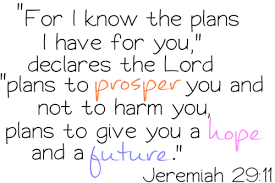
Well, in marketing spiel, that’s a sermon title to bring in the crowds 🙂 For after all, wouldn’t it be good to know God’s plan for our lives. So good indeed that one of the most oft quoted verses in the Scriptures, is Jeremiah 29:11 plans

It is so popular that it is plastered on a thousand devotional posters – ten thousand fridge magnets, and I have no way of counting how many bumper stickers it might perhaps be found on – which is odd. It’s odd for a couple of reasons. For the prophet Jeremiah is not exactly someone associated with a message which we’d all want to buy into.
God’s plan for Jeremiah was that he go into the heart of the darkness of God’s people to announce God’s impending judgement on their wickedness – and boy did he suffer as a result – one in the long line of those God sent to his people to call them to repentance culminating in his sending his Son whom they crucified . . . so quoting Jeremiah on ‘God’s plan for your life’ . . . well we might say that it is asking for trouble!

And Jeremiah, as one faithful to God’s plan for his life does not hold back – who is this people he is called to? Well by the time of the prophecy about God’s plan they are in exile and The LORD addresses these words to them : Your hurt is incurable, your wound is grievous. There is no one to uphold your cause, no medicine for your wound, no healing for you.

All your lovers have forgotten you; they care nothing for you; for I have dealt you the blow of an enemy, the punishment of a merciless foe, because your guilt is great, because your sins are so numerous. Jer 30:12-14

Apart from the use of oil etc. to produce such commercial tat, the real problem with fridge magnet theology is that fridge magnets aren’t large enough 🙂 ‘I have plans for you, plans for your welfare and not for harm, to give you a future with hope. . . . because you are incurably sin sick – all those false gods you have run after have let you down and I’ve taken you into exile because of them . . .’ These are the people that God has plans for . . .

And immediately we understand that God’s plans for us have little or nothing to do with ‘the house we’ve always dreamed of’, ‘things working out well in our careers’, or ‘finding the man or woman of my dreams and living happily ever after’. God’s Plan for his people is that he will save them from the consequences of their abandonment of Him – put another way, that he will save them from death and hell, in and through Jesus . . . and without wishing to harp on about a theme I have spoken of these past weeks, of all those ‘fridge magnet dream’ plans . . . where is Jesus in any of them???

So when Jesus comes, this is precisely to whom he comes, those who in their hearts are still in exile – those of whom the prophet Isaiah wrote “This people honours me with their lips, but their hearts are far from me; in vain do they worship me, teaching human precepts as doctrines.”

Jesus puts it plainly You abandon the commandment of God and hold to human tradition. The commandment of God, his Life giving word is abandoned – we saw this played out last week in the gospel – the words that Jesus speaks are Light and Life, but his disciples abandon Jesus words, for teaching more attuned to the darkness of their wicked hearts. Like people who avoid going to the doctor for whilst in their heart of hearts they know they are ill, they do not wish to be confronted with their condition – they do not wish to be well, so when the Light shines in the darkness it is for judgement  ‘that the light has come into the world, and people loved darkness rather than light because their deeds were evil.’

So, let us come to James the brother of Jesus and pillar of the Jerusalem church – and his meditation upon how God’s plan is worked out in us when we come into the light.

Firstly he begins with this acknowledgement – Every generous act of giving, with every perfect gift, is from above, coming down from the Father of lights, with whom there is no variation or shadow due to change. When Jesus says to the wealthy man who calls him good teacher ‘Why do you call me good, only God is good.’ He is pointing to one of the most fundamental truths of existence, the Goodness of God. What else can explain God’s desire to rescue his people who have utterly abandoned him – what else can explain God’s plan for us, indeed a plan that extends to the whole created order as our abandonment of the command of God has led to a Creation which mirrors the humans who have sought to act as God within it. The Goodness of God we may well say is that which gives Hope, when humanly there is only despair – God’s Goodness is Life from Death.

James goes on ‘In fulfillment of his own purpose [putting his plan into Action] he gave us birth by the word of truth, so that we would become a kind of first fruits of his creatures.’ He gave us birth by the word of truth – through His Living Word, His Word made flesh, God gives us new birth. ‘Into a living hope’ as St Peter puts it, ‘by the resurrection of the dead’ – there you are again, a people beyond hope are given Hope, a people who are dead in sin and wickedness are given new birth, by this Word – that they might become a kind of first fruits of his creatures . . . The Genesis narrative of ‘creation’ is nothing more nor less than a foreshadowing of THIS Creation. God coming to his people in Jesus is His plan, ‘since before the foundation of the world’ Jesus indeed is the lamb who was slain, from before the foundation of the world. Before ever there was sin, before ever there was a world, God’s plan has been to rescue his people and to reveal his Goodness.

Yet, this plan requires our participation You must understand this, my beloved: let everyone be quick to listen, slow to speak, slow to anger; for your anger does not produce God’s righteousness.  Be quick to listen! Quick!! — the Living Word speaks – ‘This is my beloved Son – listen to Him!’ – The Words he speaks are Spirit and truth – they are Life eternal. Quick to listen. Slow to speak – as James will remind us in a couple of weeks, our words are dangerous – not least those who presume to be teachers, for too easily does the preacher end up teaching human precepts as doctrines. This is why I ask that you pray for all those who presume to teach that they may, both by their life and doctrine, set forth thy true and lively Word, and rightly and duly administer thy holy Sacraments. That my brothers and sisters is why we should pray for our clergy – not that their lives will work out well according to the standards of the world, but that they might ever hold fast to the Life giving word of truth and not descend into the evil of teaching human precepts as doctrines, which Jesus condemns.

Quick to listen – slow to speak – slow to become angry. The Church has always taught that anger is one of the wicked thoughts, the deadly sins (in Catholic tradition) – that the only valid anger was anger against our own sins. For too easily we stand in angry judgement of others and find ourselves, in the words of the crucified thief, under the same condemnation. ‘Man’s anger does not produce God’s righteousness’ – and who would dare presume to announce Their anger to be that of the Living God??

Noting all that – our slowness to listen to the Word, our alacrity to speech and anger, the apostle counsels Therefore rid yourselves of all sordidness and rank growth of wickedness, and welcome with meekness the implanted word that has the power to save your souls. It is the language of New Creation – of gardening, tilling and keeping the soil of our hearts. In an echo of his Brother Jesus’ parable, James would have us tear out the weeds – all those things which Jesus lists which defile us – ‘For it is from within, from the human heart, that evil intentions come: fornication, theft, murder, adultery, avarice, wickedness, deceit, licentiousness, envy, slander, pride, folly. All these evil things come from within, and they defile a person.’ All those things which strangle the Word of Life and truth. Seek to tear them out to make soil fit for ‘the implanted word that has power to save your souls’

The Word of Christ, in us, which alone has power to heal and save our souls . . . I will say little on this point, but to note that it is in this day when the language of sin and soul has all but disappeared even from the discourse of the Church, Lord have mercy on us, that the evil of euthanasia rears its head . . .

But let us be clear – this welcome for the word is not simply a meditative exercise – as we are to rid ourselves of the rank growth – active – so James says in receiving the word, Act on it!! But be doers of the word, and not merely hearers who deceive themselves. There are many many deceptions abroad in this age. As James points out, if we do not bridel our tongue, we deceive ourselves, our religion is worthless, for we are unrestrained, our energy is wasted. But  one of the most clever schemes of our enemy is that of encouraging mediation on the word as healing in and of itself – this is no better to us that gazing lovingly at the medicine in the bottle – or seeking to feed ourselves by reading ‘Good Food magazine’ but never cooking. It is the religion of nice thoughts, it is a vapour and a mist, and highly seductive for that for it requires no effort on our part. cf Luke 13:24 The man Jesus heals he commands – ‘take up your mat and walk.’ God has given us birth to be a kind of first fruits of his creatures and like new born babies we move from passivity, to the strenuous work of participation in His Life . . . Yes, Meditate upon the word – accept it – and Do it. Those who love me, obey me, Jesus says – again Those who hear my words and do them are like those who build their house on the rock, that in the day of Judgement, they may stand firm. As James, Jesus’ brother and our puts it – But those who look into the perfect law, the law of liberty, and persevere, being not hearers who forget but doers who act—they will be blessed in their doing.

Religion that is pure and undefiled before God, the Father, is this: to care for orphans and widows in their distress, and to keep oneself unstained by the world . Love the Lord your God with all your heart, soul mind and strength – love your neighbour as yourself – do this and you will live –

As I said – the Jeremiah fridge magnet is not large enough; wanting God’s plans for us to be about Our hopes and dreams,it is cut off half way through.

God has a far better plan for our lives – Hear the Word of the LORD For surely I know the plans I have for you, says the Lord, plans for your welfare and not for harm, to give you a future with hope. Then when you call upon me and come and pray to me, I will hear you. When you search for me, you will find me; if you seek me with all your heart, I will let you find me, says the Lord, and I will restore your fortunes and gather you from all the nations and all the places where I have driven you, says the Lord, and I will bring you back to the place from which I sent you into exile. I will bring you to myself – I will give you my life, in and through Jesus my beloved Son – the Bread of heaven, the Word of Life

Hungry for Jesus – Sermon for Ordinary Time 20 – Year B

Sunday 20th in Ordinary Time – Year B – 16th August 2015

Ephesians 5:15-20
John 6:51-58

Hungry for Jesus

Perhaps one of the more significant things that we have to wake up to as the Church in these times, is the realisation that we do not know how to think as Christians. Not that Christians cannot think, but that when they do they largely do so in exactly the same way as people amongst whom they live. Indeed we may well be surprised to hear that their may be such a thing as Christian Thought at all.

To begin to think Christianly is as I suggested a few weeks ago to have our imaginative world Filled by the Reality of Jesus Christ, Crucified, Risen and Ascended. In other words to see Reality only in terms of that which it is, the realm over which we declare Jesus Christ to be Lord to the glory of God the Father.
As I recently pointed out, for many many years this was precisely how the Church did its thinking. And as a result developed ways of speaking of God in Christ, and being the Church. We call these The Tradition – and they include the Catholic Creeds, the teachings of the Church Fathers and certain ways of doing and being church.

As a shadow of the One who was to Come, Solomon, the son of David by Bathsheba, prayed for Wisdom. Christ in his coming IS the embodiment of Wisdom – and the Church as His body, as it grew Grew in Wisdom. The teachings of the Church and the Creeds being the embodiment of that Wisdom, the Holy Spirit leading her into all truth as Jesus said.

A very simple example of that was the way in which the Early Church Fathers understood the significance of our bodies for our Life in Christ. This to us may well sound very strange. We imagine Christian Faith as a set of ideas. That Faith might have a bodily aspect seems a little odd to us. Yes we might be able to understand that we need a body to live out our faith in. After all if you are going to share your bread with the poor, you need hands to do it with – but children of the Enlightenment that we are, we tend to understand that we are chiefly our minds, and that all that is happening when we feed the poor is that our faith – in our head, or brain – directs our inanimate body in a certain way. Now certainly that is in part true, but it is a very shallow understanding of the truth of the matter. Our forebears understood these things far better than we – indeed they understood everything it often seems to me, far better than the best of us ever shall. We have traded Wisdom for the riches of the world, we have eaten afresh of the Knowledge of Good and Evil – and the Church in the West has withered as a result.

But lets come back to that issue – that of the body and its place in our Salvation. A few weeks ago I was with someone who in passing had told me that his life was so full of appointments and busyness, that he had little or no time to be fed – he was not studying the faith, or spending long hours in prayer with the Scriptures. As it happened I spent the morning with this man and later that day something struck me – which was that in the time we were together he had eaten two large meals.
Now we might have thought nothing of this . . . but the Fathers, those early teachers of the Church would have instantly seen a connection, which came to me later that day and which I passed on to him. Which was this – that the Body and the Soul are so intimately connected, that if the body is full of food, the Soul is left hungry – for to be full is to be full, and if we are full of food, there is no room for the Spirit. My friend was substituting bread that perishes for the bread that one may eat and live forever. Having a full belly led to a contentment which made us slothful in prayer – I passed this insight on and told him that in part I recognised it because it was a discovery I’d made about myself. That if I’d had a large meal – my sense of the Spirit of God, my desire for reading the Scriptures, my thirst for study of the Traditions, and above all, my hunger for Christ was blunted at best and all but killed off at worst.

This of course was no news to those of the Old faith – they knew these things intimately, indeed it was my reading the Fathers that alerted me to this and brought me to myself in this respect. Regular, not dramatic, gentle fasting – was a part of their discipline of faith, for they knew that to be physically full led surely to spiritual emptiness . . .

Which of course leads us to the greatest challenge to us as a Church in this place and this time, that we are very comfortable – yes we grumble a little if some suffering common to all people comes our way, but generally we are comfortable. The words of Jesus – ‘woe to you who are well fed now’, at best bounce off deaf ears, at worst are reworked so that they mean something completely different and we don’t have to be discomforted by Jesus himself.

And yes I do mean it that way – it is better not to have heard, than to hear and twist the words of Jesus . . .And if we don’t want to pay attention to Jesus, he will not force himself upon us.

So to return to where I started, thinking Christianly for a start means listening to the Wisdom of the Tradition. Why is the Church falling asleep? Because she is too well fed on food that perishes, and busy lives – and because she is too well fed, too full, she has all she has and imagines, if she would never say it out loud that she has no need  to pay attention to Jesus. And he withdraws, he shakes off his sandals – after all, in our words and deeds we are making it clear, ‘We don’t need Jesus’.
As I said last week – I was recently at a Church conference where the Board in charge of this aspect of the Church’s life had produced a list of words to express the heart of what we are about – Jesus was totally absent from that list . . .

We are whole beings – Body, Soul and Spirit. The Spiritual and the Physical are interwoven and affect one another intimately. The Gospel reading today comes towards the end of a lengthy dispute between Jesus and those who have come looking for him. Immediately before it he has fed the five thousand – and now the crowds come after Him, but as Jesus discerns ‘Very truly, I tell you, you are looking for me, not because you saw signs, but because you ate your fill of the loaves.’ . . . but that bread perishes – just as your physical body will perish. You eat, you are full, your belly empties, you are hungry, but you keep going back to the bread that does not satisfy – it keeps giving out – and eventually it will give out for good. The sheer fact that physical food keeps giving out on us is a sign that there is some other food!! Do not work for the food that perishes, but for the food that endures for eternal life, which the Son of Man will give you.

Like myself and my friend the other day, we fill up over and over with food that perishes – yet we do not work for the food that endures for eternal life. To put it most sharply – we substitute the temporary fulness of food, of busy lives which only serve to bolster our sense of self importance – we substitute these things that are passing away for the very Life that Jesus offers.

And this substitution is a revolt against him. “How can this man give us his flesh to eat?” So Jesus said to them, “Very truly, I tell you, unless you eat the flesh of the Son of Man and drink his blood, you have no life in you. Those who eat my flesh and drink my blood have eternal life, and I will raise them up on the last day; for my flesh is true food and my blood is true drink. Those who eat my flesh and drink my blood abide in me, and I in them. Just as the living Father sent me, and I live because of the Father, so whoever eats me will live because of me. This is the bread that came down from heaven, not like that which your ancestors ate, and they died. But the one who eats this bread will live forever.”

Whoever eats me will live because of me – Jesus cannot put it more plainly than this

Jesus Christ is our Very Life. What can we say of a Church body which in a hundred separate words does not once mention Jesus when it speaks of ‘the heart of what it is about’? It has surely found some substitute – it is not hungry for the bread that endures to eternal life but satisfied with that which perishes . . . and so it perishes.

God so loved the World that he gave his only Son that whosoever believes in Him, should not perish, but should have eternal life. That belief in Jesus goes way beyond thoughts about Him – to believe in Jesus is to Know in our very Souls that Apart from Him we have no Good thing – that in Him is all our Life . . . that we shall refrain from being full physically, or ‘busy’ for we know that to do so weakens our Love for Him

As I said last week, Christian Life is not a ‘way of life’ – nor is it a set of moral ethics or virtues – indeed the Romans saw this clearly and denounced it as not even being a religion! No it is none of these things – it is Life itself in the One who gives himself to us in Word and Sacrament. We feed on Him – He is our Life. This is why we should always come to the Eucharist – not with full bellies as those Corinthians whom St Paul denounced did – but Hungry. Hungry for the Word of Life – This is my Body – This is my Blood.

St Paul’s words as he writes to the Ephesians sound ‘too spiritual’ for our ears Be careful then how you live, not as unwise people but as wise, 16making the most of the time, because the days are evil. 17So do not be foolish, but understand what the will of the Lord is. 18Do not get drunk with wine, for that is debauchery; but be filled with the Spirit, 19as you sing psalms and hymns and spiritual songs among yourselves, singing and making melody to the Lord in your hearts, 20giving thanks to God the Father at all times and for everything in the name of our Lord Jesus Christ.

Giving thanks at all times to God the Father for everything in the name of our Lord Jesus Christ – Giving Thanks – Eucharisteo is the verb – At the Eucharist we give thanks for Everything, for Christ is our Everything and in Bread and wine he gives himself to us

Just as the living Father sent me, and I live because of the Father, so whoever eats me will live because of me.

May the LORD awaken the deepest of hungers for him in our hearts that we might make every effort to enter in at the narrow gate

Amen

‘Love your neighbour as yourself’

I’ve just been reading yet another of those seemingly endless and interminable articles in the ‘Christian’ media on ‘why it is so hard to love ourselves . . .’, and consequently teaching us to learn to do so, in the hope that eventually we might love ourselves and then love our neighbours . . .

Brothers and sisters, heaven cannot wait.

Actually, with one or two exceptions, we all love ourselves and to a point where perhaps we have lost the plot – and as witness I cite the innumerable blog posts etc. cited above


So just to make it clear

Love your neighbour as yourself

Simple


I give an example

Do we have enough food to eat today?

Do we know of anyone who doesn’t?

Share our bread with them


Again

Do we have enough clothes to keep you warm and protected from the elements?

Do we know of anyone who doesn’t?

Share our clothes with them


Again

Do we have sufficient money etc to live in a house that is warm?

Do we know anyone who doesn’t?

Share what we have with them so that they also may be warm – indeed we might even welcome them into the warmth of our house – it will cost nothing – we may even find new friends and thus break the cycle of our narcissitic isolation which leads to the sort of articles we waste our time writing and reading.


You see, we love ourselves enough to make sure that we take care of our basic needs – this is the embodied understanding of love which the entire Scripture points us to in Christ who loves us in the flesh,  by the giving of his body.

Loving ourselves involves taking care of our physical needs – as St Paul puts it  in an aside ‘For no one ever hates his own body, but he nourishes and tenderly cares for it’. By and large, we love ourselves plenty. Indeed many if not most of us have ‘ample goods laid up for many years’. (Luke 12 vs 19)

We have food and clothes and warmth for today, and tomorrow, and day after day after  day – we love ourselves so much, we even have planned for years down the line . . .

Our problem is not that we do not love ourselves, it is that our self love has blinded us to our neighbour  (Luke 16:19-31)


The irony of all this is that if we obeyed Christ in this regard – shared our bread with the poor etc. we may well enter into a way of Life in which our narcissitic obsession with self acceptance became nothing more than a dream that fades from our memories as the light shines into the darkness


. . . and pray for me, a sinner also


Sermon for the 18th Sunday in Ordinary time, Year B. (2015) “That He may fill all things”

Sermon for 9th Sunday after Trinity – Year B – 2015

“That he may fill all things”


‘They said to him, ‘What must we do to perform the works of God?’ Jesus answered them, ‘This is the work of God, that you believe in him whom he has sent.’


Ceiling


A joke, A Confession, A Question, and why we modern Christians seem to need our eyesight checking


Allegedly, the old jokes are the best – ‘Sunday school teacher – ‘what is small, flightless, nocturnal and has a long beak?’ A child hesitantly puts up their hand, ‘Well I know it sounds like a Kiwi – but given we’re in Sunday School, is the answer Jesus??’


This joke, which I first heard in an Anglicised form – (Squirrel replacing Kiwi) – at theological college, is interesting, in that if jokes are translatable within cultures, and we told it to a Christian of the Middle Ages, they wouldn’t See the joke . . . for undoubtedly Christians for the first thousand or so years of the Church’s history had a different way of speaking of the Reality of their existence – in that they might readily speak Christianly of any manner of things, and that it would seem utterly normal and entirely unforced to speak of any aspect of the created order, and Jesus Christ in the same breath.


That there was no dimension of life which we could begin to speak about in Truth, without beginning with Christ . . . That there was no dimension of life which we could begin to speak about in Truth, without beginning with Christ . . . That Jesus Christ was the key to understanding the True nature of Everything, Everywhere, and for all time – and that apart from Knowing Jesus Christ, one was as it were blind to the world . . . And if we see the world in that way, then perhaps we don’t get the joke?


Well I’ll come back to the Kiwi Jesus in a few moments, but let’s move on to the Confession. And for once, sorry to disappoint, it’s not one of mine. Rather the Confession of David, which may seem every bit as odd to our ears as the Kiwi Jesus Christ, and indeed perhaps to us at least, outrageous, but for precisely the same reasons.


We pick up the story from last week, as we remember – David – quietly humming Crimmond, ‘The Lord’s my Shepherd, I’ll not want . . .’ wanders onto the roof of his palace, and . . . Oh Hello!!!’ David sins, taking the wife of another man, and when the consequences of his actions begin to appear, he compounds his sin by having her husband murdered, and then taking her as his wife and she bears him a child.

David we remember stands for all of us Western Consumers with power over so much, and no thought for the consequences – He sees, He LIKES, he sends (he uses a servant – we moderns perhaps use the internet) – and he takes . . . But for David, unlike us, the consequences of his consumer habits are visited directly upon him, and that swiftly. David is rudely awakend from his premise that He is the centre of the universe, and REALITY smacks him in the face. ‘the thing that David had done displeased the LORD’ Davids ability to send and to dispose depends utterly on his knowing that he is the Servant of the LORD. The one who Sends, the one who sent ‘a man named John’, the One who sent the One whom we are commanded to believe in.

The LORD Sends Nathan to David, and Nathan the prophet skillfully leads David to speak the Truth from his own mouth – reminding us all, do not judge your brother, for the measure you give will be the measure you get – ‘You are the man!’ ‘You are the sheep stealer who deserves to die, as you yourself have said’


So far, so comfortable – He’s done wrong and Nathan lays it out how David is going to get it as a consequence,  . . . But let us remind ourselves of what happens next . . . David said to Nathan, ‘I have sinned against the Lord.’ Nathan said to David, ‘Now the Lord has put away your sin; you shall not die.’


Well if talking about the Kiwi Jesus Christ was ridiculous, and silly to our ears – surely this is outrageous!!! What is more it is amplified in David’s Psalm of penitence which we recited together – ‘Against you, you only have I sinned, and done what is evil in your sight’. What about Bathsheba? What about URIAH!!! Then to make it worse, Nathan goes on, ‘Nevertheless, because by this deed you have utterly scorned the Lord, the child that is born to you shall die.’ And for those who can only interpret the Sunday School teacher in terms of religious naivety and silliness, it would be hard for them to hear the judgement pronounced upon the innocent child and not think of The LORD as some capricious deity, who lashes out at the innocent . . .


And I suggest again that our problem is that we don’t see the nature of reality in the same way as those who read and heard the Scriptures in the first thousand years or so of the Church – indeed that we are those whose responses reveal us to be those who cannot see. [I think it is sobering to reflect on our attitudes to previous generations in the light of Jesus’ denunciation of those who think they see, but do not See Him] I will return also to David’s outrageous confession and the dreadful consequences of his actions


A Joke, A Confession, and a Question . . . Why as Christians – as those who in Baptism are included in Jesus Christ – should we have a concern about the Created order?? Now just ponder that for a moment – and if you have an answer, what place does Jesus Christ play in it? What does it mean to believe in Jesus Christ in terms of the ecological collapse we face?? What does the Creation have to do with Jesus??

As some of you know I have an interest in Climate Change and the impact of the human on the Created order. And so I have read many books on it by ‘Christian’ Writers, but rather strangely, Jesus is all but absent from them. Almost without exception they read the same if written by someone other than a Christian, of any faith, or none, except obviously ‘God’ gets a mention, but not Jesus. Which is troubling. If Jesus Christ is the centre of God’s self revelation – if as Jesus tells us, ‘the work that God gives is to believe in Him’. If THE Work that God gives us is to believe in Christ . . .


What does that mean?? Our question might be to Jesus, what does it mean to believe in you?? Nothing less than to See Everything in terms of the Person of Jesus Christ, Incarnate, Crucified, Resurrected and Ascended . . . and our forebears in the faith shaking their heads and inviting us to see things as they did, with the eye of faith in Christ. With the eye of faith. Faith is not so much about what we think, but what we See . . . to be born of the Spirit is about our Sight, and Christ Fills our entire field of view


When God took on human flesh in the person of Jesus, he took on materiality. God who is Spirit, embraced not just humanity, which is the focus of nearly all modern Christian piety be it liberal or Conservative, he embraced the whole Cosmos. This is the Gospel, of Jesus Christ. God in Jesus Christ is revealed as the Creator of all that is, and apart from Knowing Him, we cannot Know the Created order


Listen to St Paul as he writes to the Colossians. [Jesus Christ] is the image of the invisible God, the firstborn of all creation; for in him all things in heaven and on earth were created, things visible and invisible, whether thrones or dominions or rulers or powers—all things have been created through him and for him. He himself is before all things, and in him all things hold together. He is the head of the body, the church; he is the beginning, the firstborn from the dead, so that he might come to have first place in everything. For in him all the fullness of God was pleased to dwell, and through him God was pleased to reconcile to himself all things, whether on earth or in heaven, by making peace through the blood of his cross. Like a drumbeat – ‘all things, all things, all things’ Whatever is going on on the Cross, it goes further, much much further than ‘a mechanism for dealing with human sinfulness’, insofar as we see sinfulness purely in terms of moral infraction. The descent of God in Christ into human flesh through the obedience of The Blessed Virgin Mary – his death upon the Cross – his resurrection from the Dead and his Glorious Ascension into the presence of the Father – is nothing less than God in Jesus Christ taking to himself the entire Cosmos. God was in Christ reconciling himself ‘to the world’


And so Paul again this time from our epistle this morning When it says, ‘He ascended’, what does it mean but that he had also descended into the lower parts of the earth? He who descended is the same one who ascended far above all the heavens, so that he might fill all things.


So back to our medieval friends . . . how we damn the medieval era, turning into a term of abuse . . . and yes there were things that were wrong, but brothers and sisters, human action would not have wrought the devastation we wise moderns have caused – because to look upon the creation was to see it in Sacramental terms. God in Christ had taken the Creation to himself, and as to wound our neighbour was an offence against God, so too to wound Creation, for was not Christ Sacramentally present in the materiality of bread and wine?? Had not God in Jesus Christ taken hold of all things?? Was he not Sacramentally present in the person who hungered? Was he not Sacramentally present in the very dirt of the ground, he descended into the lower parts of the earth . . . The medieval imagination would not permit for example ploughs driven by more than a couple of oxen, for the very ground was to be treated with reverance, after all were we not made from mud oursleves? Did not Jesus Christ take on the dust of which we are made?? Not that he WAS those things, – but that apart from HIm, theuir true nature could not be known.

That we might seek to release all the energy we could possibly do to extract every last ounce of everything from it, and then to fill the gaping wound in the earth with the detritus of our madness, would be understood for what it is an offence against Christ himself . . .


That, in a very sketchy outline is the Truth about the Creation and our lives in the light of it. That is why if the Sunday School teacher was perhaps hoping that the answer might have really been Jesus, he or she was groping towards some truth which the church has known since the beginning, yet has forgotten. And why David’s Confession is Truthful, against you, you only have I sinned, for in sinning against my neighbour, I have sinned against you O Lord, for you in Christ fill all things. I was blind and I did not see you . . .


And the child?? There is a line of thought which some Christians fall into when seeing the death of the innocent – that somehow in the mysterious purposes of God it is ‘necessary’ as ‘God works out his purposes and we are drawn as humanity deeper into the truth of God’ That brothers and sisters is Blasphemy . . . no, the child dies because our actions have consequences. That in losing sight of the one for, through and too all things are made – the one who fills all things – we lose sight of the reality of our very existence and becoem as blind bulls in shops of the most delicate china.

Yes, we may well come to our senses, see what we have done, and repent of destroying the created order, but the innocent will continue to die as a result of our consumptive madness. We were called to live our lives in the light of Christ who fills all things, we chose not to and the consequences were and are visited upon the countless innocent.


But has God no answer to this?? Indeed he does, His answer is the One who inhabited the dust of our lives, the Innocent one who died for the sins of the World, who stepping down so far taking up the lost and the last and the weak and poor and those who die for no fault of their own. God will see that they are recompensed and more than fully, for he raised Him who stepped down into the depths to the highest place, and feeds those who hunger because of our refusal to share, and gives abundant life to those who die in their powerlessness – for he gave up all power, he hungered and thirsted . . . and as The Innocent One – assumed all the innocent in His death and was raised with them . . .


In repentance we turn once more to the one who fills all things, we face Reality – and we too hear the words of the Lord to David ‘Now the Lord has put away your sin; you shall not die.’ And in Love and mercy and Grace he once more says – come to my table – Here in Bread and Wine – here in heaven and Earth Woven together – here in my Body and my blood ‘Remember me’ . . . I have often said, we all need our eyes opened to the Truth manifested in the Eucharist – for it is the Truth about everything. For truly – he is the same one who ascended far above all the heavens, so that he might fill all things. In that is God’s Judgement, In that is God’s Life extended even to us


Sermon for Sunday July 26th – Eight after Trinity – Year B 2015

Sermon Sunday July 26th

8 After Trinity

2 Samuel 11:1-15

Ephesians 3:14-21

John 6:1-21

God loves us too much to give us what we want . . .

Back from the UK . . . perhaps a certain concern – 9 weeks ‘at home’ . . . homesickness – itchy feet???

Certainly, just this last week I posted this on Facebook . . .

Capture

Gifted with one precious day . . .

Plaice Fell

I believe I would be truly content – if only . . .

I wonder what your . . . if only . . .

I believe I would be truly content – if only . . .and certainly there might be ways for me to get what I want . . . and surely God wants me to have what I want and to be happy??

If I had THAT all would be perfect!

A longing for some thing, or some one, or a career or . . . but of course none of my desires affect just me . . .

How many conflicts in the church and in the home and the wider world have their roots in this longing – this desire – this Sehnsucht as CS Lewis was fond of calling it . . .

So David – Established as King – stands looking over ‘His domain’.

‘I have everything – ‘The Lord is my shepherd, I shall not want . . .’

But the next moment – he sees – he sends and he takes . . .consumed by his desires

And David epitomises the modern person – trained to consume, but in truth be consumed by our desires . . .we see – we send – we take

In David’s case his desires lead to the death of Uriah, Bathsheba’s husband, the death of the child conceived, and sees the unravelling of David’s kingship . . .

‘The Lord is my Shepherd, I shall not be in want . . . but if only . . .

And our desires have similar effects – we see . . . a car, a phone, yet another something for the kitchen – we see, we send, we take – without a thought for the land that was taken to provide the metals, as we know locally an Aluminuim smelting plant is required for this sort of thing, most definitely NOT onour doorstep – rather on that of the poor who have no political clout,  the streams that were polluted, the people’s displaced, in some cases as we know all too painfully well, lives closer to home are torn apart . . . And perhaps worse – trained as we are now in patterns of consumption – we take the name of the Lord in vain and say ‘God wants me to have this or that or the other’ . . . and for what??? For things that are passing away . . . for things that will fill landfill, that our families will throw away when we’re gone, for the dream relationship that when it becomes reality is just the same because we are just the same . . .

So we might therefore say, that God loves US to much to give E what I want because my wants ignore their impact on others – often many thousands – so God loves US to much because he wants us to take seriously the command ot loveourneighbour as ourself. If I want a car, I should be happy to have the Aluminium smelter disrupt my life etc. etc.


BUT it goes far far deeper than that – Love your neighbour as yourself is the second commandment . . .

One of the biggest regrets of my life is the poverty of my relationship with my father. He frequently was away on business which meant that to some considerable degree he and I were strangers to one another – and whenever he returned from his travels – he brought presents, and in my childishness I learned at some deep level to value the presents far more than my father – I lost sight of the far deeper longing to know and be known by him and substituted it for the desire for what he would bring back when he returned . . .

You see our problem as CS Lewis puts it so well is not that our desires are too strong, but they are too weak . . .half hearted creatures fooling around with drink and sex and ambition, when Infinite joy is offered us, like ignorant children making mud pies in slums because we cannot imagine what is meant by the offer of a holiday at the sea . . .

And so it is with us and God, the Father from whom all families in earth and heaven take their name . . . If only I had this or that or the other I would be happy . . . God wants me to be happy – he wants me to have this or that or the other

This is why in many respects and for most is not all of us, the life of discipleship can be a long training in disappointed hopes and desires, because God’s desire for us exceeds all that we can imagineably ask or conceive – our vision is too small – we are too readily satisfied – our capacity is not extended sufficiently – for God desires to give us his very self . . .

This is why Paul prays that he wants us to know ‘the depth the height, the breadth the depth and the length of the Love of God – for if we for one moment we saw even a scintilla of the Vastness of God’s Love. The inexpressibility of His Beauty – The Universe dwarfing Oceans of his tenderness and mercy . . . we would never desire anything or anyone ever again

The answer to our deepest longings and desires, Love the Lord your God with all your heart and soul and mind and strength . . .

If for a moment we can say –yes I know the depths of God’s love for me, but . . . we have no idea of the Love of God for us . . . God desires that we might so know him that we might be filled with all his fullness and be unmistakeably his treasured children.

When Israel was in the wilderness He gave them what they needed, bread and forgiveness: the Manna and the sacrificial system – by giving them himself – God at the centre of the community feeding, forgiving and nourishing them with his very self – and so comes Jesus feeding the 5000, pointing to the Cross where he will pour out his very self as Bread, as forgivness as LIFE . . . and in his mute appeal from the Throne of his Glory, the crucified one asks ‘Am I not enough?’ ‘Is it nothing to you, all you who pass by?’

Find rest O my soul, find your home in God alone – Come to me and I will give you unimagineably more than all you could possibly ask or conceive

After my FB post a friend asked ‘Are you homesick?’ – I replied – aren’t we all? We’ve just forgotten where home is, but the Good shepherd comes looking for his sheep to lead them home, to lead them to green pastures

Find rest O my Soul in God alone – come home