Through the Bible in a year – January 8

The Scheme for January and February can be found here

Genesis 18-19; John 7:1-24; Psalm 11-12

Yet once again our Genesis text takes us into the deep water of the Ancient things that hold the world together. Here in these familiar stories of the visitation to Abram and the destruction of Sodm and Gomorrah – we see how the deep things, that are good can be now in human experience for Good or Evil.

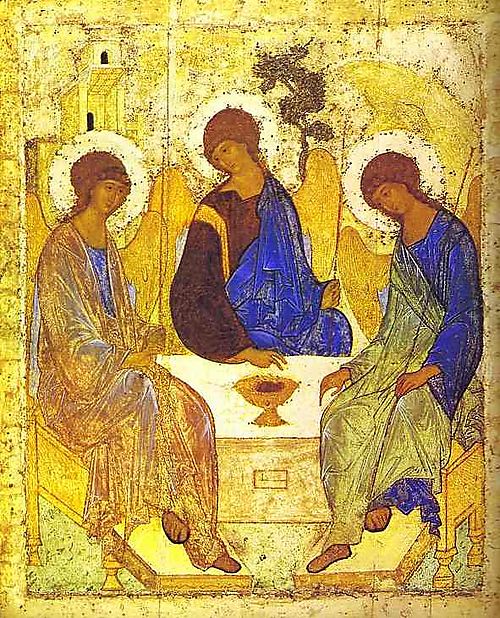
Hospitality is the theme that runs through both – hospitality given and received – honoured and abused. Too many read the story of Sodom and Gomorrah to answer questions the text does not begin to seek to answer. What we see played out here is a society so corrupt that the stranger is seen as means to ends, and not honoured, as The Stranger has just been welcomed by Father Abraham.

We think of the words of the writer to the Hebrews reminding us to honour strangers with hospitality, reminding us of the visit of the LORD to Abraham who entertained angels unawares . . . as did the people of Sodom.

The seriousness of every encounter is laid plain before us. Perhaps this is why we shrink from these texts, finding them Primitive. They are too demanding in setting Reality before us too plainly. as we often say, when thinking of how we treat others ‘it is very difficult’. The text will not allow us this deceit.

God’s presence is Known in hospitality – in giving and receiving it.

This matter of Life is serious, we should not laugh

Who knows who it is that walks among us in secret? What their Promise means?

“In the LORD I take refuge”

Through the Bible in a year – January 7

The Scheme for January and February can be found here

Genesis 15-17; John 6:41-71; Psalm 10

“Does this offend you?”

In the story of Abram, there is much to offend our modern sensibilities – just as the words of Jesus offended those of his own time. Abram hears the promise of God but does not receive the gift of the promise. The promise is too far fetched he thinks for this strange God who has called him to put into effect. Sarai casts around for a way in which her lord might be spared the ignominy of Faith, of which the Psalmist often reminds us. Her eye lands on her Egyptian slave-girl Hagar and no good comes of it – yet once more, as in the story of Cain, God intervenes in the messy and ambiguous outcome, not staying removed.

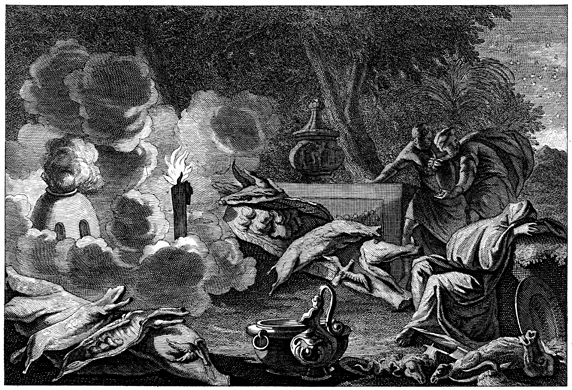
The dark scene of the sacrifice feels prehistoric to us – yet it speaks of something profound of which we have lost sight. The Power of Word – or Promise – or Oath – that we are taken with immense seriousness. If the Word of God endures forever, does not that of the human made in his image? The divided animals were potent reminders of the significance of the human word – that it was a Bond. ‘Thus be it to me as it is to these animals if I do not keep my word’ [Thus do not swear . . . let your yes be yes, your no, no] Words are the creative power of life, and the destructive power of death. As Noah creates division enmity in blessing and cursing, so oaths have deep power. Yet here one party is taken out of the picture. Abram falls into a deep sleep – who walks between the pieces, with whom does the LORD make this covenant, but with himself. Abram as we see cannot be trusted [‘he knew what was in a man’] – Abram will try to do it for himself – he will not be a covenant partner. God swears by himself  – and when man fails – God pays the price

Anyone who does not see that the entire world is built for better or worse upon human sacrifice is blind to Reality. The offensiveness of the words of Christ are two fold – we think we have moved on from these deep primitive archetypes and metaphors – we think his words are nonsense, for we do not treat words with seriousness, And we like Abram and Sarai still believe that we can have life that is not Promised. The Gift that comes in the Creative Word – made flesh and blood – that is offered to us as real food and real drink – that we might have life within us.

Sermon for January 6 – EPIPHANY 2013

EPIPHANY2013 [Link to recording of sermon]

EPIPHANY 2013 – YEAR C – Text of sermon as prepared

Isa 60:1-9
Eph 3:1-12
Matt 2:1-12

Latecomers

Well I hope that you have celebrated Christmas fully – the whole twelve days!! 🙂 As I noted a few days ago, my weighing scales seemed to be measuring out the twelve days pretty accurately, if you count out time in additional pounds! 🙂 As we’re often told, we don’t know the actual date of Jesus’ birth, although if Jesus was born six months after his cousin John the Baptist then we can say with some certainty that Jesus was born in September. John’s father Zecchariah was on duty in the Temple at the time of the announcement of John’s birth and thus, knowing when his family would have been on duty as we do – Luke tells us Zechariah was of the order of Abijah – it’s merely a matter of adding 15 months which brings us to September!! So we were ALL late for Christmas!!
However many Christians are even later than we were. For Orthodox Christians, who make up about 1/3 of the world’s Christians celebrate Christmas today – the Feast of the Epiphany – so if you like a good reason for some more celebration – then conversion might be a good idea 🙂

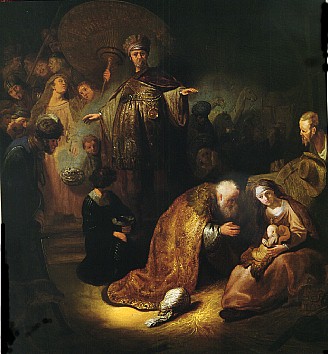
Of course the reason that the Orthodox celebrate Christmas today is because it is today – the feast of the Epiphany – we remember the Revealing of Christ to ALL nations. The Magi, the Wise men from the East being foreigners – outsiders on the story of Jesus – who in some regards represent Us. We are so used to being Christians, we forget that we are latecomers to the story of God’s people. That as of old, it wasn’t our story.

Even that first Christmas story isn’t really ours – no matter how much we try and domesticate it in Nativity plays. We pay little or no attention to the fact that the events around the birth of Jesus are all Jewish. The gospel is first announced to the Jewish people – and then and only then to the Gentiles – that’s us.  Not only is his birth announced in this order – the Shepherds coming to Bethlehem long before the Magi – Jesus himself says ‘I was sent only to the lost sheep of the house of Israel.’ and he sends out the twelve saying ‘Go nowhere among the Gentiles, and enter no town of the Samaritans, but go rather to the lost sheep of the house of Israel. and first to the Jews is the way that the Gospel is proclaimed. So on the day of Pentecost Jerusalem is full of Jewish people – yes from all over the known world, but all of them Jews. It is only following Peter’s conversion through a strange dream that the Gospel is then taken and announced to God fearing Gentiles in the household of Cornelius. And so Paul writes to the Ephesians – I Paul am a prisoner for Christ Jesus for the sake of you Gentiles – AND – Although I am the very least of all the saints, this grace was given to me to bring to the Gentiles the news of the boundless riches of Christ, and to make everyone See . . . !

Listen to the words of the prophet, Nations shall come to your light, and kings to the brightness of your dawn. 4Lift up your eyes and look around; they all gather together, they come to you; your sons shall come from far away, and your daughters shall be carried on their nurses’ arms. 5Then you shall see and be radiant; your heart shall thrill and rejoice, because the abundance of the sea shall be brought to you, the wealth of the nations shall come to you. 6A multitude of camels shall cover you, the young camels of Midian and Ephah; all those from Sheba shall come. They shall bring gold and frankincense, and shall proclaim the praise of the Lord. 7All the flocks of Kedar shall be gathered to you, the rams of Nebaioth shall minister to you; they shall be acceptable on my altar, and I will glorify my glorious house – These are words of promise for the Jewish people – ‘You’ here, is not us 🙂
If we remember the parables that Jesus told of the Kingdom being like a great feast, then Epiphany is a reminder that we weren’t on the original guest list! We are latecomers. And so perhaps celebrating Christmas at This time is a good idea. Not only because we have become so accustomed to Christmas Our way the comfortable way we’ve always known it, it is easy to forget that this message is not about Our ways. It is about God’s way. This Christmas story is as always meant to disturb us, to shake us out of our familar ways and to place us in the midst of something far greater – and to make everyone see what is the plan of the mystery hidden for ages in God who created all things

And what is that mystery?? Well our reading comes in a little late as well – it’s not just Christmas that is late – Paul puts it like this in the verses before our reading So then you are no longer strangers and aliens, but you are citizens with the saints and also members of the household of God, 20built upon the foundation of the apostles and prophets, with Christ Jesus himself as the cornerstone. 21In him the whole structure is joined together and grows into a holy temple in the Lord; 22in whom you also are built together spiritually into a dwelling place for God.

God’s secret plan – the mystery hidden for ages – is that he desires once more to have a place to dwell upon earth and as I said on Christmas day, reflecting on the words of John ‘The word became flesh and tabernacled amongst us, that place is in and amongst his people’ ‘With Christ Jesus himself as the chief cornerstone’ With Christ Jesus himself as the foundation – The foundation  – of everything . . . and as we know all too well here in New Zealand, mucking around with foundations brings buildings down – and so the house of Herod – the one who himself had tried to have himself made ‘King of the Jews’ by dictat – the house of Herod is shaken to its foundations ‘Where is the child who has been born king of the Jews?’ Such an innocent enquiry – and one that threatens everything – all that Herod had planned and built. But like any ruler always on the lookout for those who might usurp his power (partly why we can never expect grown up politics . . .) Herod announced himself ‘King of the Jews’ and ordered that his sons succeed him, but then had them executed!!1 When King Herod heard this, he was frightened, and all Jerusalem with him

And so the Magi come to offer their gifts – Gold Frankincense and Myrrh – and knelt down and paid Him homage. Not paying homage to Herod – homage to the one who is the corner stone for the dwelling place of God

And having been warned in a dream not to return to Herod, they left for their own country by another country . . . this is dangerous knowledge . . .

To know Him who is the cornerstone of the dwelling place of God is dangerous knowledge – as it remains today, at least where the church has retained the understanding that all knees must bow before him to pay homage . . . the understanding that actually We too are outsiders . . . that our obligations are not to the rulers and pricipalities of this age – but of those of the age to come

On an almost daily basis I receive from around the world news of the persecution of Christians – just this past week I read startling evidence that Christians are overwhelmingly persecuted for their faith over against all other faith groups. From our context here in New Zealand this must sound very odd – what after all is very threatening about being a Christian?? We don’t need to be warned in a dream not to tell folk about the one who has been born into the world to supplant all human rule and authority – we just don’t do it.

There is I think a very necessary strangeness in the visit of the Magi – those who come from the East. Whose focus is no human rule but one divinely revealed in the shining of a strange star. I think we too readily try to undo this story – try to make it make sense on our terms and when it doesn’t, then dismiss it – we fail to be troubled by it, in much the same way we have lost sight of the troubling idea that this Faith isn’t first of all ours – that we were only lately invited to become the people of God, and that the birth of Christ into the world really does challenge everything we are so accustomed to.

This is Not an easy story – and the life we are summoned to is not a life of ease. our reading from Paul stops at Verse 12. He continues I pray therefore that you may not lose heart over my sufferings for you; they are your glory. This Glory that the angels announce – and that the Wise men behold will come about only through suffering and on our part, the chief part of that is the knowledge that in being insiders to to the mystery that has been revealed in Christ – we find ourselves outsiders in the world in which we ha learned to be so comfortable

In a sense I think that this is the great adjustment we need to make at this time. Most of us have grown up with church being a very ordinary part of things one way or another – certainly I did. But that is rapidly changing – once more we are coming into an age where to Know Christ is, as it is for so many of our brothers and sisters to be in possession of dangerous knowledge – But Life giving knowledge. In the early years of the church Christians met as they do nowadays in China and PAkistan, in Iran and many other places, behind closed doors. There as in the early days of the church, the wider world’s hostitlity was shut out as God’s people met in secret – to worship and adore – to lay their treasures before him . . . and the church grew like never before as it continues to in those places – so that through the church the wisdom of God in its rich variety might now be made known to the rulers and authorities in the heavenly places.
Perhaps The great strangeness of Christian faith in this world today is that it is not primarily a set of ideas, an ideology, a way of life, it not about values. No it is about a person. We bleieve in Jesus Christ the only son of God eternally begotten of the father, God from God, Ligth from Light, true God from true God, begotten not made, being of one substance with the Father through whom all things were made. Our Faith is to Know ourselves to be His –  in relationship with Him, the Babe of Bethelehem, the King of the Jews, the Son of God most High. It is Only in and through worship and adoration that we like the Magi begin to comprehend what we are called into, and how Graced we are that we who were once far off have been brought home.
Through the Bible in a year – January 6

The Scheme for January and February can be found here

Genesis 12-14; John 6:1-40; Psalm 9

So now a crucial step is made in the text of Genesis, from the world of the mythical archetypes – the foundations from since the beginning of the world – into those stories of people who are in some regards much more familiar to us. Textured portraits presented to us in narrative form. And so as we with our own life narratives read along we are drawn into the lives of these others, in whose lives the Creator is at work.

And immediately we are confronted by divine Call – that which summons us forth. And as the Divine Word called forth the good Creation from the inchoate waters in Genesis one – so we see that call does not come to that which is as it were pre-existent. Abram appears in the text in his own right only as one Called, as do Peter, James, John and the rest – note how the gospel narratives never names those called who do not follow – the Call is the beginning of personal creation.

So it is the question of Jesus which evokes faith ‘Where are we to buy bread for these people to eat?’ The Word precedes human response. Call is always first. The Spirit once more hovers over the crowd questioning seeking for response from that which is formless and hungry, empty and void, and out of this impossible nothingness, 5000 are fed with the bread of heaven.

‘I will give thanks to the Lord with my whole heart : I will tell of all your Wonder Full deeds’

Through the Bible in a Year – January 5

The Scheme for January and February can be found here

Genesis 10-11; John 5; Psalm 8

Our Psalm today is one of the great Psalms of contemplation ‘What is man that you are mindful of him, the son of man that you care for him – yet you have made him a little lower than the angels and crowned them with glory and honour’

Sometimes we hear that we now know so much more of the Wonders and scale of the universe that we have a far better grasp on our finitude than those of old – yet most of us have grown up under light polluted skies and have little sense of the carpet of life of the desert sky. We may see photographs from the Hubble space telescope in the comfort of our living rooms, but it is a far cry from the Glory of the sky when the cold bites our bones.

The Psalmist is full of wonder at the place God has assigned to human beings – yet our Genesis text finds the human trying to define himself over and against God – trying as it were to conquer the heavens, to make a name for himself. Not content with the glory and honour with which the Creator would crown him.

‘Nimrod, a mighty hunter before the Lord’ is a text full of ambiguity. It is all too easy to read of this man who has made a name for himself and built cities – great in the eyes of his fellow humans no doubt is the one who built cities. He gets honour and glory from men and we too might fete and honour such a one – but the Lord crowns with glory and Honour those whom he chooses.

Nimrod’s kingdom begins with Babel – the centre of the biblical rebellion against God – of those who build a name for themselves – and it is from Babel that we are scattered like ashes across the face of the earth. Dust we are, and to dust we shall return

Nimrod’s process of unification is shown to be one that is anti-God – as all such human plans are.

So it is that The Human, The One comes – the one who gives life to those He chooses – the one who does not accept honour from men, but only seeks and accepts the Glory that comes from above and so fulfils the human vocation to dwell in the space between the heavens and the Earth. But who will believe Him? Who will trust in the one who does not seek his own Glory?

Through the Bible in a Year – January 4

The Scheme for January and February can be found here

Genesis 8-9; John 4; Psalm 7

Two days ago I commented in passing on the habit of editing the Psalms to suit our sensibilities, swathed in cotton wool as many of us are, never thinking it possible we would find ourselves in a position where we might in desperate need call down curses on those who come against us. The Psalms are prayers for All of Life. Today’s though faces us with something which I suggest ought to be far more troubling to us. How in truth dare we pray ‘O Lord my God . . . if there is wrong in my hands . . . then let my enemy pursue, overtake me and trample my life to the ground and my soul to the dust . . .’ Strangely we have not excised this from our psalters

Praying the Psalms as with all prayer is not just about, or even not primarily about calling on God to change things, rather if we pray attentively we cannot but find that We must change. The Psalms throughout speak with searing clarity and not a hint of hypocrisy of The upright, The Just, Those of integrity. As with the serious grandeur which our Genesis readings confront us – these prayers call us to a fuller and deeper humanity and repentance.

A necessary repentance – for as we see, God has wiped the slate clean, but he still works with the same raw material of fallen humanity, whose ‘heart is inclined towards evil from youth’. We do not need Augustine to ‘devise’ original sin. It is there, in the new humanity as in the old. And humanities Choice, to Know Good and Evil is revealed to be terrible in its effects.

Noah is found naked and drunk – in the aftermath he takes the fullness of the divine image upon himself, to Bless, and to Curse – from one family, the people’s are divided.

Yet One comes who joins together in himself those so divided. The deadly enemies, Samaritans and Jews – those who pray these ancient prayers – are joined into one in the encounter of the woman at the well with the Lord of Life. Deep archetypes – Male and Female – Life giving. Look! The fields are ripe for harvesting!

Reading through the Bible in a Year – Scheme

A few folks have asked for copies of the scheme

For various reasons I can’t reproduce it all here, but I am publishing it in two monthly installments for use at St John’s

I refer readers to the notes on using the scheme – don’t let it become a chore!!

Here are the readings for January – February

Jan 1    Genesis 1-2; John 1; Psalm 1-2
Jan 2     Genesis 3-4; John 2; Psalm 3-4
Jan 3    Genesis 5-7; John 3; Psalm 5-6
Jan 4     Genesis 8-9; John 4; Psalm 7
Jan 5    Genesis 10-11; John 5; Psalm 8
Jan 6     Genesis 12-14; John 6:1-40; Psalm 9
Jan 7  Genesis 15-17; John 6:41-71; Psalm 10
Jan 8     Genesis 18-19; John 7:1-24; Psalm 11-12
Jan 9    Genesis 20-21; John 7:25-52; Psalm 13-14
Jan 10 Genesis 22-23; John 8:1-30; Psalm 15-16
Jan 11    Genesis 24; John 8:31-59; Psalm 17
Jan 12 Genesis 25-26; John 9; Psalm 18:1-30
Jan 13 Genesis 27-28; John 10; Psalm 18:31-50
Jan 14 Genesis 29-30; John 11:1-27; Psalm 19
Jan 15 Genesis 31-32; John 11:28-57; Psalm 20-21
Jan 16 Genesis 33-34; John 12: Psalm 22
Jan 17 Genesis 35-36; John 13; Psalm 23-24
Jan 18 Genesis 37-38; John 14; Psalm 25
Jan 19  Genesis 39-40; John 15; Psalm 26-27
Jan 20  Genesis 41; John 16; Psalm 28-29
Jan 21 Genesis 42-43; John 17; Psalm 30
Jan 22 Genesis 44-45; John 18; Psalm 31
Jan 23 Genesis 46-47; John 19; Psalm 32
Jan 24 Genesis 48-50; John 20; Psalm 33
Jan 25 Job 1-3; John 21; Psalm 34
Jan 26 Job 4-5; Acts 1; Psalm 35
Jan 27 Job 6-7; Acts 2; Psalm 36
Jan 28 Job 8-9; Acts 3; Psalm 37:1-19
Jan 29 Job 10-12; Acts 4; Psalm 37:20-40
Jan 30 Job 13-14; Acts 5; Psalm 38
Jan 31 Job 15-17; Acts 6:1-7:16; Psalm 39

Feb 1 Job 18-19; Acts 7:17-60; Psalm 40
Feb 2 Job 20-21; Acts 8; Psalm 41
Feb 3 Job 22-23; Acts 9; Psalm 42
Feb 4 Job 24-26; Acts 10; Psalm 43-44
Feb 5 Job 27-29; Acts 11; Psalm 45
Feb 6 Job 30-32; Acts 12:1- 13:12; Psalm 46-47
Feb 7 Job 33-35; Acts 13:13-52; Psalm 48
Feb 8 Job 36-37; Acts 14; Psalm 49
Feb 9 Job 38-39; Acts 15:1-35; Psalm 50
Feb 10 Job 40-42; Acts 15:36- 16:40; Psalm 51
Feb 11 Exodus 1-3; Acts 17; Psalm 52
Feb 12 Exodus 4-5; Acts 18; Psalm 53-54
Feb 13 Exodus 6-7; Acts 19; Psalm 55
Feb 14 Exodus 8-9; Acts 20; Psalm 56-57
Feb 15 Exodus 10-11; Acts 21; Psalm 58-59
Feb 16 Exodus 12; Acts 22; Psalm 60-61
Feb 17 Exodus 13-14; Acts 23; Psalm 62-63
Feb 18 Exodus 15-16; Acts 24; Psalm 64-65
Feb 19 Exodus 17-19; Acts 25; Psalm 66
Feb 20 Exodus 20-21; Acts 26; Psalm 67
Feb 21 Exodus 22-24; Acts 27; Psalm 68
Feb 22 Exodus 25-26; Acts 28; Psalm 69
Feb 23 Exodus 27-28; Romans 1; Psalm 70-71
Feb 24 Exodus 29-30; Romans 2; Psalm 72
Feb 25 Exodus 31-32; Romans 3; Psalm 73
Feb 26 Exodus 33-34; Romans 4-5; Psalm 74
Feb 27 Exodus 35-36; Romans 6-7; Psalm 75
Feb 28 Exodus 37-28; Romans 8; Psalm 76

Through the Bible in a Year – January 3

Genesis 5-7; John 3; Psalm 5-6

Our readings in Genesis continue in the mythical world of the first 11 chapters. In it deep and mysterious foundations are laid. Ancient Archtypes set forth – male and female – evil and good – pastoral life vs that of the city and more.  In these ‘times’ human life is long – always in Scripture a sign of blessing – and the lives described are large in every sense – from Nimrod, to Noah, from Methuselah to the Nephilim, there is a sense of the serious grandeur of human existence.

Such serious grandeur and deep themes we choose to largely live unconscious of, indeed modern life often seems designed to obliterate these deep characteristics of the human story – along with any story about a God whose ways are not ours in one form or another. This is not a game solely for atheists or indifferent agnostics – Christians are all too fond of taming ‘God’ and living out of synch with such Reality. A God who refuses to live by a simple code, or at least one known to us, and who expresses regret that he ever conceived of humans . . . yet one catches his eye, through whom he considers a new beginning might be made

As we come to John, we find Nicodemus out of his depth – in a Genesis 6 darkness. The teacher of Israel is blind – and faced with One who demands the impossible of him – that he is born a second time. ‘I had no say in my birth – how can one be born a second time?’ Jesus calls Nicodemus to the full seriousness of Life – something Other, Older yet ever new.

As of old God wiped the slate clean, to start afresh, now also in Christ a New beginning is heralded, but with a twist – not that the world might be condemned, but Astonishingly, that the world might be saved through him. And like Noah was mocked, so too ‘He testifies to what he has seen and heard, but no one accepts his testimony’

The world of Genesis 1-11, might be strange, but surely no stranger than our own. Take time to dwell upon Archetype – Myth – the Seriousness and Grandeur of Life, and one who says we ‘must be born again’

Through the Bible in a Year – January 2

Genesis 3-4; John 2; Psalm 3-4

From our first readings – with the declaration that ‘it was very good’ – our reading from Genesis enters highly ambiguous territory.

The Choice is made to eat from the tree of the knowledge of Good and Evil. There are many ways that this can be understood, but in part it becomes clear that living in a world of ‘freedom of choice’ is not all we are constantly taught it is nowadays.

Through Choice, the Man and the Woman  find themselves in a world where nothing is at all easy, plain sailing, happy. The ground will only yield its fruit through toil and sweat, new birth will be accompanied by pain, and there will be war between the offspring of the serpent and the Woman

But even in the midst of the Worst that this choice brings forth, the murder of Abel – it becomes evident that God will continue to work, and in mysterious ways. Life is not simple and God’s actions in the protection of Cain suggest that for all our choices look like either Good or Evil – God is at work to transform the outcome of even the worst of human choices.

So one comes who will transform the worst that humankind can do into the finest wine. We hear an echo in these readings of Josephs words to his brothers. We cannot see a way though, a way of hope in the darkness we often choose, yet ‘Even though you intended to do harm to me, God intended it for good’

We are not the Great players on the Stage we believe we are, indeed the stage itself is impossibly being rebuilt in and through Christ, The Player . . .

The Psalms throughout are prayers in the midst of this ambiguity and adversity – and we should be very very slow to take from them by prissy editing as some are wont to do, lest in the midst of this ambiguity we have nothing to pray

Psalm 4 is one of the evening Psalms – in the midst of it all, in the midst of all or flawed, ambiguous and even evil choices, we remember that this story is not ours, but Gods

‘I will lay me down to sleep and take my rest, for it is thou Lord only that makest us dwell in safety’

Reading through the Bible in a year

I’m encouraging my church to join in reading through the Scriptures together in 2013 – here is part of what I have suggested as an aide.

“Just a couple of tips – if you miss a day, do not worry, or try to catch up, this will just turn it into a chore! Start again with the reading set for the day. And if something grabs your attention, then stop, turn to God in prayer or praise or lament or in whatever way seems appropriate.

This scheme will take you through the whole Bible in a year and twice through some parts. It is adapted from a scheme supplied by the Christian Medical Fellowship and includes a reading from the Old and New Testament everyday as well as a reading from the Psalms, the prayer book of God’s people down through the ages.

Yes there are parts of the Scriptures which may seem arid (having OT and NT readings will help in this regard), but not all of life is through well watered places 🙂 )
Perhaps you might like to keep a small journal of those things that seem Significant to you as a memorial of the way you have made your was as a Pilgrim through the Scriptures this year?”

As someone said to me recently – it is surely better to memorize one chapter of scripture than to read it all through and never take any in. “What profiteth it a man . . .”

Hope that helps!